A former intelligence officer exposes the shadows lurking behind government secrets and UFOs.
The Weight of Disclosure
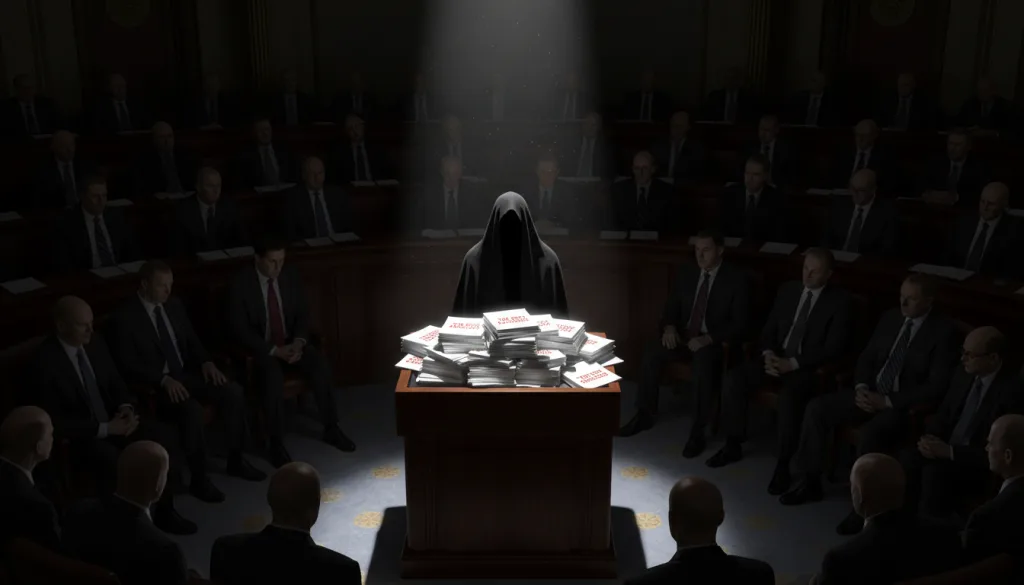
On July 26, 2023, the House Oversight Committee convened a momentous hearing that would reverberate through the halls of power and across the nation. The room, filled with congressional representatives, media personnel, and a visibly tense audience, held its breath as David Grusch, a former U.S. intelligence officer, took the stand. The atmosphere was electric, charged with the anticipation of long-suppressed truths surfacing. Grusch had previously served as a military officer in the National Geospatial-Intelligence Agency, and his new role as a whistleblower placed him at the center of a storm that had been brewing for decades.
Grusch's Claims: A New Era of Accountability
Grusch’s testimony was not just a collection of sensational claims; it was a detailed account that drew upon years of classified experience. With meticulous precision, he described a clandestine program within the U.S. government focused on reverse engineering unidentified aerial phenomena (UAP). According to Grusch, the government had operated these programs in secrecy, devoid of any public accountability or oversight. His assertion was stark: “I was informed by individuals with direct knowledge of these programs that there are, in fact, materials and technologies not of this Earth.” The weight of his statement hung in the air, swallowing any skepticism in the room.
The Context of UAP Investigations
To fully grasp the implications of Grusch's testimony, one must consider the context of UAP investigations in recent years. The U.S. government’s increasing openness about UAPs is a stark contrast to its historical silence. In June 2021, a report from the Office of the Director of National Intelligence (ODNI) documented 144 sightings of UAPs between 2004 and 2021, with only one case classified as explainable. This shift in disclosure, spearheaded by figures such as former Senate Majority Leader Harry Reid, signaled a growing acknowledgment of the phenomenon that Grusch now so bravely addressed.
The Science of Secrecy
Within the realm of classified programs, the very act of research can shroud itself in layers of secrecy. The government’s reluctance to share detailed findings on UAPs has often led to speculation and conspiracy theories. The scientific community has echoed these sentiments. In a 2019 study published by astrophysicist Eric W. Davis and others, the researchers concluded that “the public deserves access to what is currently classified.” The tension between national security and public interest has been a long-standing battle, with Grusch’s testimony representing a powerful attempt to tip the scales toward transparency.
Whistleblowing: A Personal Sacrifice
The act of whistleblowing carries profound implications, both personally and professionally. Grusch’s decision to come forward was not made lightly. It meant risking his career and personal safety to reveal what he believed was a pattern of deception by the government. His testimony presented evidence of an internal culture that discouraged transparency and fostered a climate of fear among those who dared to challenge the status quo.
The Emotional Toll
As Grusch spoke, the emotional weight of his experience was palpable. “I could never have imagined how deep this would go,” he recounted, his voice catching slightly. The tension in his body language spoke volumes; he was relaying more than information; he was revealing his very soul. Whistleblowers often face backlash, ostracism, and even threats. Grusch disclosed that he had received warnings of retaliation, yet he felt compelled to act for the greater good. His bravery could inspire others to step forward, igniting a movement for disclosure that might reshape the American understanding of both its government and the cosmos.
Government Denials and the Shadows of Cover-Ups
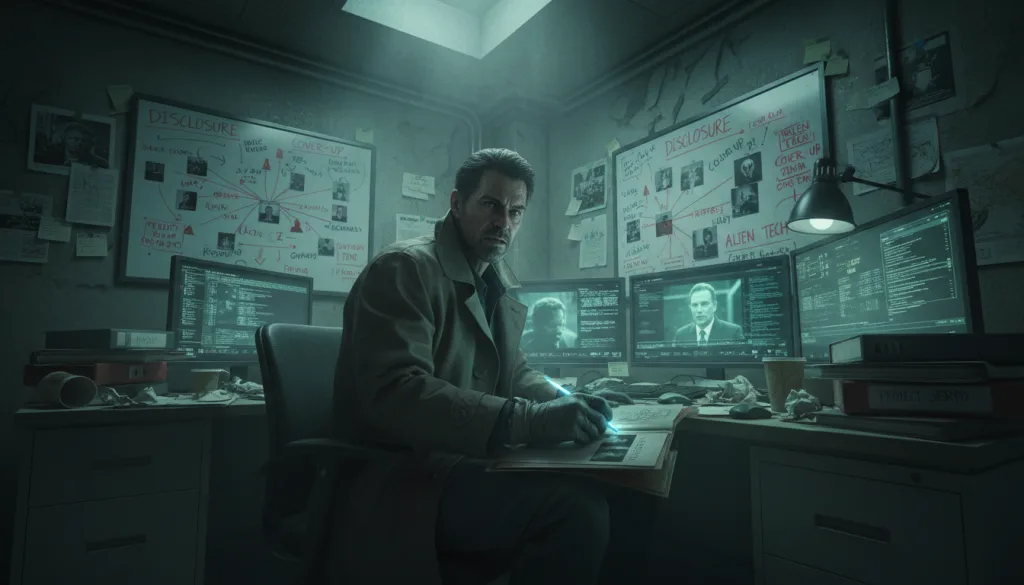
In the wake of Grusch's testimony, government officials scrambled to respond. Some vehemently denied the existence of reverse engineering programs or any extraterrestrial materials, while others remained conspicuously silent. In January 2023, the Pentagon stated that the investigation of UAPs was “focused on safety and security” rather than any extraterrestrial implications. So, why the discrepancy? As Grusch's revelations indicated, the truth may lie buried beneath layers of bureaucracy.
Historical Precedence of Secrecy
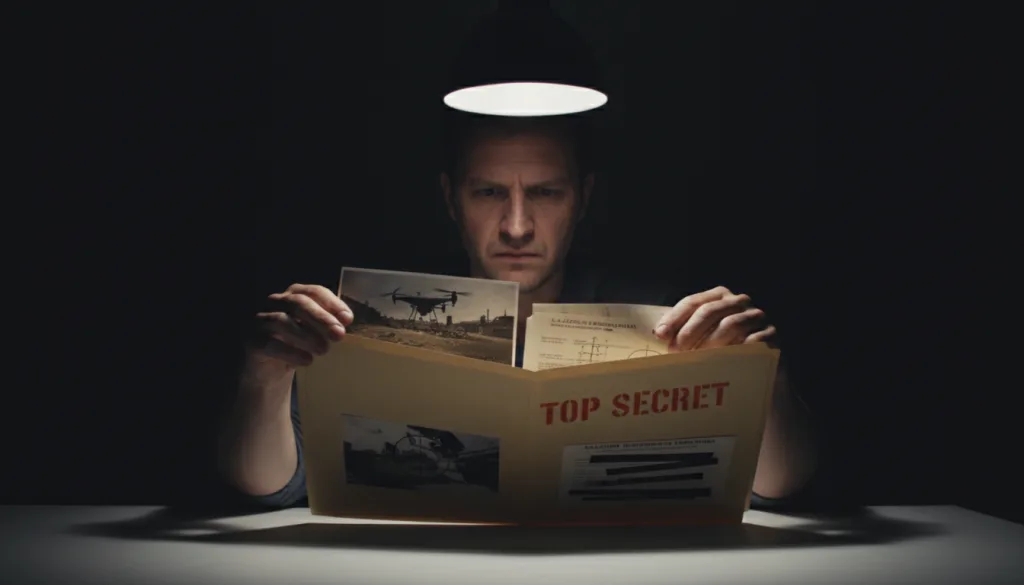
The history of governmental cover-ups surrounding extraterrestrial phenomena is rich and convoluted. One need only look back to the infamous Roswell incident of 1947, where initial reports of a “flying disc” were quickly retracted, replaced with claims of a weather balloon. Such incidents laid the groundwork for distrust in governmental narratives surrounding UFOs. In 1994, the U.S. Air Force published the “Roswell Report: Fact vs. Fiction in the New Mexico Desert,” attempting to quell conspiracy theories. However, the report only fueled further speculation, highlighting a persistent pattern of denial.
The Implications of Grusch’s Testimony
The fallout from Grusch's testimony extends beyond the immediate reactions of legislators and analysts. It signals a potential shift in the relationship between the government and its citizens, particularly regarding issues of national security and transparency. For decades, citizens have been fed a narrative that has fostered skepticism and fear. Grusch's revelations might just be an inflection point, a moment where the public begins to reclaim agency over information that should never have been withheld.
The Call for Legislative Action
The hearing on July 26 sparked discussions not only of accountability but also of the need for comprehensive legislation regarding UAP investigations. Representative André Carson emphasized the importance of creating an independent body to oversee UAP research, stating, “We cannot allow the shadows of bureaucracy to shroud our understanding of the unknown.” Echoing sentiments from the recent 2020 National Defense Authorization Act, there is a mounting call for accountability and clarity that may lead to the future establishment of investigative bodies dedicated solely to UAP inquiry.
The Aftermath: Public Reactions and Media Coverage
In the wake of Grusch's testimony, public reactions varied widely, showcasing the deep-seated cultural divide regarding belief in extraterrestrial phenomena. Some citizens expressed exhilaration and hope, while skeptics dismissed Grusch’s revelations as mere fabrications. The media landscape erupted into a frenzy, with outlets dissecting every word and implication from the hearing. The New York Times, known for its investigative journalism, highlighted Grusch’s credibility and the potential ramifications of his testimony.
The Psychological Impact of Disclosure
The psychological implications of such a moment cannot be understated. Researchers, including Dr. John E. Mack, a psychiatrist and Harvard professor, have studied the effects of UFO experiences on individuals. In his 1994 book, “Abduction: Human Encounters with Aliens,” Mack noted that many experiencers often grapple with feelings of isolation and disbelief from their communities. Grusch's testimony offers a potential pathway to validation for countless individuals who have long felt marginalized and silenced by society.
The Future of UAP Investigations
The implications of Grusch's groundbreaking testimony may forever alter the trajectory of UAP investigations. As awareness grows and more individuals come forward with their experiences and knowledge, the landscape of public understanding may drastically shift. Government agencies, now under public scrutiny, may be compelled to rethink their strategies regarding transparency and disclosure.
The Promise of Scientific Inquiry
In the realm of scientific inquiry, Grusch's testimony could catalyze a renaissance of interest in UAP phenomena. The public and academic communities might rally around the pursuit of empirical research to demystify the unknown. As demonstrated by the work of physicists like Michio Kaku, who advocates for an open-minded approach to the study of UAPs, the intersection of science and the unexplained can yield transformative insights. In his 2021 book “The Future of Humanity,” Kaku elaborates on the possibilities of advanced technologies and civilizations, reinforcing the premise that understanding UAPs could unlock new dimensions of human progress.
Conclusion: A New Dawn for Transparency
David Grusch's testimony before Congress marks a pivotal moment in the long, complex relationship between the government and its citizens regarding UAP investigations. His courageous revelations have shed light on a shadowy world of secrecy, igniting a fervor for truth and accountability that has the potential to reshape public perception. As the dust settles on that historic hearing, the call for transparency echoes louder than ever, resonating with the collective yearning for understanding that transcends earthly confines. The evidence strongly suggests that the time for silence is over; the truth is ready to be unveiled.


Comments 0
Be the first to comment!