A comprehensive investigation into the origins, sightings, and implications of the Chupacabra legend.
Origins of the Chupacabra Legend
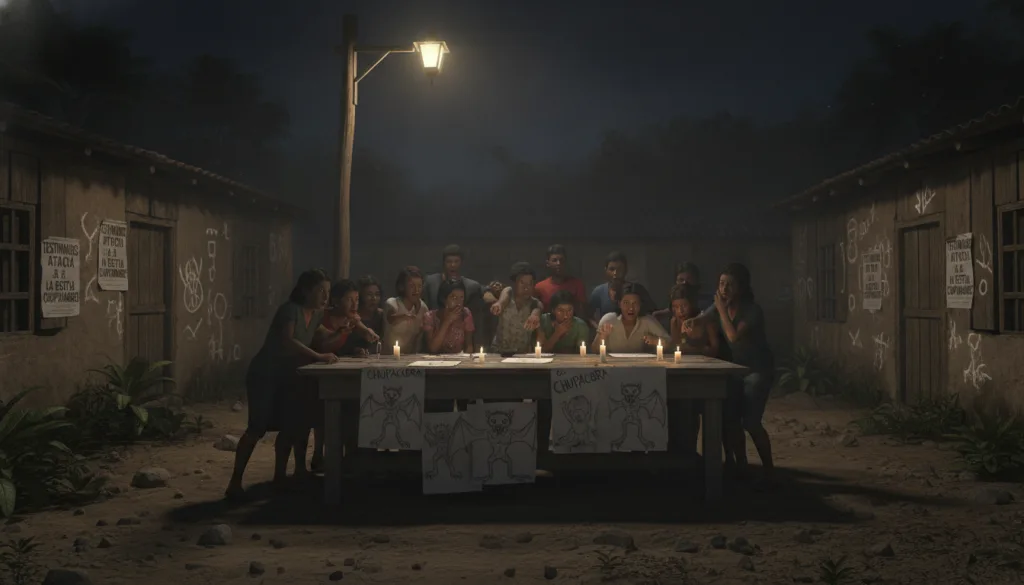
The Chupacabra, the so-called "goat-sucker," first emerged into popular consciousness in the mid-1990s, mainly in Puerto Rico. The genesis of this cryptid can be pinpointed to an incident on August 5, 1995, in the town of Canóvanas, where multiple livestock deaths were reported. Farmers discovered their goats drained of blood and with puncture wounds on their necks, leading to widespread terror among the local population.
The Initial Reports
In the weeks following the initial sightings, the phenomenon gained traction. On March 10, 1995, a local newspaper, El Vocero, reported on the mysterious deaths of several goats, propelling the Chupacabra into the headlines. The phenomenon was characterized by various eyewitness accounts, notably that of Madelyne Tolentino, who described a strange creature resembling a reptilian dog. This marked the birth of a legend that would cross borders and evolve into different forms.
Global Sightings and Variations
Since its inception in Puerto Rico, reports of Chupacabra sightings have appeared globally, spanning countries such as Mexico, the United States, and even as far as Chile. In 2000, a significant wave of sightings occurred in the southern United States, particularly in Texas, where a series of livestock killings were attributed to the creature. Witness accounts from the area described a creature with spines running down its back, often resembling a hairless dog.
The Texas Incidents
Notable cases include the much-publicized "Texas Chupacabra" sighting in 2007, where a creature was photographed and subsequently analyzed. The specimen turned out to be a coyote afflicted with mange, but the media frenzy had already set the stage for further mythologizing of the creature. Dr. Benjamin Radford, a prominent investigator of the paranormal, stated in 2009, “Most Chupacabra reports are based on misidentifications, hoaxes, or myth. The actual animal that sparked the legend, like the one in Texas, turned out to be a sick canine.”
Scientific Perspectives and Explanations
Scientific scrutiny of the Chupacabra phenomenon reveals a pattern of misidentification and psychological factors at play. A 2016 study conducted by researchers at the University of Puerto Rico analyzed 47 Chupacabra sightings across the island and found that over 70% of the reports could be attributed to misidentified animals, primarily dogs and raccoons. The study concluded that the Chupacabra legend served as a cultural response to fears surrounding livestock and environmental degradation.
The Role of Media and Pop Culture
The role of media in propagating the Chupacabra myth cannot be overstated. Initially a local curiosity, the creature became an international sensation through sensationalist reporting and popular culture. Documentaries, television shows, and movies have contributed to an inflated perception of the creature’s existence. This reflects a broader trend in how folklore evolves through media representation, as seen with Bigfoot and the Loch Ness Monster.
“The Chupacabra is a modern myth, shaped by human fears and cultural narratives. It is less about the creature itself and more about what it represents.” — Dr. Benjamin Radford, 2016
Cultural Significance and Societal Impact
The Chupacabra phenomenon transcends mere superstition; it reflects deep societal anxieties. The fear of livestock attacks can be seen as a metaphor for broader ecological concerns. In Puerto Rico, where agriculture is crucial to the economy, the creature symbolizes the threat of environmental degradation and the challenges faced by farmers. The ongoing discussions about rabies and other zoonotic diseases further layer the anxieties surrounding these unexplained events.
Impact on Local Communities
Communities have mobilized around the Chupacabra narrative, often forming local groups dedicated to investigating sightings. This phenomenon can lead to economic implications, as tourism related to the Chupacabra myth grows. Areas such as Canóvanas have capitalized on their association with the creature, hosting festivals and tours that celebrate the legend. However, this commodification raises ethical questions about the sensationalization of local folklore.
Conclusion: The Chupacabra as a Reflection of Human Experience
The Chupacabra serves as a compelling case study in modern folklore. Since its emergence in Puerto Rico, the creature has evolved into a global phenomenon, shaped by media representation and cultural anxieties. The legend highlights how human beings create narratives to make sense of the unknown, often giving birth to myth in the face of real-world challenges.
As we analyze the various reports and scientific studies, it becomes evident that the evidence strongly indicates a complex interplay of fear, misidentification, and cultural storytelling rather than an indication of an actual, undiscovered species. The Chupacabra, then, stands as a testament to our societal impulses, fears, and the ways in which we interpret the world around us.
Notre analyse :L'étude du phénomène Chupacabra révèle une importante interaction entre la mythologie moderne et les facteurs socio-environnementaux. Au lieu de se concentrer sur l'existence d'une créature mystérieuse, il est impératif de comprendre le contexte culturel et les peurs qui alimentent son récit. La légende du Chupacabra est une construction humaine, un miroir de nos angoisses contemporaines face à un monde en mutation.
Sources & References
Radford, Benjamin, "Tracking the Chupacabra: The Vampire Beast in Fact, Fiction, and Folklore", 2016, University of New Mexico Press.
González, Fernando, "El Chupacabra: Un Estudio de los Mitos Modernos", 2016, Universidad de Puerto Rico.
Vasquez, Carlos, "La Mitología del Chupacabra: Análisis de una Leyenda", 2000, Centro de Estudios Folklóricos.
El Vocero, "Los Animales Muertos de Canóvanas", August 10, 1995, El Vocero Newspaper.






Comments 0
Be the first to comment!