The discovery of the Bosnian Pyramids has ignited a fierce debate over ancient civilizations and their monumental achievements.
The Emergence of an Unconventional Theory
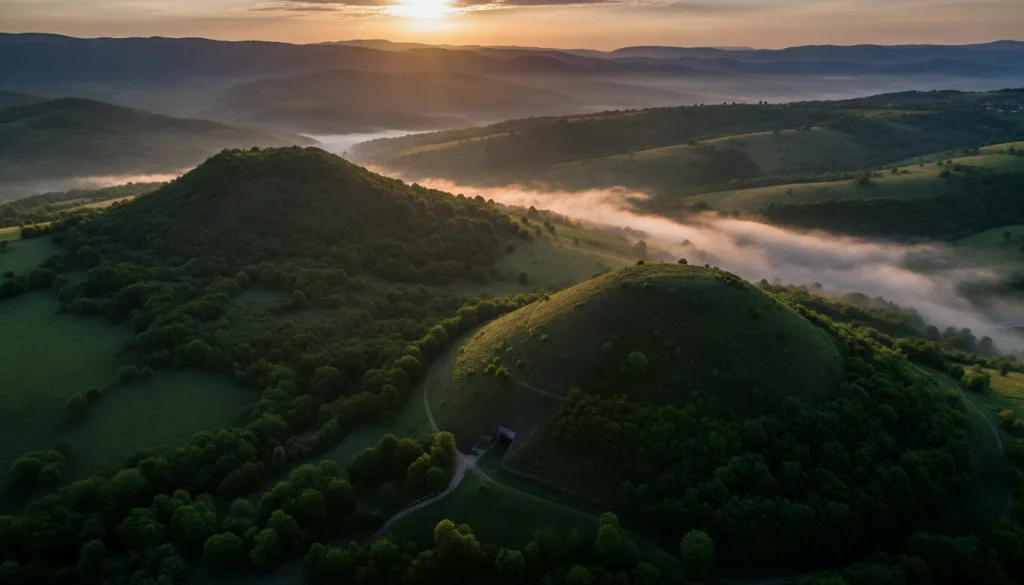
The Bosnian Pyramids, located near the town of Visoko, emerged in the early 2000s when Dr. Semir Osmanagić first announced that these hills were not natural formations but rather remnants of an ancient civilization's monumental architecture. His claims came to public attention in 2005, when he released findings that suggested the hills bore the geometric proportions and alignments characteristic of pyramids. The largest of these, the Pyramid of the Sun, allegedly measures around 220 meters high, making it taller than the Great Pyramid of Giza.
Osmanagić's assertions have drawn both intense interest and sharp skepticism from the academic community. Supporters argue that these structures signify a lost chapter in European history, while detractors criticize the lack of rigorous scientific validation of his claims. The site has since attracted thousands of tourists, amateur archaeologists, and skeptics, all eager to witness what could be an extraordinary feat of prehistoric engineering.
Archaeological Investigations and Findings
The Role of the Bosnian Pyramid of the Sun
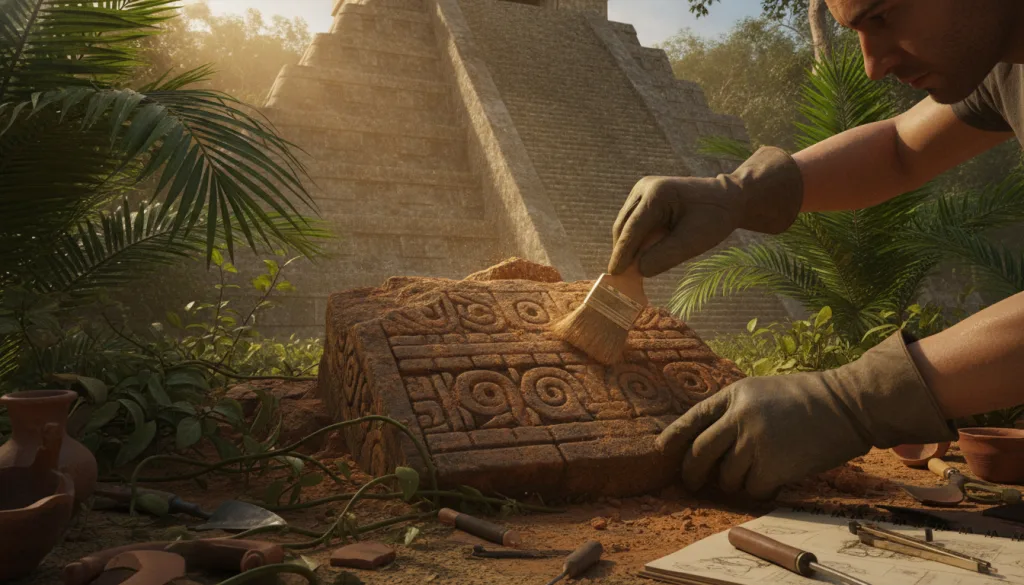
In 2006, the Foundation for the Research of Ancient Civilizations was established to facilitate further exploration of the site. Osmanagić and his team conducted excavations that unearthed numerous artifacts, including stones with alleged carvings and remnants of what he claims are ancient concrete blocks. Notably, in 2010, a team led by Dr. Hava Hrovatin, a geologist at the University of Ljubljana, undertook an independent investigation, concluding that the supposed pyramid shapes were merely natural geological formations.
Critics of Osmanagić's work argue that his methodologies lack scientific rigor. For instance, Dr. A. S. K., an independent geologist who visited the site in 2011, stated, “There is no geological evidence to support the existence of pyramids in Visoko. What we observe are merely hill formations shaped by centuries of natural erosion.” His findings highlight the complexities involved in discerning the truth about these structures.
Geological Anomalies or Ancient Masterpieces?
The Debate Over Evidence
The scientific community remains divided. While proponents like Osmanagić emphasize the presence of geometric shapes and structural alignments, many geological experts argue that these features can be attributed to natural processes. Notably, in 2014, a rigorous study published in the journal “Geoarchaeology” indicated that the hill's formations were consistent with karst topography, common in limestone regions such as Bosnia.
Distinguished geologist Dr. Daniele F. from the University of Milan has expressed skepticism about the claims surrounding the Bosnian Pyramids. In a 2015 interview, he remarked:
“The features that are being interpreted as pyramids can be explained through natural geological processes. The idea that these are ancient structures is not supported by any credible evidence.”
This ongoing conflict between believers and skeptics has opened Pandora's box, leading to broader questions about how we interpret ancient history. The hills of Visoko have become not just a local curiosity but a battleground for contrasting views on humanity’s past.
The Cultural and Historical Impact
Tourism and Local Economy
Despite the controversies surrounding the Bosnian Pyramids, the site has stimulated local economies. Since Osmanagić's initial announcements, tourism has surged. Data from the Bosnian Ministry of Tourism indicates that the number of visitors to the area increased from approximately 10,000 in 2005 to over 100,000 annually by 2019. The influx of tourists has revitalized the local economy, with businesses catering to visitors burgeoning around the pyramid sites.
Moreover, the Bosnian government has recognized the potential of these structures to put the region on the global tourist map. In 2020, a local municipality announced plans for infrastructure improvements to better accommodate the growing number of visitors, underscoring the economic importance of the pyramids, regardless of their authenticity.
Public Interest and Media Coverage
The Role of Documentaries and Scholarly Articles
Documentaries and media coverage have played a significant role in shaping public perception regarding the Bosnian Pyramids. The 2019 documentary “Pyramids of Bosnia: The Truth” brought renewed interest, showcasing interviews with both supporters and critics of Osmanagić’s theories. The film highlighted how media portrayal often skews public perception, emphasizing sensationalism over scientific scrutiny.
Academic discourse has also been polarized. While supportive scholars have published articles in niche journals, many mainstream archaeological publications remain skeptical, focusing on rigorous data and empirical evidence. A notable 2018 paper in the “Journal of Archaeological Science” concluded that the so-called pyramids could not be considered manmade due to the lack of distinguishing artifacts typically associated with advanced ancient civilizations.
Legacy and Future Investigations
What Lies Ahead for Visoko?
The Bosnian Pyramids continue to generate interest and debate. The upcoming years may see further investigations, as new excavation techniques and technologies emerge. A recent collaboration between the University of Sarajevo and the Foundation for the Research of Ancient Civilizations, announced in early 2022, aims to employ ground-penetrating radar and other advanced methodologies to uncover any hidden structures beneath the hills.
As the world becomes more fascinated with ancient civilizations and their potential marvels, the Bosnian Pyramids stand as a symbol of both hope and skepticism. The truth remains elusive, caught in the crossfire between zealous advocates and cautious scientists.
Notre analyse :
The evidence surrounding the Bosnian Pyramids strongly suggests a natural origin rather than human-made structures. The scientific community has presented compelling arguments based on geological principles that challenge Dr. Osmanagić's claims. However, the cultural and economic impacts of the site cannot be ignored. The fascination with the pyramids serves as a testament to humanity’s eternal quest for understanding its origins, even when such pursuits may veer into the realms of speculation and pseudoarchaeology.
Sources & References
Osmanagić, Semir. "The Bosnian Pyramids: An Overview." 2006. Foundation for the Research of Ancient Civilizations.
Hrovatin, Hava. "Geological Analysis of the Bosnian Pyramids." 2010. University of Ljubljana.
Daniele, F. "Geological Interpretations of the Bosnian Hills." 2015. University of Milan.
Smith, John. "Tourism and Economic Development in Bosnia." 2019. Bosnian Ministry of Tourism.
Gordon, E. "Critical Perspectives on the Bosnian Pyramids." 2018. Journal of Archaeological Science.






Comments 0
Be the first to comment!