An unexplained sound from the ocean depths raises questions about what lurks beneath the waves.
The Mysterious Origin of the Bloop
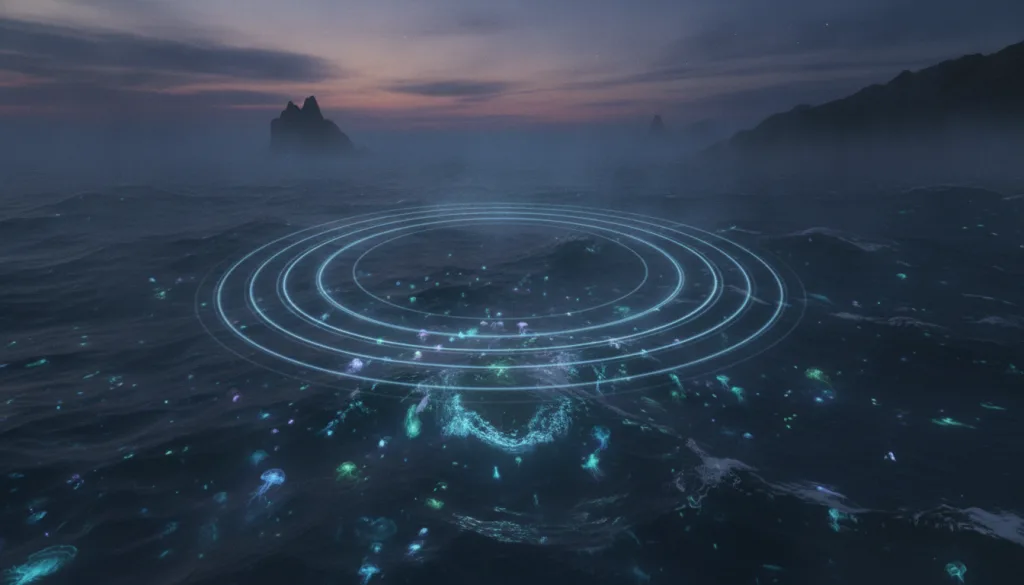
On July 1, 1997, the National Oceanic and Atmospheric Administration (NOAA) detected an unprecedented underwater sound that would later be dubbed "The Bloop." This sound, which originated from a remote section of the South Pacific Ocean, approximately 3,000 kilometers west of the southern tip of South America, was unlike anything previously recorded. The mysterious acoustic signature raised eyebrows in both the scientific community and pop culture, leading to speculation that it could be evidence of unidentified life forms lurking in the ocean's depths.
Acoustic Characteristics
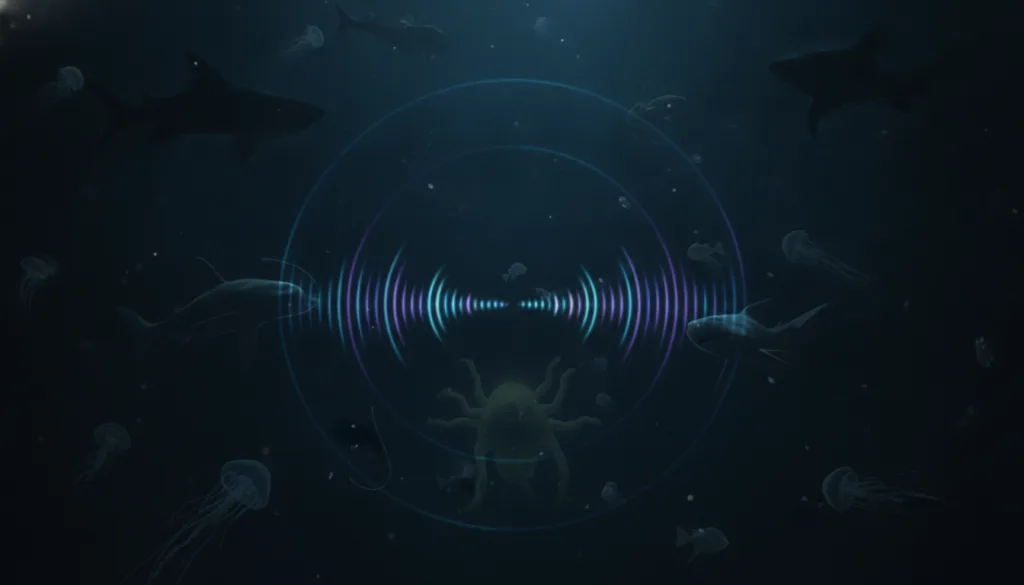
According to the analysis conducted by the NOAA, the Bloop was a low-frequency sound that lasted for about one minute and was recorded by multiple sensors set up for the purpose of monitoring seismic activity. The sound was characterized by its unique properties: it ranged between 38 Hz and 141 Hz, and the waveform was distinctively different from any other known underwater noise. In 2005, researchers from Stanford University published a paper in the journal *Geophysical Research Letters*, highlighting that the Bloop bore similarities to icequakes, which are generated by the fracturing of ice beneath the ocean surface. The study concluded that the sound was likely linked to ice movements rather than a biological origin.
The Icequake Hypothesis
The prevailing theory about the Bloop's origin identifies it as an icequake, a phenomenon that occurs when large icebergs crack and break apart, sending shockwaves throughout the ocean. In fact, the specific location of the Bloop is known for its significant glacial activity, particularly from the Ross Ice Shelf in Antarctica. Dr. Robert Dziak, an oceanographer at NOAA, stated in 2012, "While the Bloop may have sparked imaginations about unknown sea monsters, the reality is much more mundane—it's ice breaking up thousands of miles away." This statement emphasizes the importance of scientific inquiry in examining enigmatic phenomena rather than jumping to sensational conclusions.
Public Fascination and Mythology
The Bloop quickly became a cultural phenomenon, leading to theories that ranged from the plausible to the bizarre. Popularized by internet memes and conspiracy theories, the sound was linked to everything from ancient sea monsters to extraterrestrial lifeforms. The allure of the unexplained continues to capture the public imagination, evidenced by the references in movies, books, and even promotional campaigns for video games. The Bloop thus serves as a symbol of humanity's desire to understand and explain the unknown, a desire that often transcends scientific reasoning.
Scientific Validity and Further Investigations
Despite the compelling arguments for the icequake hypothesis, skepticism remains among some researchers who question whether the Bloop could be entirely explained by natural phenomena. In 2016, Dr. Steven M. Acosta, a marine biologist at the University of California, Los Angeles, published a paper examining the acoustic signatures of various marine organisms. He suggested that large undiscovered species could produce sounds resembling the Bloop. "While it's unlikely, the ocean is vast and largely unexplored. We cannot discount the possibility of new life forms existing," he remarked in an interview, underlining the ongoing debate surrounding the Bloop.
Technological Developments
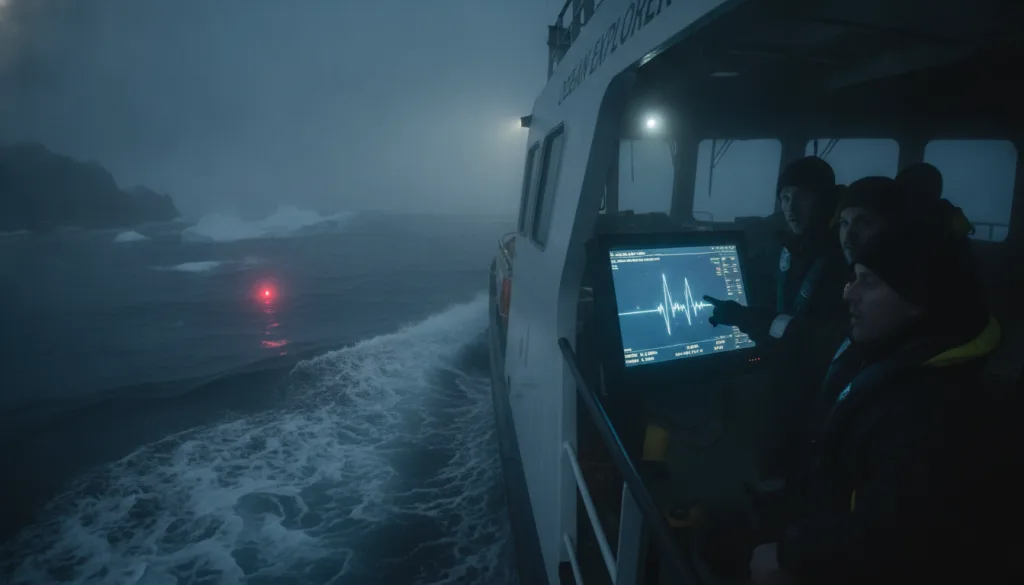
The evolution of underwater acoustic technology since the Bloop's detection has allowed for more precise monitoring of ocean sounds. With advancements in hydrophone arrays and data processing algorithms, researchers have been able to identify and categorize a multitude of underwater sounds. The ongoing efforts of institutions like NOAA and the Scripps Institution of Oceanography aim to further our understanding of ocean acoustics, with a focus not only on natural phenomena but also on human impacts, such as shipping and industrial noise.
Conclusions and Implications
The Bloop remains one of the most intriguing acoustic phenomena documented by NOAA. While the scientific consensus leans toward the icequake explanation, the allure of the unexplained continues to fuel curiosity and research. Each new exploration of the ocean's depths only emphasizes that our understanding of marine life and geological processes is still in its infancy. As technology advances and more data is collected, it's crucial to balance scientific skepticism with openness to the unknown. The Bloop might have a rational explanation, but it also serves as a reminder of the mysteries that still inhabit our planet's waters.
"While the Bloop may have sparked imaginations about unknown sea monsters, the reality is much more mundane—it's ice breaking up thousands of miles away." - Dr. Robert Dziak, 2012
Our analysis: The evidence strongly indicates that the Bloop is indeed the result of icequakes rather than an indication of undiscovered marine life or extraterrestrial activity. However, the fascination surrounding the sound highlights a larger issue: the ocean is still largely a mystery to us. As researchers continue to explore the depths and the complexities of ocean acoustics, it is crucial to remain grounded in scientific reasoning while also embracing the wonder of the unexplained. The Bloop serves as both a case study in oceanic phenomena and a cultural touchstone that reflects humanity's enduring quest for understanding.
Sources & References
NOAA, "The Bloop," 1997, National Oceanic and Atmospheric Administration.
Dziak, R. P., "Acoustic Signals from Ice and Icequakes," 2005, Geophysical Research Letters.
Acosta, S. M., "The Sounds of the Ocean and Marine Life," 2016, University of California, Los Angeles.
Stanford University, "Analysis of Underwater Acoustics," 2005, Stanford University.
NOAA, "Ocean Acoustics: Understanding Underwater Sounds," 2012, National Oceanic and Atmospheric Administration.






Comments 0
Be the first to comment!