An extraordinary case where 62 children reported similar encounters with unidentified aerial phenomena.
A Historic Incident in West Zimbabwe
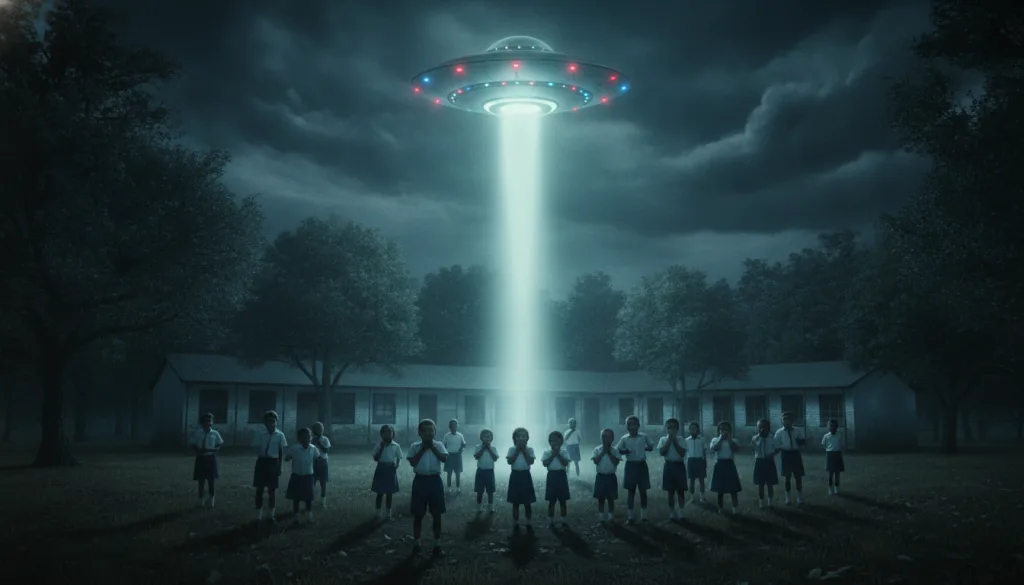
The Ariel School incident, which occurred on September 16, 1994, in Ruwa, Zimbabwe, remains one of the most compelling cases of mass UAP (unidentified aerial phenomena) sightings. At approximately 10:00 AM local time, during recess at the Ariel School, a group of 62 students aged between 6 and 12 reported witnessing a strange craft land near their school. This event is significant not only for the sheer number of witnesses but also for the consistency of their testimonies, which have been evaluated in multiple studies.
Details of the Encounter
According to various accounts, children observed a glowing, egg-shaped craft descend into a nearby clearing. Witnesses described the craft as being silver and emitting a bright light. Some children reported seeing humanoid figures with large heads and big black eyes exit the craft. These details were consistently reported across multiple interviews, affirming a collective experience that is rarely documented in similar encounters.
Professor Robert Hastings, a well-known researcher in the field of UAP, examined the Ariel School case and emphasized the credibility of the witnesses. In his 2008 book "UFOs and the Nuclear Wind," he stated that "the children's detailed descriptions leave little doubt that they observed something extraordinary." Hastings' analysis underscores the importance of studying such cases to understand the implications of collective human experience with unidentified phenomena.
The Psychological Impact on Witnesses
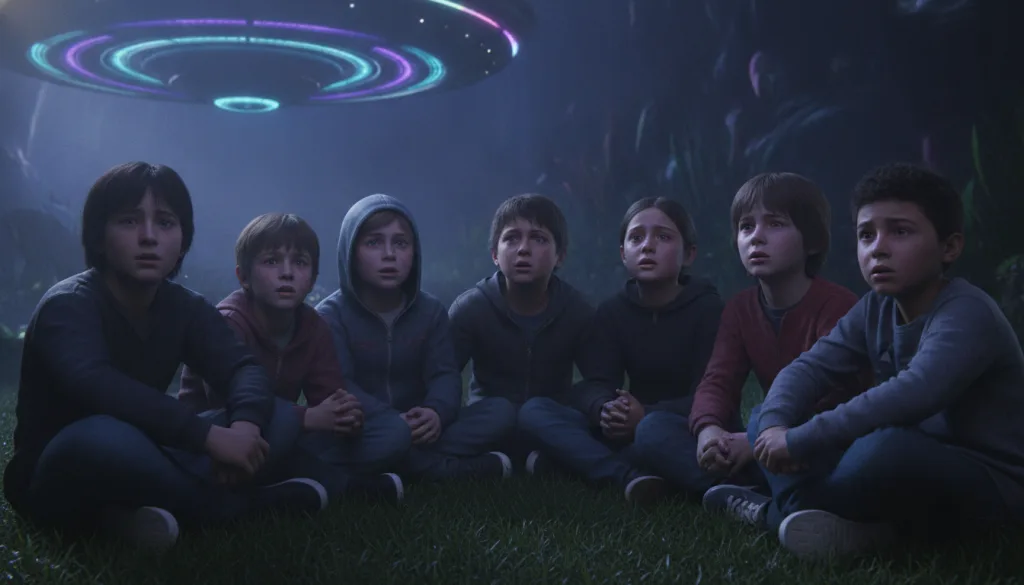
In the aftermath of the incident, several researchers, including Dr. John Mack, a Harvard psychiatrist, evaluated the psychological impact on the children. Dr. Mack, known for his advocacy of credible research into UAP experiences, conducted interviews with the children in 1999. He noted that many of them experienced varying levels of emotional distress and confusion about the event. His findings, published in the journal "The Journal of Scientific Exploration," indicated that the children were profoundly affected, not just by the sighting, but also by the skepticism and disbelief expressed by adults in their lives.
"The children were not only witnesses but participants in an experience that fundamentally challenged their understanding of reality."
Cross-Validation and Skepticism
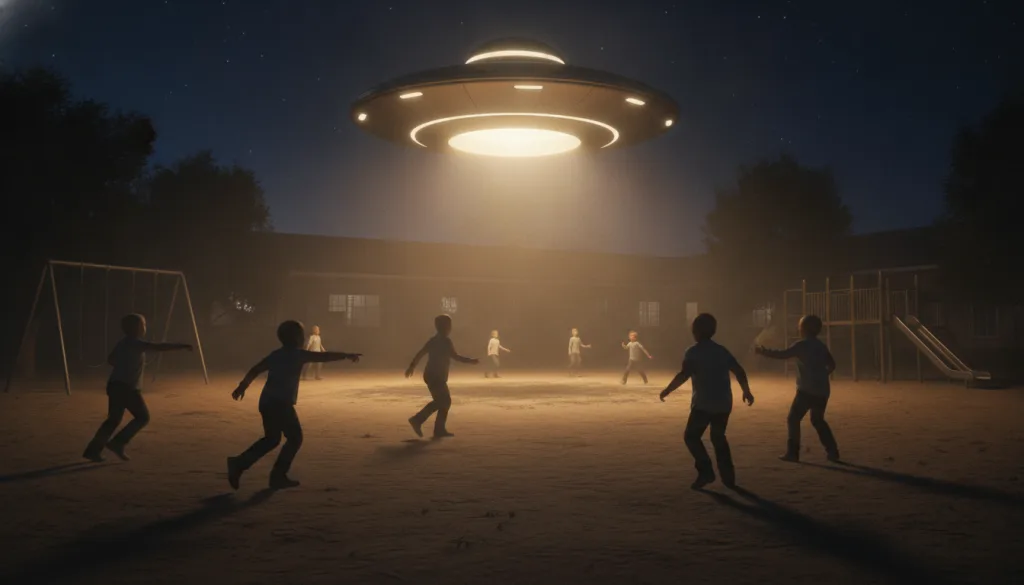
Despite the overwhelming consistency in the children's reports, skepticism regarding the Ariel School encounter has persisted. Critics argue that the children's testimonies may have been influenced by media coverage or conversations with each other. However, a closer examination reveals the integrity of their accounts. The children's descriptions were recorded shortly after the incident, without any exposure to subsequent media narratives about UFOs.
Moreover, the work of Dr. Susan Clancy, a psychologist at Harvard University, who published "Abducted: How People Come to Believe They Were Kidnapped by Aliens" in 2005, adds complexity to our understanding of such phenomena. Clancy’s research suggests that experiences of perceived abduction or contact with extraterrestrial beings often stem from psychological factors. However, she also acknowledges that these experiences are real to those who report them, a sentiment echoed in the responses of Ariel School witnesses.

Media Coverage and Cultural Context
The Ariel School incident attracted international media attention, with coverage from major outlets such as the BBC and The New York Times. The incident unfolded against a backdrop of a country grappling with political turmoil and socio-economic challenges. Zimbabwe in the 1990s was a time of transition, and the children's reports provided a rare glimpse into a shared experience that transcended cultural boundaries. The children, many from different socio-economic backgrounds, unified in their testimony, eliciting curiosity and concern from the global community.
During a 1994 interview with BBC, one of the students, now an adult, stated, "I think I saw something that others cannot explain. It changed my view of the world." Such sentiments underline the broader implications of the Ariel School encounter not just for the individuals involved, but also for how society interprets unexplained phenomena.

The Role of Education in Perceptions of UAPs
Interestingly, the Ariel School, founded in 1992, had a unique educational philosophy that emphasized personal experience and creativity. This approach may have contributed to the children’s willingness to share their experiences candidly. Educators like Mrs. C. A. Selwyn, the school's director at the time, promoted an environment where students were encouraged to express their thoughts openly. This educational framework likely played a crucial role in shaping the children's narratives.
In contrast to more traditional educational settings, which often prioritize conformity and standardized answers, the approach at Ariel School fostered critical thinking. This dynamic may account for the children's ability to articulate their experiences in a coherent and consistent manner. The incident raises questions about how educational environments influence perceptions of UAPs and related phenomena.
The Ongoing Investigation and Future Implications
The Ariel School encounter continues to inspire researchers and advocates for transparency regarding UAPs. Investigations into this incident have not only revolved around the children’s testimonies but also include examinations of the political, social, and psychological dimensions of the event. The Zambian UFO researcher, Dr. Timothy Good, has conducted extensive studies on cases similar to Ariel School, arguing that the patterns of mass sightings often yield insights into societal fears and aspirations.
Moving forward, the Ariel School incident serves as a litmus test for the credibility of UAP reports. With advancements in technology and a growing interest in the scientific community, it has become increasingly feasible to approach these occurrences from a multidisciplinary perspective. As universities and research institutions begin to explore UAP phenomena more rigorously, the Ariel School encounter stands as a cornerstone case that continues to provoke discourse and inquiry.
Conclusion: A Call for Serious Inquiry
The Ariel School incident represents one of the most documented encounters involving children and unidentified aerial phenomena. The consistency of testimonies, the psychological impact on witnesses, and the cultural context surrounding the event collectively challenge the prevailing narratives about UAPs. This case is not simply an anecdote; it is a call for serious inquiry into how societies understand and respond to encounters with the unexplained.
It is incumbent upon researchers, policymakers, and educators to confront and investigate the implications of such phenomena comprehensively. The evidence strongly indicates that the encounter at Ariel School was not a mere figment of imagination, but rather a collective experience that has lasting significance in the discourse surrounding UAPs.
Notre analyse: L'incident de l'école Ariel illustre non seulement l'importance des témoignages d'enfants dans l'étude des phénomènes aériens non identifiés, mais remet également en question les paradigmes traditionnels de la science et de la compréhension humaine. La nécessité d'une approche interdisciplinaire est primordial pour élucider ces mystères qui persistent dans notre société contemporaine.
Sources & References
Hastings, Robert. UFOs and the Nuclear Wind. 2008, Hastings Books.
Mack, John. "Psychological Effects of UFO Experiences." The Journal of Scientific Exploration. 1999.
Clancy, Susan. Abducted: How People Come to Believe They Were Kidnapped by Aliens. 2005, Harvard University Press.
Good, Timothy. Above Top Secret: The Worldwide U.F.O. Cover-up. 1987, Macmillan.
Selwyn, C. A. "The Educational Philosophy of Ariel School." 1994, Ariel School Foundation.





Comments 0
Be the first to comment!