A sophisticated ancient device reveals the advanced scientific understanding of the Greeks.
The Discovery of the Antikythera Mechanism
In 1901, a group of Greek sponge divers stumbled upon what would become one of the most astonishing discoveries in the history of archaeology—the Antikythera Mechanism. Found off the coast of the small Greek island of Antikythera, this ancient artifact was recovered from a shipwreck dated to around 60 BCE, based on radiocarbon tests of associated materials. The mechanism itself is a complex assembly of gears, bronze, and wood, indicating a sophistication previously thought to be unattainable in the ancient world.
Initial Examination and Misunderstanding
Following its discovery, the mechanism was initially misidentified as a simple navigational instrument. The first thorough examination by archaeologist Valerios Stais in 1902 revealed that it was not merely a navigational tool, but a celestial calculator, capable of predicting astronomical positions and eclipses for several years into the future. Stais’s findings were published in the journal Chronique de l'Égypte, but it took decades for the full significance of the device to be appreciated.
Technical Specifications and Functionality
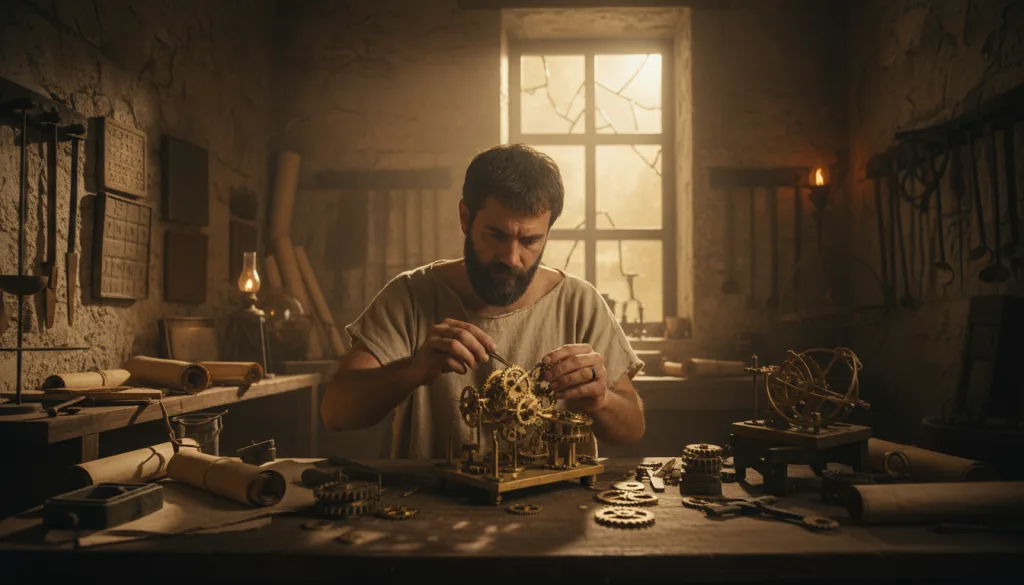
The Antikythera Mechanism contains at least 30 gears, some of which are meticulously crafted for precision. Modern studies, including a 2008 analysis by astrophysicist Tony Freeth and his colleagues at Cardiff University, used 3D X-ray tomography to visualize the internal structure of the device without further damaging it. Their research revealed that the mechanism not only tracked the lunar and solar cycles but also had a dial that indicated the timing of the Olympic Games. This intricate design demonstrates a profound understanding of mechanical engineering and celestial phenomena.
The Gear Systems and Their Implications
The gear ratios found in the Antikythera Mechanism suggest that the ancient Greeks were capable of creating differential gears, a technology not seen again until the Renaissance. For example, the device features a 53-tooth gear coupled with a 127-tooth gear, which allows for the complex calculations necessary to predict lunar eclipses. Such ingenuity challenges the long-held belief that the Greeks lacked the technological capability to create such advanced machinery, suggesting a knowledge base that has, to date, remained enigmatic.

Historical Context of Ancient Greek Astronomy
To understand the significance of the Antikythera Mechanism, it is essential to place it within the broader context of ancient Greek astronomy. By the 2nd century BCE, Greek astronomers like Hipparchus were already developing theories about the heavens, utilizing observational data to create models of celestial movements. The Antikythera Mechanism likely synthesized the work of earlier scholars, including Archimedes and Apollonius, whose contributions to mathematics and mechanics laid the groundwork for this device.
Influence on Subsequent Scientific Thought
The knowledge embodied in the Antikythera Mechanism influenced later Islamic scholars during the medieval period, who preserved and expanded upon Greek astronomical studies. Notably, the 9th-century polymath Al-Khwarizmi built upon these foundations, which eventually influenced European scientific thought during the Renaissance. This lineage shows that the Antikythera Mechanism was not an isolated artifact but rather a key component in the continuum of scientific discovery.

Modern Interpretations and Relevance
Modern scholars have only recently begun to unravel the complexities of the Antikythera Mechanism. In addition to Freeth’s 2008 study, a 2016 investigation by physicist Alexander Jones at New York University offered new insights into its operational principles. Jones highlighted that the mechanism likely served as both an educational tool and a practical device for predicting celestial events. By simulating the solar and lunar cycles, users could gain an understanding of astronomical phenomena that were critical for navigation and agricultural planning.
The Challenge of Reconstructing Ancient Knowledge
Despite its sophistication, numerous questions remain about the Antikythera Mechanism's creators. Little is known about the specific individuals or schools of thought that contributed to its design. Furthermore, the loss of knowledge following the decline of the Roman Empire likely obscured many of the principles that informed its construction. As noted by historian of science John N. Wilkins in his 2018 book, Ancient Greek Science: A Sourcebook, the transition from ancient to medieval knowledge was fraught with discontinuities, complicating our understanding of the mechanism's context.
The Implications for Understanding Ancient Technologies
The Antikythera Mechanism is not merely a relic of ancient engineering; it represents a significant challenge to our preconceived notions about the technological capabilities of ancient civilizations. The complexity of its design suggests a level of scientific understanding that has often been underestimated. The implications extend beyond Greece, as the study of similar devices from other cultures—such as the ancient Chinese and Indian astronomical instruments—can yield insights into a shared heritage of scientific inquiry.
Future Research Directions
Future research will undoubtedly focus on unearthing additional artifacts and manuscripts that can provide context to the Antikythera Mechanism’s creation. The work of the Antikythera Research Project continues to unfold, bringing together experts from various disciplines to decode the mechanics and cultural significance of this ancient device. As researchers utilize advanced imaging techniques and engage in interdisciplinary study, the Antikythera Mechanism stands to offer an increasingly detailed picture of ancient technological prowess.
Conclusion: Reevaluating Ancient Knowledge
The Antikythera Mechanism forces a reevaluation of the capabilities of ancient civilizations, particularly in the realm of technology and mathematics. It presents a compelling case for the advanced scientific knowledge that existed well before the modern era. As scholars continue to analyze this remarkable device, the evidence strongly suggests that the ancient Greeks possessed a sophisticated understanding of mechanical engineering that should be celebrated and studied, rather than overlooked.
In a time when historical narratives are often simplified or dismissed, the Antikythera Mechanism serves as a reminder of the complexities of ancient civilizations. It challenges historians and archaeologists to broaden their perspectives on technological advancement and knowledge transmission throughout history.






Comments 0
Be the first to comment!