The search for extraterrestrial intelligence is advancing through the identification of industrial activity in distant atmospheres.
The Concept of Technosignatures
Technosignatures refer to indicators of technology used by intelligent life forms, providing a potential method to identify alien civilizations beyond Earth. This concept, although initially theoretical, has gained traction among astronomers and astrobiologists as new observational techniques and technologies emerge. The term was popularized by scientists such as Jacob Haqq-Misra and his colleagues in their 2016 paper, “The Search for Extraterrestrial Technosignatures,” published in the journal *Astrobiology*.

Defining Technosignatures
The notion of technosignatures encompasses a variety of signals and markers, which can range from radio waves to atmospheric chemicals indicative of industrial processes. Unlike biosignatures, which are chemical signs of life processes, technosignatures imply the presence of an intelligent entity capable of manipulating its environment. For example, large-scale industrial activities might generate gaseous byproducts or alter the atmosphere in detectable ways.
Current Methods for Detecting Technosignatures
Modern astronomical techniques allow for the detection of chemical compositions in exoplanet atmospheres. Spectroscopy is a key method employed in this exploration. By analyzing the light spectra emitted or absorbed by an exoplanet during transits—when the planet passes in front of its star—scientists can identify the presence of specific molecules.
Example of Spectroscopy in Action
The *Hubble Space Telescope* and its successor, the *James Webb Space Telescope* (JWST), represent significant advancements in this field. For instance, in July 2021, the JWST captured the first detailed spectrum of an exoplanet's atmosphere, identifying water vapor in the atmosphere of WASP-121b, a gas giant located approximately 900 light-years away in the constellation Puppis.
“The detection of water vapor in the atmosphere of WASP-121b is a significant step forward in our understanding of exoplanets and their atmospheres.” — Mark Clampin, *NASA*, 2021
This capability will expand as telescopes improve, allowing astronomers to look for additional technosignatures like chlorofluorocarbons (CFCs), which are associated with industrial activity on Earth.
Specific Technosignatures of Interest
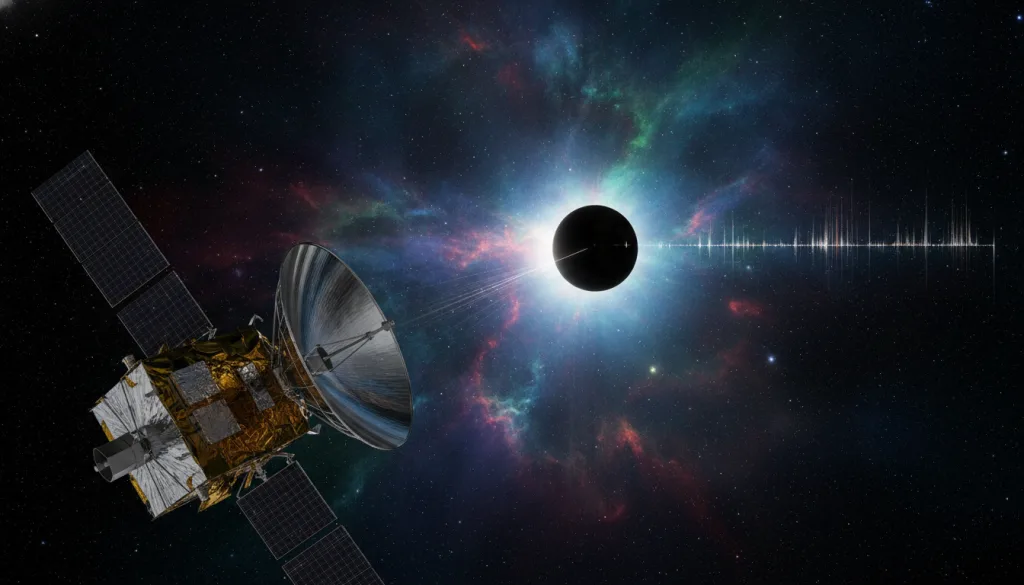
Several specific chemical signatures have been proposed as potential indicators of intelligent life. These include the presence of synthetic molecules and industrial pollutants that do not occur through natural processes.
CFCs and Their Implications
Chlorofluorocarbons, once widely used in refrigeration and aerosol propellants on Earth, serve as a prime example. They have a distinct spectral signature and are not produced by natural processes. The detection of CFCs in an exoplanet’s atmosphere could suggest advanced technological activity. Research by Sara Seager and her colleagues in *The Astrophysical Journal* (2018) outlines methods for detecting CFCs in the atmospheres of terrestrial exoplanets, emphasizing their significance as technosignatures.
The possibility of detecting CFCs depends on the size of the planet and its distance from Earth. For example, Earth-like exoplanets in the habitable zone of their stars are prime candidates for such detection. Advanced spectroscopic techniques could identify CFCs at concentrations similar to those produced by Earth’s industrial activities.
Expanding the Search: Potentially Habitable Exoplanets
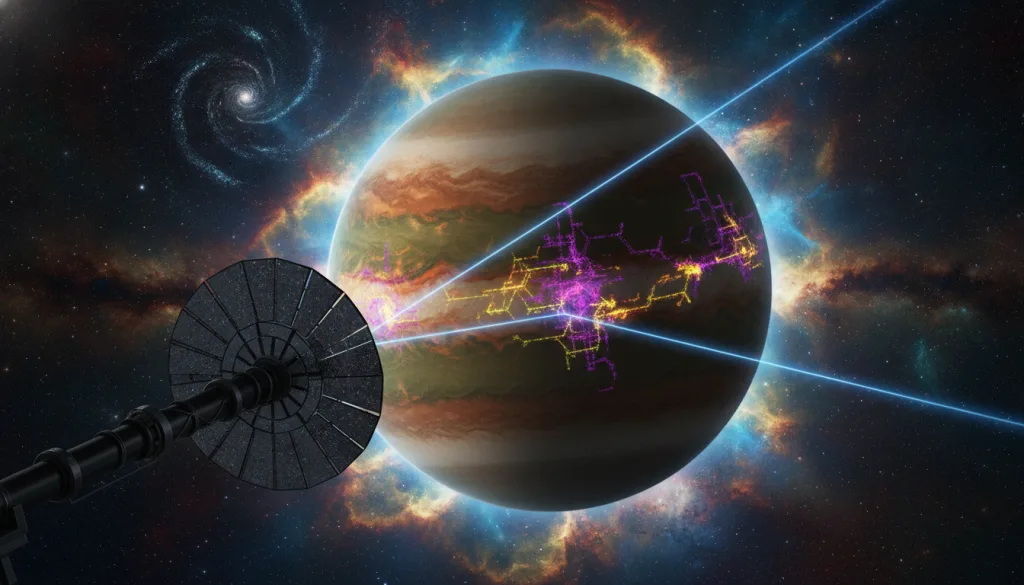
The search for technosignatures is particularly focused on exoplanets located in their star's habitable zone—an area where conditions may allow for liquid water to exist. The *Kepler Space Telescope*, launched in 2009, has identified thousands of such candidates, with many located in the *Kepler-62* and *TRAPPIST-1* systems. These systems present possibilities for identifying life, including intelligent industrial civilizations.
Kepler-186f and Its Potential
One notable candidate is Kepler-186f, an Earth-sized exoplanet located about 500 light-years away in the constellation Cygnus. Research published in *Science* (2014) by Elisa Quintana et al. demonstrated its potential habitability. If intelligent life exists there, the detection of technosignatures could provide compelling evidence of its existence.
Additionally, the TRAPPIST-1 system, located approximately 40 light-years away, hosts three Earth-sized planets within the habitable zone. The potential for industrial technosignatures in these atmospheres makes them prime targets for upcoming observations with JWST.

Challenges in Detecting Technosignatures
Despite advancements, numerous challenges remain in identifying technosignatures. The primary issues include distinguishing between natural and artificial signals and the limitations of current technology.
Natural Versus Artificial Signals
It is critical to differentiate between technosignatures and biosignatures, as well as understand the potential for natural processes to produce similar spectral signatures. For example, methane, a key biosignature, can also be produced abiotically by geological processes. This complicates the interpretation of data collected from exoplanets. According to a 2020 study published in *Nature Astronomy*, researchers emphasize the necessity of context in interpreting atmospheric signatures, particularly when distinguishing between biological and technological origins.
“The challenge of distinguishing between biological and abiotic processes remains one of the most significant hurdles in astrobiology.” — Sara Seager, *Nature Astronomy*, 2020
Furthermore, the immense distances involved mean that signals are often faint and may require sophisticated and sensitive instruments, such as those used in infrared spectroscopy.

The Role of Artificial Intelligence in Detection
Artificial intelligence (AI) is increasingly being employed to sift through vast amounts of astronomical data. Machine learning algorithms can identify patterns in spectra that may indicate technosignatures, effectively enhancing our ability to find subtle signals in the noise.
Machine Learning Applications
Research by the University of California, Berkeley, published in *The Astronomical Journal* (2021), demonstrates the successful application of AI to identify potentially habitable exoplanets by analyzing light curves. As these technologies develop, they will be instrumental in refining our searches for technosignatures.
Moreover, AI can assist in prioritizing targets for observation, thereby optimizing the use of observational time on powerful telescopes like JWST and the upcoming *Nancy Grace Roman Space Telescope*.
Future Prospects in the Search for Technosignatures
The future of technosignature detection is bright, bolstered by both advancements in technology and an increasing understanding of the universe's complexities. Upcoming missions such as the *European Space Agency's* ARIEL (Atmospheric Remote-sensing Infrared Exoplanet Large-survey) aim to explore the atmospheres of exoplanets in greater detail.
ARIEL Mission Objectives
Slated for launch in 2029, ARIEL will focus on characterizing the atmospheres of more than 1,000 exoplanets. By analyzing molecular signatures, including potential technosignatures, ARIEL's findings could reshape our understanding of exoplanetary systems and the possibilities of intelligent life beyond Earth.
Furthermore, the continued collaboration between institutions like NASA, the European Space Agency (ESA), and various universities will enhance our collective capabilities in this field. The synthesis of knowledge and technology marks the beginning of a new era in the search for extraterrestrial intelligence.
Our analysis:
The evidence strongly indicates that the search for technosignatures is not merely a hopeful endeavor; it is a scientifically grounded pursuit with robust methodologies and technological advancements to support it. The convergence of spectroscopy, artificial intelligence, and international collaboration provides a promising path forward. The ethical implications of discovering intelligent life, particularly concerning how we approach this knowledge and its potential societal impact, must also be considered. Ultimately, the investigation of technosignatures offers a unique opportunity to understand our place in the cosmos and the potential for complex life beyond Earth.
Sources & References
Haqq-Misra, J., et al., “The Search for Extraterrestrial Technosignatures,” 2016, Astrobiology.
Clampin, M., "NASA's Webb Space Telescope Captures First Detailed Spectrum of an Exoplanet," 2021, NASA.
Seager, S., et al., “A Method for Detecting CFCs on Exoplanets,” 2018, The Astrophysical Journal.
Quintana, E. V., et al., “An Earth-size Planet in the Habitable Zone of a Sun-like Star,” 2014, Science.
Wang, S., et al., “Machine Learning for Exoplanet Detection,” 2021, The Astronomical Journal.





Comments 0
Be the first to comment!