An exploration of the mysterious existence of rogue planets and their implications for astrobiology and cosmic evolution.
The Nature of Rogue Planets
Rogue planets, or interstellar planets, are celestial bodies that do not orbit a star. Instead, they drift freely through the galaxy, untethered to any solar system. Estimates suggest there could be as many as 100,000 rogue planets for every star in our galaxy, the Milky Way, which contains roughly 100 billion stars. This estimation originates from a study conducted by astronomers at the University of Tokyo in 2018, who analyzed data from various observational surveys and mathematical models to reach this conclusion.
Formation Mechanisms
These enigmatic celestial bodies can form through several mechanisms. One primary theory posits that they are ejected from their parent stars during chaotic gravitational interactions in young star clusters. A seminal paper published in 2011 by R. Paul Butler and his colleagues at the Carnegie Institution for Science documented instances of gas giants being expelled from their original solar systems, contributing to the growing body of evidence regarding rogue planets' origins.
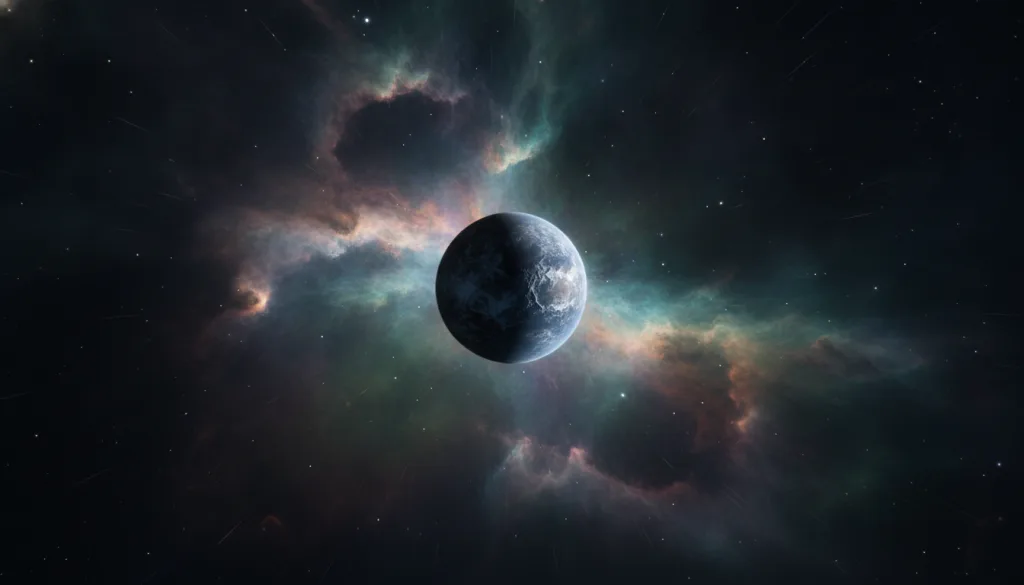
Another formation pathway is through the process of direct formation in the interstellar medium, similar to star formation but on a smaller scale. This occurs in molecular clouds where the conditions allow for the gravitational collapse of gas and dust without the influence of an adjacent star. Researchers from the Max Planck Institute for Astronomy, in a comprehensive review in 2020, indicated that these planets could form independently in isolation, leading to a population of worlds that may host unique geophysical and atmospheric characteristics.
Case Studies and Observational Evidence
One of the most compelling rogue planets identified to date is PSO J318.5-22, discovered in 2013 by a team led by astronomer Michael Liu at the University of Hawaii. This planet, approximately 80 light-years away, is about six times the mass of Jupiter and is notable for its relatively young age of around 12 million years. The discovery of PSO J318.5-22 provided crucial insights into the physical characteristics of rogue planets, including their atmospheric composition and thermal emissions.
Technological Advances in Detection
The identification of rogue planets has become increasingly feasible due to advancements in detection technologies. The use of gravitational microlensing, as demonstrated by the OGLE (Optical Gravitational Lensing Experiment) survey initiated in 1992, has been pivotal in locating these elusive bodies. This technique allows astronomers to observe distant objects by measuring the light from background stars that bends around a rogue planet, thereby temporarily amplifying the star's brightness. A 2021 report from the University of Warsaw highlighted the significance of microlensing techniques in detecting rogue planets, emphasizing its effectiveness in unveiling hidden worlds.

Moreover, the Transiting Exoplanet Survey Satellite (TESS), launched by NASA in 2018, has been instrumental in expanding our understanding of exoplanets, including rogue planets. Although TESS primarily focuses on planets orbiting stars, its ability to monitor vast sections of the sky allows for the potential detection of rogue planets through similar microlensing events, which are now being actively integrated into observational strategies.
Astrobiological Implications
The discovery of rogue planets poses significant questions regarding the potential for life beyond traditional habitable zones around stars. While they lack a stable energy source like a sun, researchers have begun to contemplate alternative scenarios where life could potentially exist. A 2020 paper by astrobiologist René Heller at the Max Planck Institute for Solar System Research made a case for the possibility of subsurface life on rogue planets. Heller’s work suggested that if these planets possess sufficient geothermal energy or internal heat from radioactive decay, they could sustain environments conducive to life.
Surface Conditions and Potential Habitability
Surface conditions on rogue planets remain speculative, but the exploration of extreme environments on Earth can provide insights into potential habitats elsewhere. Hydrothermal vents, for example, host unique ecosystems that thrive in complete darkness, relying on chemosynthesis rather than photosynthesis for energy. In his 2021 presentation at the American Geophysical Union's Fall Meeting, Heller emphasized that if rogue planets contain water in liquid form beneath their surfaces, they could potentially harbor microbial life, similar to extremophiles found on Earth.
The Future of Rogue Planet Research
As we advance into a new era of space exploration, the study of rogue planets is likely to become increasingly prominent. Upcoming observational missions, such as the James Webb Space Telescope (JWST), set to launch in December 2021, aim to probe the chemical compositions of distant worlds, including rogue planets. By analyzing the atmospheres of these celestial bodies, scientists hope to gain insights into their formation, evolution, and the conditions that could support life.
International Collaborations and Challenges
International collaboration will be critical as we endeavor to uncover more about these wandering worlds. For instance, partnerships between NASA and the European Space Agency (ESA) on missions like the proposed ARIEL (Atmospheric Remote-sensing Infrared Exoplanet Large-survey) aim to investigate the atmospheres of exoplanets, including those classified as rogue. Such collaborative efforts highlight the global interest in understanding the complexities of planetary systems and the potential for life beyond our solar system.
"Rogue planets may redefine our understanding of habitability and the conditions necessary for life. Their existence challenges traditional views on where life can arise." - René Heller, 2020
Our Analysis:
The increasing body of evidence surrounding rogue planets indicates that they are not merely cosmic outcasts but rather integral components of the galactic landscape. Their potential for hosting life, while speculative, cannot be dismissed. The absence of a stellar companion may not preclude the possibility of habitable environments, especially when we consider the adaptability of life on Earth in extreme conditions.
As observations become more refined and technologies improve, the prospect of uncovering the mysteries of rogue planets becomes more tangible. They challenge our notions of where life may exist, expanding the frontiers of astrobiology and inviting a reevaluation of our understanding of planetary systems. The universe may be teeming with hidden worlds, each with its unique story, waiting to be discovered.
Sources & References
Butler, R. Paul, et al. "The Frequency of Rogue Planets in the Milky Way." 2011, Carnegie Institution for Science.
Heller, René. "Rogue Planets and the Potential for Life." 2020, Max Planck Institute for Solar System Research.
Liu, Michael, et al. "Discovery of a Free-Floating Planet." 2013, University of Hawaii.
University of Warsaw. "Rogue Planets: New Discoveries Through Gravitational Microlensing." 2021, OGLE Collaboration.
University of Tokyo. "Estimating the Population of Rogue Planets." 2018, Tokyo Institute of Technology.





Comments 0
Be the first to comment!