Exploring the Enigmatic Ruins of Ancient Architecture
In a world where ancient civilizations are often shrouded in mystery, few places evoke such awe and curiosity as the breathtaking site of Puma Punku. Nestled within the Andean highlands of Bolivia, this archaeological marvel presents a conundrum that continues to baffle researchers and enthusiasts alike. The monumental stone structures, composed of massive blocks, are characterized by their astonishing precision and engineering prowess, hinting at a level of technological sophistication that many argue should not have existed in pre-Columbian America.
The allure of Puma Punku lies not only in its grand scale but also in the sheer precision of its construction. The site is part of the larger Tiwanaku complex, which flourished between 300 and 1000 AD. Yet, while Tiwanaku is known for its cultural significance, it is Puma Punku that captures the imagination with its seemingly impossible stonework and enigmatic origins.
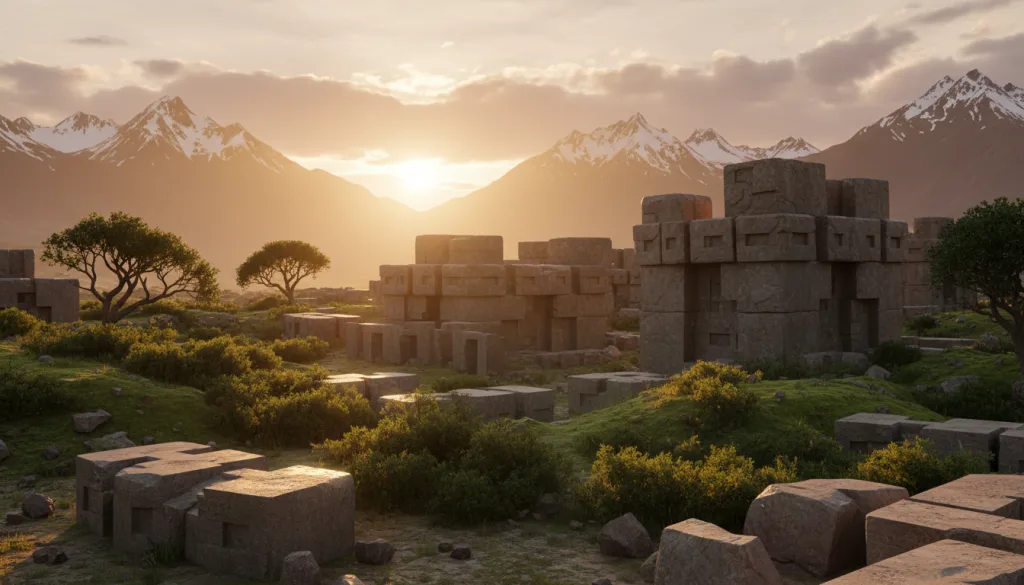
The Engineering Marvels of Puma Punku
Puma Punku measures approximately 1,000 feet long and contains an array of megalithic stone blocks that weigh as much as 130 tons. What sets these stones apart is not merely their size but the precision with which they were fashioned. Each stone is expertly cut and fitted together, boasting interlocking joints that seem to defy the rudimentary tools that were supposedly available at the time.
Archaeologists and historians have long debated the methods employed to achieve such remarkable craftsmanship. Some have posited that the ancient builders utilized primitive tools made from copper or stone, while others suggest the possibility of lost technologies that enabled them to manipulate heavy stones with ease. The blocks are carved with exacting angles and flat surfaces, demonstrating a level of craftsmanship that many modern construction projects would envy.
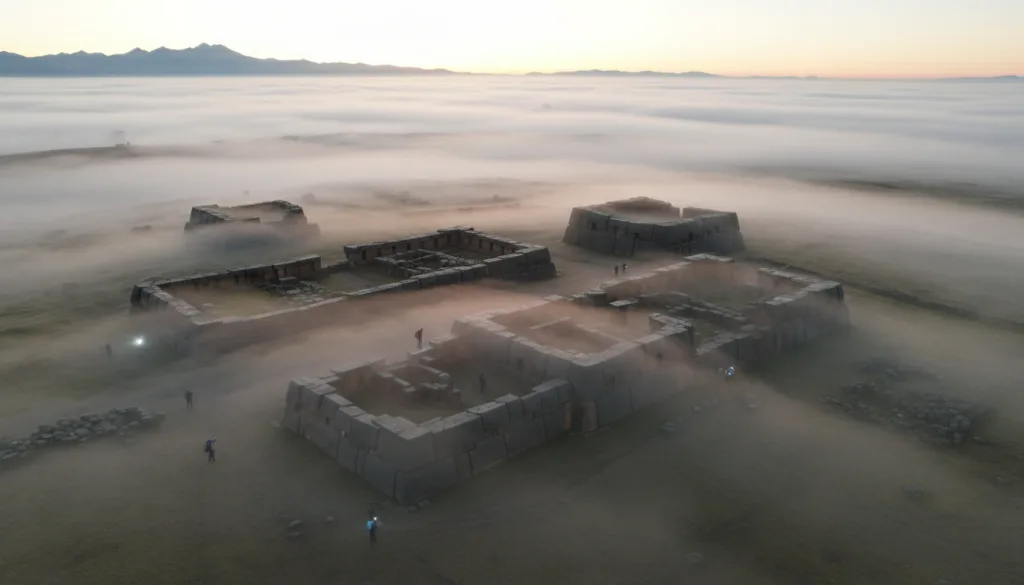
Theories of Construction
Several theories have emerged regarding the construction of Puma Punku. One of the most widely accepted explanations involves the use of ramps and levers, but the logistics of moving such massive stones over rough terrain raises further questions. Could the builders have harnessed a form of ancient knowledge, perhaps even lost to history, that allowed them to manipulate gravity or resonance? The idea seems fanciful, yet those who have studied Puma Punku cannot help but be drawn to the possibility.
Another intriguing theory suggests that the builders possessed advanced knowledge of stone-cutting techniques, akin to what we might consider as "forbidden archaeology." Some researchers have pointed out similarities in the stonework at Puma Punku to other sites around the world, leading to speculation about a shared ancient culture or technology. Perhaps the builders of Puma Punku were part of a broader civilization whose achievements we have yet to fully understand.
The Role of Water in Puma Punku's Construction
One cannot discuss Puma Punku without considering the role water played in its construction. The site is located near Lake Titicaca, and some theorists propose that hydraulic engineering was used to facilitate the movement of stone blocks. The possibility of using water as a lubricant or even for flotation presents an alternative route for transporting these behemoth stones. If true, this theory suggests an advanced understanding of fluid dynamics and engineering that would seem far ahead of its time.
Additionally, the layout of Puma Punku raises questions about its purpose and function. Unlike other ancient sites, which often served primarily religious or ceremonial purposes, the precise engineering of Puma Punku may indicate a more utilitarian design. Some researchers speculate that the site could have served as a workshop or manufacturing center for advanced stonework, with the surrounding area functioning as a hub for trade and innovation.
The Mystique of Lost Civilizations
The enigma of Puma Punku is further accentuated by the idea of lost civilizations. The notion that advanced societies existed long before recorded history has been a captivating theme in both archaeology and popular culture. The idea that Puma Punku could be a remnant of such a civilization invites a sense of wonder and intrigue.
The stories surrounding Puma Punku often evoke images of aliens or ancient astronauts imparting knowledge to early humans. While this may seem sensationalist, it indeed speaks to a deeper yearning to understand our origins and the capabilities of those who came before us. The ancient astronaut theory, though controversial, stirs the imagination and encourages us to question the narratives that have shaped our understanding of humanity's past.

Modern Investigations
In recent years, advancements in technology have provided new avenues for investigating Puma Punku. Researchers have employed satellite imagery, ground-penetrating radar, and 3D modeling to better understand the site and its surrounding landscape. These modern tools have revealed additional structures, suggesting that Puma Punku may be part of a much larger complex than previously thought.
Moreover, studies of the stone composition have uncovered details about the materials used in construction. Some stones at Puma Punku have been found to originate from quarries located over 70 miles away, indicating that the builders must have possessed not only advanced engineering skills but also extensive logistical capabilities. The discovery of ancient roads leading to the site further supports the idea that Puma Punku was central to trade and cultural exchange in the region.
Despite these breakthroughs, many questions remain unanswered. The precise timeline of Puma Punku's construction and use is still debated among scholars, and the true purpose of the site remains elusive. Some argue that the site was a religious center, while others believe it served as a political or administrative hub. The lack of written records from the Tiwanaku civilization only adds to the air of mystery that surrounds Puma Punku.
The Future of Puma Punku
As we gaze toward the future, the preservation of Puma Punku becomes a pressing concern. With climate change and increasing tourism, the delicate structures face threats that could alter their integrity. Archaeologists and cultural heritage advocates are working tirelessly to ensure that this ancient site is protected for future generations.
Moreover, the ongoing research at Puma Punku and the surrounding areas continues to shed light on the rich tapestry of human history. Each new discovery contributes to our understanding of this awe-inspiring site, challenging us to rethink the narratives of progress and innovation that we have long taken for granted. Puma Punku stands as a testament to the ingenuity of our ancestors and the mysteries that still lie ahead.
In a world that often yearns for simplicity and connection to our past, Puma Punku encapsulates the wonders of ancient craftsmanship and the enduring questions about our civilization's origins. As we explore this ancient wonder, we are reminded of the potential for human achievement and the mysteries that still beckon us to uncover the truth.






Comments 0
Be the first to comment!