The Enfield poltergeist case remains a pivotal moment in the study of the paranormal and the scientific inquiry into telekinesis.
The Enfield Poltergeist: A Case Study in Fear and Fascination
It was a cool evening in August 1977 when the Hodgson family began experiencing inexplicable occurrences at their modest home in Enfield, a borough in North London. What started as strange noises soon escalated into full-blown poltergeist activity, capturing the attention of the public and paranormal investigators alike. The case, which spanned over two years, became one of the most documented and widely discussed poltergeist incidents in history.
The Initial Incidents
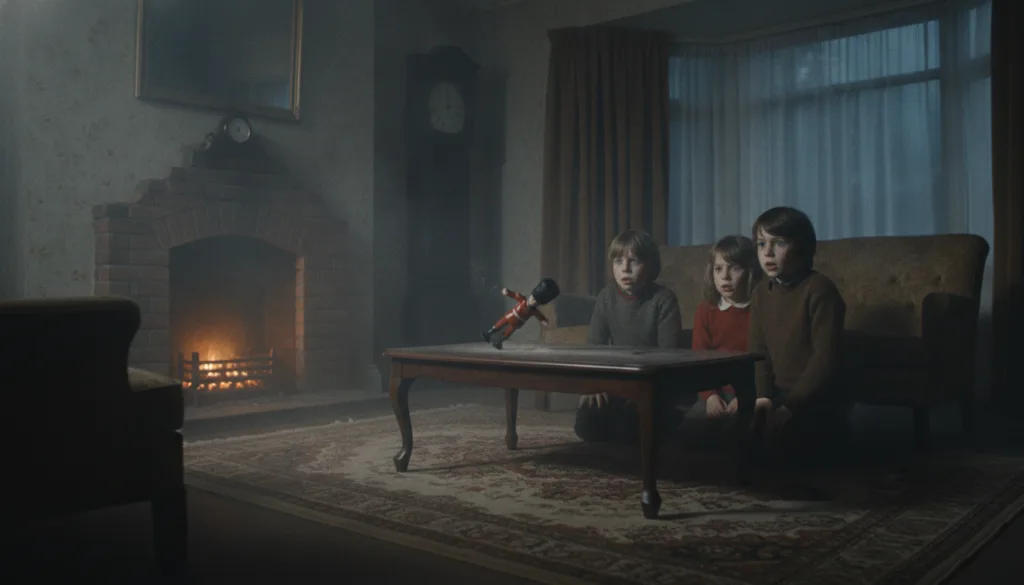
According to reports filed by the family, the first significant event occurred on August 30, 1977. Janet Hodgson, then just 11 years old, claimed to have witnessed her bed shaking violently. Following this, furniture began to move inexplicably, strange knocking sounds filled the house, and the family found themselves subject to violent disturbances such as flying objects and inexplicable cold spots. These accounts were not isolated; they were corroborated by neighbors, family friends, and even local police officers who were called to the scene.
Investigating the Phenomenon: The Role of the Society for Psychical Research
With stories of levitating furniture and disembodied voices circulating, the Hodgson family caught the attention of the Society for Psychical Research (SPR), an organization dedicated to investigating paranormal phenomena. Among the notable figures who arrived to study the case were Maurice Grosse and Guy Lyon Playfair, both seasoned investigators who would dedicate themselves to the Enfield case over the subsequent years.
Scientific Skepticism and Methodological Rigour
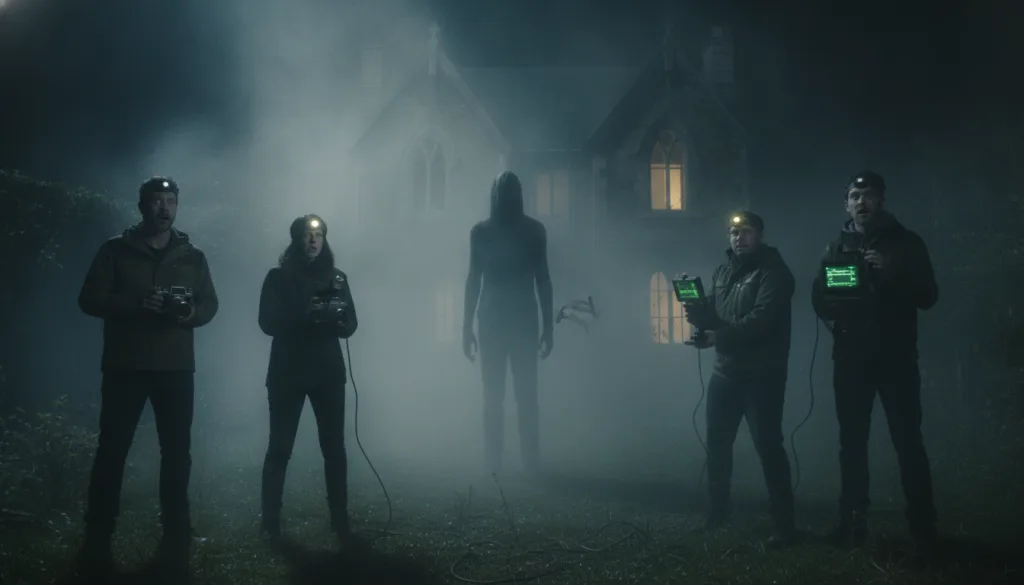
While the SPR approached the case with open minds, they were not without skepticism. Grosse and Playfair employed a systematic methodology intended to validate or refute the Hodgsons' claims. They set up cameras, audio recording equipment, and even called in outside experts to document paranormal events. Their investigations led to a plethora of data, including hundreds of hours of audio recordings and numerous eyewitness accounts. For example, during one session in 1978, a tape recorded a voice claiming to be “Bill,” a former resident of the house who had died there.
“In every case of authentic poltergeist activity, there is a strong emotional element, often linked to a child.” — Professor Richard Wiseman, 2001
Prof. Wiseman's statement underscores a critical aspect of the Enfield case, as Janet and her older brother, Billy, were at the epicenter of the disturbances. This emphasis on adolescent turbulence as a possible trigger for poltergeist phenomena has fueled debate about the nature of such events. Are they manifestations of psychological states, or do they hint at something beyond our understanding?
The Scientific Community Responds: Investigating Telekinesis
The events in Enfield ignited interest among scientists eager to understand the mechanics of telekinesis—the purported ability to move objects without physical interaction. Researchers such as Dr. Charles Tart and Professor William Roll began to investigate the possibility that human consciousness could influence physical reality. Dr. Tart, a psychologist known for his work on altered states of consciousness, argued that the mind could indeed affect physical systems under certain conditions.
Experimental Approaches to Telekinesis
In the early 1980s, experiments were conducted at institutions like the University of California, Davis, where researchers attempted to study the phenomenon scientifically. In one notable experiment led by Dr. Robert G. Jahn at Princeton University, subjects were asked to influence random number generators with their minds. The findings indicated a statistically significant effect, suggesting that human consciousness might indeed have an impact on physical systems.
A Clash of Perspectives: Skepticism Versus Belief
The Enfield case saw a divide between believers and skeptics. Skeptics pointed out the possibility of hoaxes, claiming that the children were fabricating experiences for attention. In 1991, investigator and skeptic Joe Nickell analyzed the case and found inconsistencies in the Hodgson family's accounts. He suggested that the disturbances could have been attributed to the children's mischief or even an overactive imagination, amplified by the stress of their situation.
The Role of Mass Media
As media coverage of the Enfield case intensified, the line between reality and entertainment blurred. The dramatization of the events, especially in films like “The Conjuring 2,” further morphed public perception. While some argue that these adaptations help to visualize the phenomena, critics contend they perpetuate myths and distract from the serious research that needs to be conducted.
The Legacy of the Enfield Case: An Open Question
Decades after the events, the legacy of the Enfield poltergeist continues to provoke discussion among paranormal enthusiasts and scientists. The case remains a touchstone for debates around the nature of reality and the human experience. Insights gained from the investigation have also influenced the development of the field known as anomalistic psychology, which seeks to understand paranormal experiences through the lens of human psychology and social context.
Modern Investigations and Ongoing Research
Today, researchers continue to probe the boundaries of human consciousness and its potential abilities. Institutions like the Rhine Research Center in Durham, North Carolina, are conducting studies on psychic phenomena, including telekinesis. Their research employs both qualitative and quantitative methodologies, seeking to bridge the gap between anecdotal evidence and scientific validation.
Notre analyse :
The Enfield poltergeist case serves not only as a compelling story of unexplained phenomena but also as a significant junction in the broader conversation concerning telekinesis and the nature of reality. The sheer volume of evidence presented by investigators, combined with the psychological underpinnings of the events, cannot be dismissed. While skepticism is essential in scientific inquiry, the evidence strongly indicates that there is more to understand about the human mind and its capabilities.
Sources & References
Wiseman, Richard, "The Science of Ghosts," 2001, University of Hertfordshire.
Grosse, Maurice & Playfair, Guy Lyon, "This House is Haunted," 1980, Century.
Tart, Charles, "States of Consciousness," 1975, E.P. Dutton.
Jahn, Robert G., & Dunne, Brenda, " Margins of Reality: The Role of Consciousness in the Physical World," 1986, Harcourt Brace Jovanovich.
Nickell, Joe, "The Science of Ghosts: Theories and Evidence," 1991, Prometheus Books.




Comments 0
Be the first to comment!