Unraveling the enigmatic journey of our first-known interstellar object
A Cosmic Intruder: The Arrival of Oumuamua
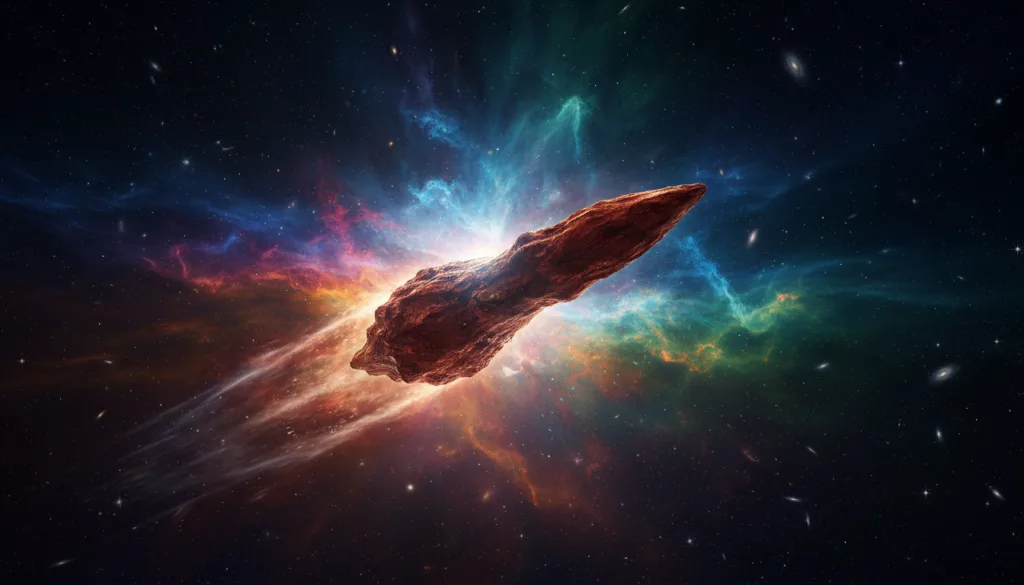
On October 19, 2017, astronomers detected an object unlike any other that had ever graced our solar system. Named 'Oumuamua', which means "scout" or "messenger" in Hawaiian, this cigar-shaped interstellar visitor caught the attention of scientists worldwide. It sped through our cosmic neighborhood at an astounding velocity of 196,000 miles per hour, and its trajectory indicated that it originated from outside our solar system.
The discovery of Oumuamua was groundbreaking. It marked the first time humanity had observed an object that had traveled from another star system, triggering a wave of excitement as well as skepticism in the scientific community. What was this strange object? Where had it come from? What could it teach us about the universe beyond our sun?
As it zipped past the sun and headed back into the depths of space, Oumuamua sparked questions that would challenge our understanding of the cosmos and our place in it.
Characteristics of the Enigma
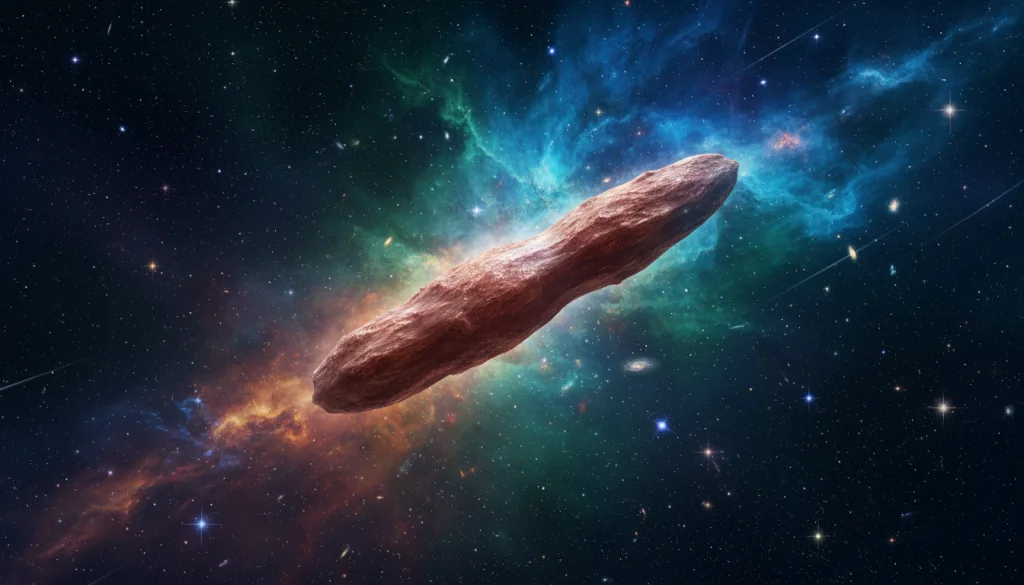
Oumuamua differed significantly from other celestial bodies we encounter. Its elongated, cigar-like shape—estimated to be about 800 meters long—separated it from typical comets and asteroids. This shape raised eyebrows and stoked theories, as such a configuration had never been observed before. Moreover, the object's surface appeared to be very shiny, reflecting around 10% of the sunlight that struck it, a characteristic that deepened the mystery surrounding its composition.
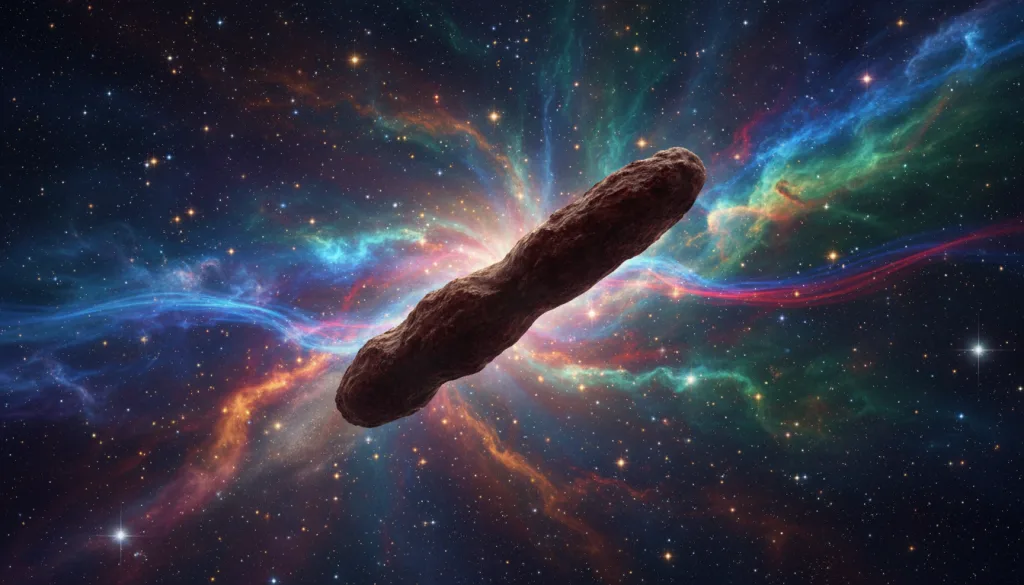
As telescopes trained their lenses on Oumuamua, scientists noted its unusual trajectory. Unlike a typical comet, Oumuamua displayed no visible tail, despite showing signs of acceleration as it moved away from the sun. Some researchers hypothesized that the acceleration could stem from the outgassing of material, common in comets, but no such evidence was found in this case. The absence of a tail led to further speculation about its origin and nature.
Unraveling the Theories
Theories regarding Oumuamua's nature began to emerge almost immediately. Some scientists proposed that it could be a fragment of a larger celestial body, ejected from its home star system. Others suggested that it might be a comet or asteroid with unique characteristics. However, the lack of a visible coma or tail ruled out many conventional explanations.
As the weeks passed, even more radical theories surfaced. Some researchers postulated that Oumuamua might be an artificial object—a spacecraft or probe from an alien civilization. This idea, while tantalizing, met with skepticism from many in the scientific community, who argued that extraordinary claims require extraordinary evidence.
The intrigue surrounding Oumuamua only deepened as astronomers continued studying its trajectory, leading to the conclusion that it came from the direction of the constellation Lyra, possibly from a star system called AFB 113. However, despite extensive investigation, definitive answers about its origin remain elusive.
Astrobiological Implications
Oumuamua has ignited not only scientific curiosity but also profound discussions about the potential for life beyond Earth. The possibility that an object from another star could traverse the vast cosmic distances raises questions about the existence of other civilizations. If intelligent life can create technology capable of interstellar travel, what else might be out there waiting to be discovered?
Astrobiologists have speculated about the implications of Oumuamua's journey. Could it contain microscopic life forms or materials that could provide insights into the building blocks of life? Although such ideas may seem far-fetched, they highlight a growing interest in the potential for interstellar biology and the concept of panspermia—the idea that life could be distributed throughout the universe via comets or meteoroids.
While Oumuamua itself may not have yielded concrete evidence of extraterrestrial life, its appearance serves as a reminder that the universe is vast and mysterious, prompting scientists to look beyond the confines of our solar system.
The Ongoing Mystery and Future Exploration
As of now, Oumuamua continues to pose questions that remain unanswered. Astronomers understand that its journey is not just a fleeting encounter but a representation of the complexity and richness of the universe. Currently, many researchers are working on projects that could enable us to detect and study more interstellar objects like Oumuamua in the future.
Telescopes with advanced capabilities, such as the upcoming Vera C. Rubin Observatory in Chile, promise to widen our observational net. By scanning the night sky more comprehensively, it’s likely that we will identify additional interstellar visitors and possibly uncover more about their origins and properties.
In the meantime, Oumuamua’s legacy as the first known interstellar object remains secure. Its perplexing characteristics and the myriad theories it inspired serve as a catalyst for further exploration and inquiry. Each new discovery in the realm of astronomy brings us closer to understanding our cosmic neighborhood and the unknowns that lie beyond.
Final Thoughts
Oumuamua's enigmatic journey through our solar system serves as a beacon of curiosity for both scientists and enthusiasts alike. It illustrates the wonders and mysteries that the universe holds, encouraging us to continue seeking answers to the questions that lie at the edge of our understanding. While we may never fully unlock the secrets of Oumuamua, it has undeniably opened a doorway to new discussions about the nature of existence beyond Earth. Perhaps, in our pursuit of knowledge, we will eventually learn that we are not alone in this vast universe.





Comments 0
Be the first to comment!