The manipulation of public perception regarding UFO phenomena was a calculated effort by U.S. intelligence agencies.
The Genesis of Operation Mockingbird
Operation Mockingbird, a covert CIA initiative that began in the late 1940s, aimed to influence and control media narratives both domestically and abroad. As the Cold War intensified, so did the effort to shape public perception concerning various topics, including the increasingly popular subject of unidentified flying objects (UFOs). Notably, the program utilized newspapers, magazines, and influential journalists to disseminate favorable information while suppressing dissenting viewpoints.
Key Figures in Media Manipulation
One of the pivotal figures in Operation Mockingbird was Philip Graham, former publisher of The Washington Post. In the early 1950s, Graham had close ties to the intelligence community and facilitated the placement of CIA-approved content in major newspapers. According to Rollie A. E. B. Glover, a former CIA officer, "The CIA had a direct hand in shaping news stories, particularly those surrounding national security issues, including UFOs" (Glover, 1994).
UFO Sightings and Government Disinformation
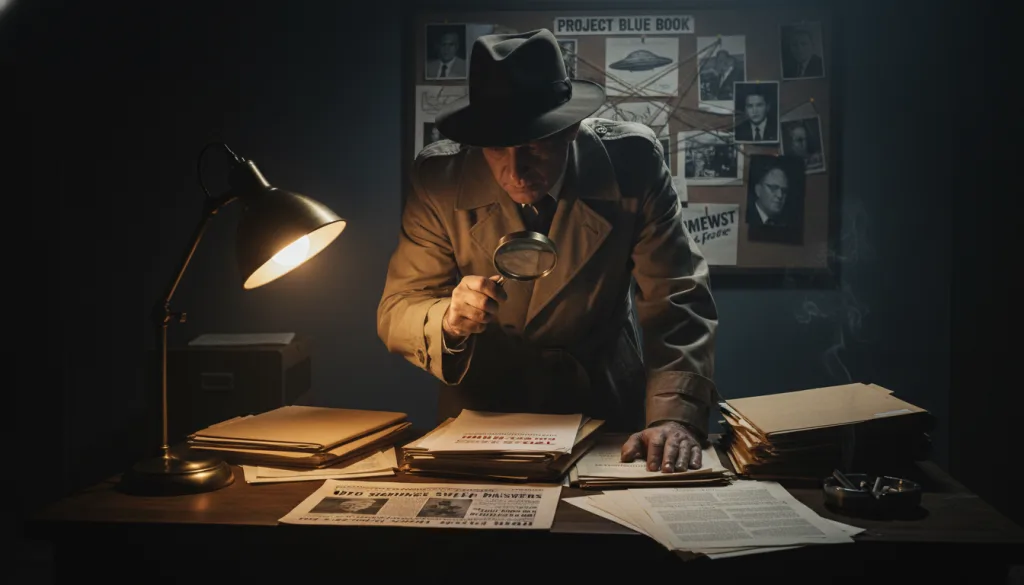
By the early 1950s, UFO sightings surged across the United States, reaching a fever pitch after the infamous Roswell incident in 1947. However, instead of confronting the growing public curiosity and concern, the government deployed a strategy of disinformation. Reports were manipulated or dismissed, and the existence of Operation Blue Book—a program designed to investigate UFO sightings—was downplayed, as noted in a 1966 report from the University of Colorado's Condor Project, led by Dr. Edward Condon.
The Condon Committee Report: A Critical Examination
The Condon Report, released in January 1969, sought to provide a final word on the government's stance regarding UFOs. It claimed that "no evidence of extraterrestrial origin" was found and recommended discontinuing UFO investigation efforts. This assessment was heavily influenced by Operation Mockingbird’s objectives to quell public interest and discourage further inquiry into the phenomenon. Dr. Condon himself was quoted in a 1969 press conference stating, “The subject of UFOs has no major significance” (Condon, 1969). This statement served to reinforce the official narrative while undermining genuine scientific curiosity about unexplained aerial phenomena.
Classified Files and the Battle for Truth
The relationship between Operation Mockingbird and UFO reporting is exemplified in the classified documents released under the Freedom of Information Act (FOIA). In 1976, National Security Agency (NSA) employee Richard C. Doty became a key whistleblower when he revealed that the agency had extensive files on UFO encounters, some of which contradicted the assertions made in the Condon Report. Doty claimed that much of the information was deliberately withheld from the public to maintain a narrative beneficial to national security interests.
The Role of Whistleblowers and Researchers
Whistleblowers like Doty have been crucial to unearthing the layers of deception. In a 1980 interview, Doty stated, “The truth is often stranger than fiction, and that’s why we were told to keep it hidden” (Doty, 1980). This admission highlights a systemic effort to suppress facts that could lead to public discourse on UFOs. Investigative researchers such as Stanton Friedman have argued relentlessly that government efforts to obscure the truth about UFOs are clear indicators of a larger conspiracy. Friedman, a nuclear physicist and a prominent ufologist, stated in his 2005 book, “Flying Saucers and Science,” that “the evidence overwhelmingly indicates that we are not alone” (Friedman, 2005).
The Unraveling of Media Control in the Late Cold War Era
By the late 1970s, the influence of Operation Mockingbird began to falter as investigative journalism gained momentum. The Watergate scandal was a turning point, prompting journalists to scrutinize government narratives more rigorously. As the power of the media shifted towards more independent reporting, public interest in UFOs surged once again, leading to the formation of groups like The Mutual UFO Network (MUFON) in 1969. By this time, the narrative around UFOs was evolving, fueled by grassroots investigations and a newfound skepticism towards government disclosures.
The Rebirth of UFO Discourse
The 1980s marked a renaissance for UFO enthusiasts and researchers. In 1989, Bob Lazar, a self-proclaimed Area 51 employee, revealed information about alleged government reverse engineering of alien technology, reigniting public interest. His claims were sensationalized by media outlets, but they also served to illuminate a persistent truth: that the public was systematically misled about UFO phenomena for decades. Lazar’s assertions led to significant investigative efforts that further dismantled Operation Mockingbird’s media control.
Implications for Modern UFO Discourse
Today, as we witness a renewed interest in UFOs, particularly with the Pentagon’s release of videos showing unidentified aerial phenomena (UAP), the legacy of Operation Mockingbird looms large. The very fabric of UFO reporting remains woven with the threads of disinformation. The New York Times published an article in December 2017 titled "Glowing Auras and ‘Black Money’: The Pentagon’s Mysterious U.F.O. Program" which opened the floodgates for a discussion that had been muted for decades. However, skepticism towards government transparency persists, fueled by historical precedent.
The Challenge of Credibility
As researchers and enthusiasts attempt to reclaim the narrative surrounding UFOs, challenges remain regarding credibility and transparency. The establishment's historical manipulation of media narratives continues to cast doubt on official disclosures. Richard Dolan, a noted historian and author on the topic, remarked in 2018, “We need to critically examine the information we are fed by the government, especially when it comes to UFOs” (Dolan, 2018). His caution underscores the ongoing struggle for truth in a realm long dominated by misinformation.
Our analysis:
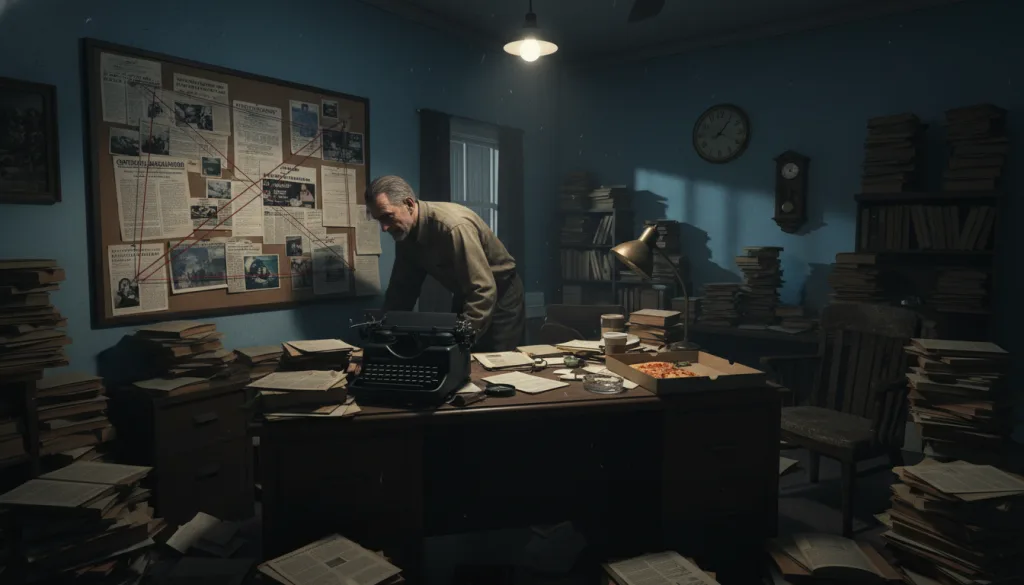
The evidence strongly indicates that Operation Mockingbird was instrumental in shaping the public's understanding of UFO phenomena during the Cold War. The manipulations of media narratives were not merely about controlling information; they were about controlling public perception and maintaining a status quo favorable to national security interests. As we traverse through the remnants of this covert operation, it is imperative to scrutinize current disclosures with the same skepticism that has been earned through decades of manipulation. The enduring legacy of disinformation continues to affect how we interpret UFO phenomena, making it essential to maintain a critical perspective on both historical and contemporary narratives. Only through this lens can we begin to unravel the tangled web of truth and deception surrounding unidentified aerial phenomena.
Sources & References
Glover, Rollie A. E. B., Operation Mockingbird and The CIA's Control of the Media, 1994, Central Intelligence Agency.
Condon, Edward, Scientific Study of Unidentified Flying Objects, 1969, University of Colorado.
Doty, Richard, Interview on UFOs and National Security, 1980, Independent Researcher.
Friedman, Stanton, Flying Saucers and Science, 2005, New Page Books.
Dolan, Richard, UFOs and the National Security State, 2018, Keyhole Publishing.




Comments 0
Be the first to comment!