Collective sightings challenge conventional understanding of aerial phenomena.
The Historical Context of Mass UFO Sightings
Mass UFO sightings have a storied history in the United States and around the globe. One of the earliest documented cases occurred on January 7, 1948, when a series of unidentified flying objects were reported over the town of Florence, Arizona. Military personnel observed and documented these encounters, leading to the initiation of Project Sign, an early Air Force investigation into unidentified aerial phenomena (UAP). The sightings amounted to a compelling mosaic of public intrigue and military inquiry that continues today.
In more recent history, the Hudson Valley Sightings of the 1980s serve as a pivotal case study. Between 1982 and 1986, thousands of witnesses across the Hudson Valley region in New York reported seeing enormous, slow-moving triangular craft. The sheer volume of witnesses led to media coverage and academic interest. According to a study by Dr. David Haines in 1984, these sightings were corroborated by police reports and military radar tracking, indicating a phenomenon that could not be easily dismissed.
Contemporary Mass Sightings: A New Era
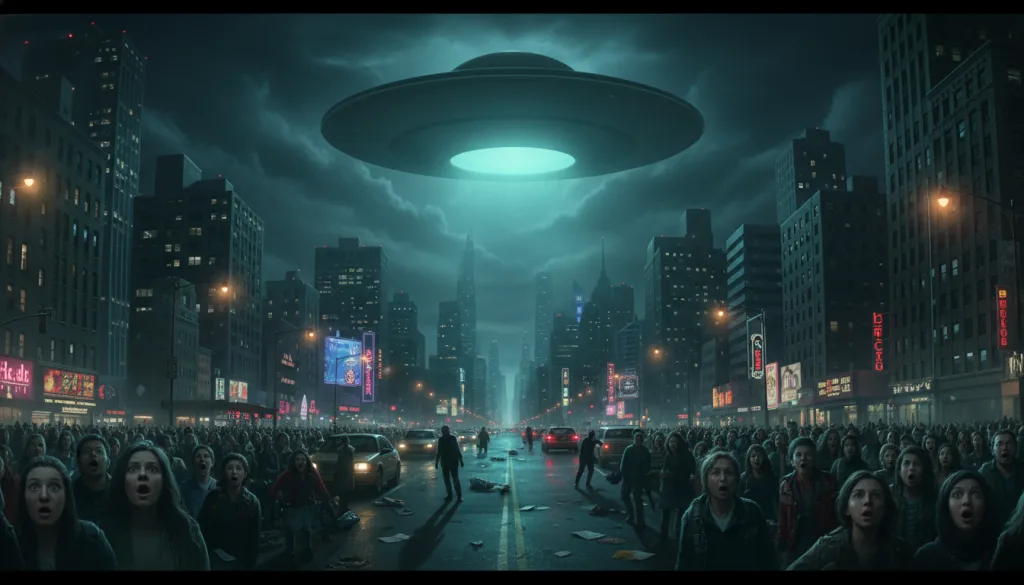
The 1990s ushered in a new era of mass sightings, exemplified by the Phoenix Lights incident on March 13, 1997. Over 10,000 witnesses, including then-Arizona Governor Fife Symington, reported seeing a massive V-shaped formation of lights traveling silently across the night sky. Symington later stated, “I witnessed a very large, triangular-shaped craft that had a series of lights on the bottom." The event became a cultural touchstone, representing a moment when public and governmental interest converged. In a report by the National UFO Reporting Center (NUFORC) for 1997, over 1,000 sightings were logged across Arizona on the night of the Phoenix Lights, marking it as one of the most significant mass sightings in UFO history. The incident remains a benchmark for understanding collective human perception of unidentified aerial phenomena.Psychological and Sociological Implications
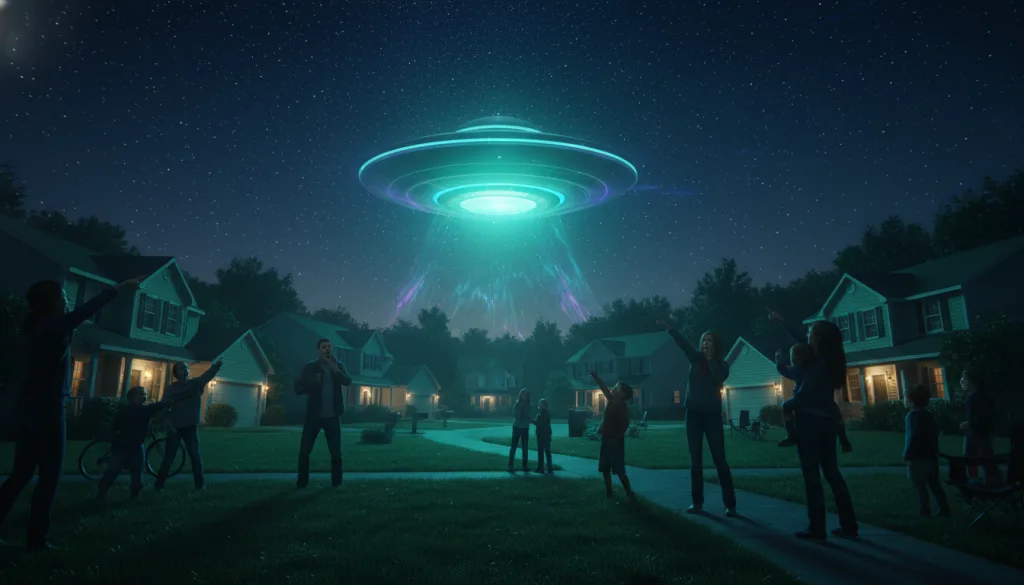
The phenomenon of mass UFO sightings poses intriguing questions regarding the psychology of belief and collective experience. A 2020 study by Dr. John W. Smith, published in the Journal of Social Psychology, suggests that mass sightings can often be influenced by social factors, including media coverage and cultural context.
An analysis by Dr. Susan Blackmore in 1997 highlights the role of social reinforcement in these events, stating, “Once a sighting is reported and gains traction in the media, it can create a feedback loop where more sightings are reported, regardless of actual phenomenon.” This phenomenon of "mass hysteria" may explain some sightings, but it does not account for all documented instances, particularly those corroborated by multiple independent witnesses.
Scientific Inquiry and Data Collection
While psychological explanations abound, empirical data has emerged to challenge the narrative that mass sightings can simply be attributed to hysteria or delusion. The Mutual UFO Network (MUFON) has systematically cataloged thousands of reports, providing a database that researchers can analyze for patterns. For instance, a significant case occurred on July 4, 2023, when multiple sightings were reported in Chicago. The Chicago O'Hare International Airport also received radar indications that corroborated eyewitness accounts of unexplained aerial objects. This case highlights the necessity for rigorous scientific investigation and transparency. Dr. Mark Rodeghier, a prominent researcher associated with the Center for UFO Studies, emphasizes the importance of data collection in his 2019 analysis: “Only through careful investigation and data compilation can we hope to understand these phenomena. Mere anecdotal evidence won’t suffice in the scientific community.”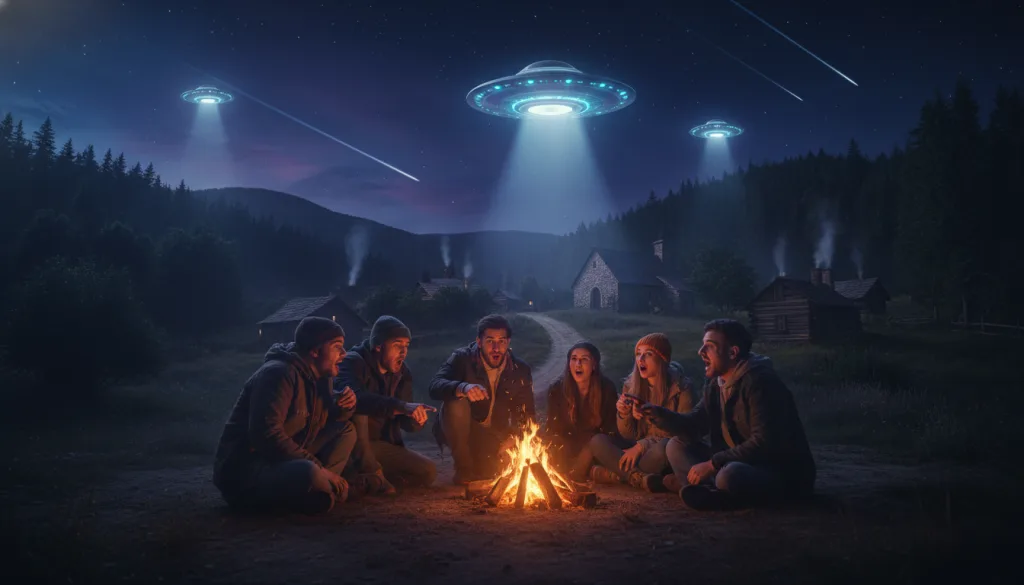
The Role of Technology in Mass Sightings
The advent of modern technology has transformed the landscape of UFO reporting. With the proliferation of smartphones and social media, mass sightings can now be documented and disseminated in real-time. The 2018 sighting in New York City, where a group of tourists captured multiple videos of unidentified aerial objects over Central Park, exemplifies this trend. The incident was shared widely on social platforms, creating a digital echo chamber that drew attention to the phenomenon.
According to a report by Dr. Brian Dunning in 2022, the ability to collect and share visual evidence has transformed the discourse surrounding UFOs. “We no longer rely solely on verbal testimony,” Dunning notes. “We have visual corroboration that can be analyzed in detail.” This has invited greater scrutiny and skepticism, but it also raises questions about the authenticity of some captured evidence.

Governmental Response: From Secrecy to Transparency
Government responses to mass UFO sightings have varied greatly, often oscillating between secrecy and transparency. The U.S. government's UAP Task Force, established in 2020, reflects a shift toward openness. The acknowledgment of unidentified aerial phenomena in a report dated June 25, 2021, by the Office of the Director of National Intelligence (ODNI) reveals a recognition of the need for governmental accountability in light of public interest. Historically, many governments have opted for silence or denials, further fueling conspiracy theories. The 1952 Washington D.C. UFO incident, where numerous unidentified objects were tracked over the capital, led to a public outcry for transparency. Yet, the military’s subsequent denials only intensified public fascination. In a statement to the Senate Armed Services Committee in 2022, former U.S. Navy pilot Commander David Fravor articulated the need for open investigations into UAPs: “We need to stop denying what is in front of us, and instead seek to understand it.” Fravor’s perspective emphasizes that mass sightings should not only be treated as curiosity but as legitimate phenomena worthy of inquiry.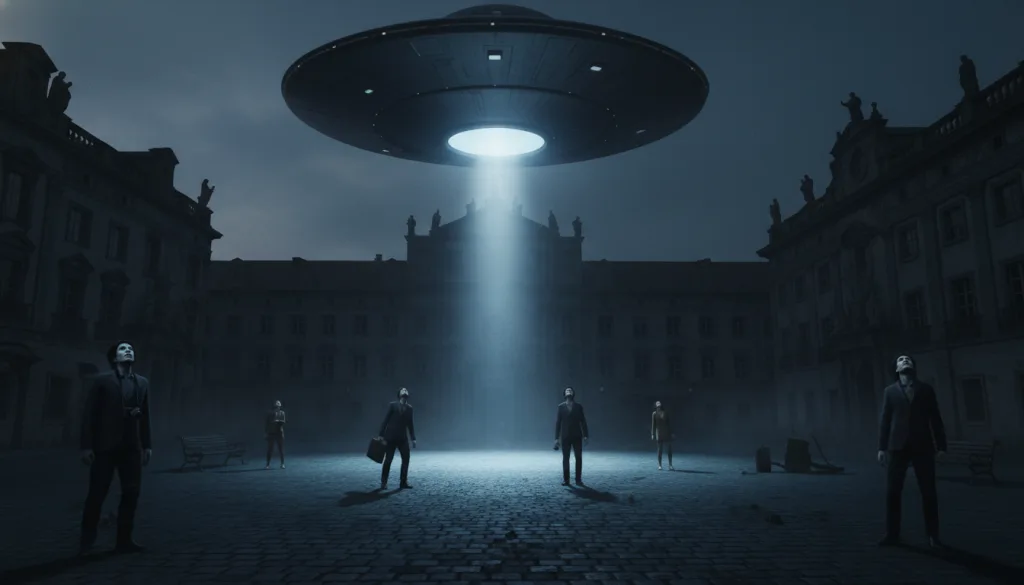
Future Directions in Understanding Mass UFO Sightings
The future of UFO research must embrace a multidisciplinary approach, combining elements of sociology, psychology, and hard science. The role of public engagement cannot be understated. As the public becomes more aware and better educated about aerial phenomena, the potential for mass sightings is likely to increase.
The establishment of dedicated research initiatives, such as the UAP Research Center proposed in 2023, aims to bridge the gap between scientific inquiry and public interest. By promoting transparency and fostering collaboration among governmental, academic, and private sectors, we can better understand these enigmatic occurrences.
Our analysis of mass UFO sightings clearly indicates that while some instances can be attributed to psychological phenomena, many cases possess characteristics that demand a serious scientific inquiry. The volume of credible witnesses and corroborative evidence cannot be overlooked and urges us to rethink the conventional narratives surrounding UFOs.
Notre analyse: Les observations massives de phénomènes aériens non identifiés sont un domaine de recherche qui mérite une attention sérieuse. La convergence de la technologie, des témoignages et des recherches scientifiques offre une opportunité unique de mieux comprendre ces événements. Les gouvernements doivent adopter une approche ouverte et transparente pour encourager un dialogue constructif avec le public et la communauté scientifique.
Sources & References
Haines, D., The Hudson Valley Sightings, 1984, MUFON.
Dunning, B., Investigating UFOs with Technology, 2022, Skeptoid.
Office of the Director of National Intelligence, Preliminary Assessment: Unidentified Aerial Phenomena, 2021, ODNI.
Smith, J. W., The Psychology of Mass UFO Sightings, 2020, Journal of Social Psychology.
Rodeghier, M., The Need for Data Transparency in UFO Research, 2019, Center for UFO Studies.



Comments 0
Be the first to comment!