Exploring how ancient cultures may have reached for the cosmos long before modern science.
Ancient Astronomers: The Knowledge of the Skies
From the Sumerians to the Mayans, ancient civilizations exhibited a profound understanding of astronomical phenomena. The Sumerians, who thrived in Mesopotamia around 3500 BCE, created one of the earliest known systems of writing, cuneiform, which included astronomical records. Scholars like John D. North in his 1994 book "The Ambassadors of the Stars" argue that these records indicate an ambitious attempt to catalogue celestial movements and predict celestial events.
By 250 BCE, the ancient Greeks built upon this foundation. Hipparchus, often called the father of astronomy, developed a star catalogue that established a framework for future astronomers. His work laid the groundwork for Ptolemy's "Almagest" in 150 CE, which remained the authoritative text on astronomy for over a millennium. Ptolemy's geocentric model, while later disproven, showed the complexity of ancient astronomical knowledge.
In the Americas, the Mayans demonstrated a similarly sophisticated understanding of celestial events. They had a calendar system that could predict solar and lunar eclipses with remarkable accuracy. The Dresden Codex, a Mayan manuscript created around 1200 CE, includes detailed astronomical tables that reveal their advanced knowledge of cycles, particularly concerning Venus. This points to a clear correlation between their agricultural practices and celestial events, suggesting they looked to the stars for guidance in their daily lives.
Architectural Alignments: Structures and Celestial Events
The architecture of ancient societies often reflects a deep-seated connection to the cosmos. Stonehenge, constructed around 2500 BCE in England, is a prime example. Archaeologists like Mike Parker Pearson have demonstrated that the structure aligns with the summer solstice sunrise and winter solstice sunset. This alignment suggests that the builders had a specific interest in solar events, positing that they may have gathered there for rituals or astronomical observations.
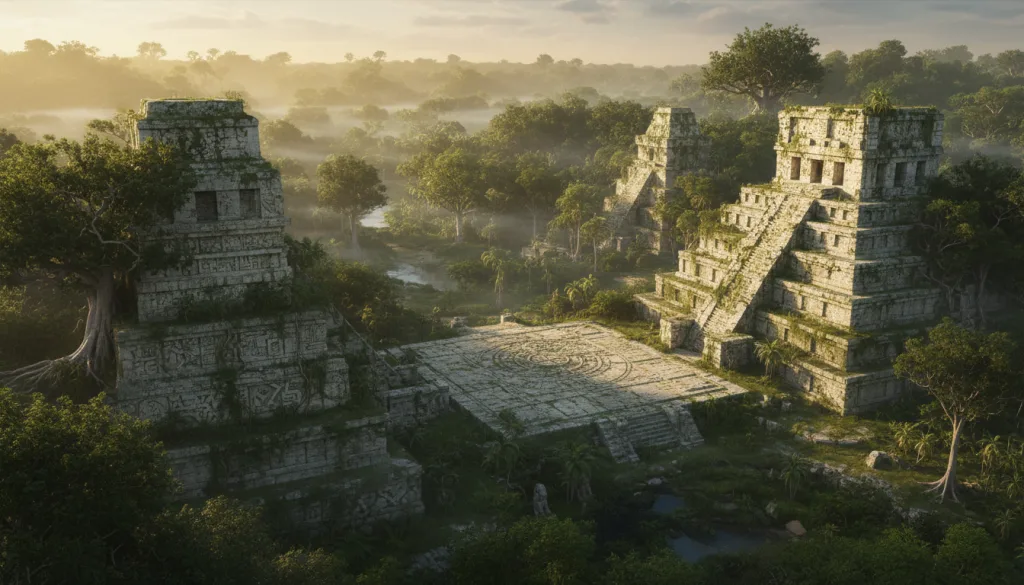
In Mesoamerica, the Pyramid of the Sun at Teotihuacan, built around 100 CE, also exhibits astronomical alignments. Researchers such as Patricia L. Crown from the University of New Mexico have noted that its design correlates with the rising sun on specific dates, hinting at a ceremonial significance tied to solar observations. This reflects a cultural practice of aligning monumental architecture with celestial phenomena, reinforcing the idea that these civilizations viewed the cosmos as integral to their existence.
Similarly, the Great Pyramids of Giza, completed around 2560 BCE, align with the three stars of Orion's Belt. Renowned archaeologist Mark Lehner has argued this alignment suggests a connection to Osiris, the Egyptian god of the afterlife, indicating that the ancients may have believed in a cosmic order that extended beyond Earth. The intentional design of these structures reveals that they were not merely tombs but were embedded with astronomical significance.
Artifacts and Their Cosmic Representations
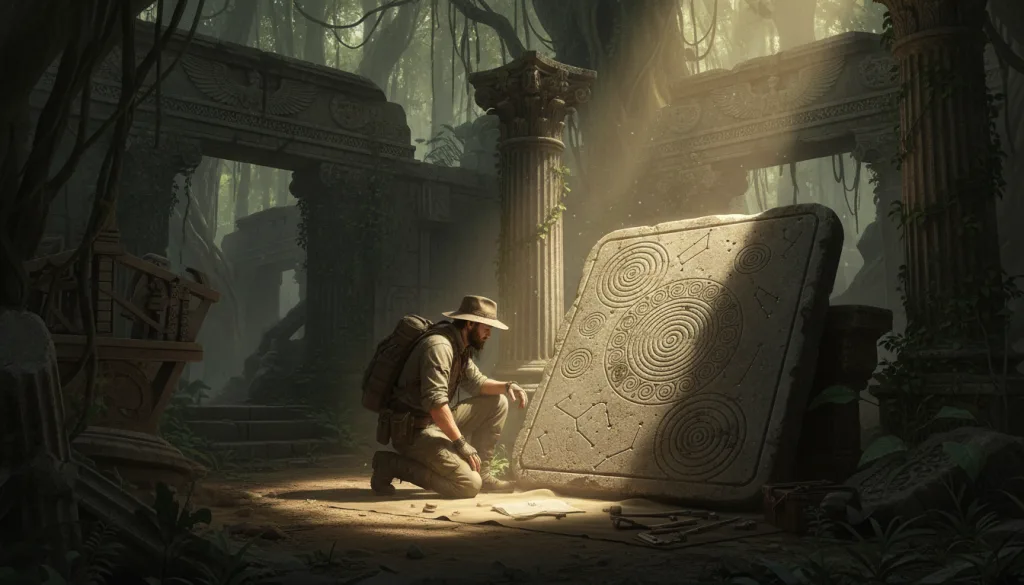
The artifacts left behind by ancient civilizations often reveal their fascination with the stars. The Nazca Lines in Peru, created between 500 BCE and 500 CE, consist of enormous geoglyphs depicting animals, plants, and geometric shapes. Researchers like Maria Reiche, who dedicated her life to these geoglyphs, proposed that some alignments correspond to celestial bodies, including the sun and the stars. The sheer size of the lines and their visibility from the air suggest an intentionality that aligns with astronomical observations.
In addition, the Dogu figurines from Japan, dating back to around 14,000 BCE, have sparked debate among researchers regarding their purpose. Some theorists, like Richard H. D. Merlino, have suggested that the exaggerated features of these figures, including what appear to be helmets or spacesuits, may hint at ancient cosmic knowledge or interactions with extraterrestrial beings, despite the absence of direct evidence to support such claims. This interpretation, while controversial, reflects a broader tendency in ancient cultures to ascribe significance to celestial beings or visitors.
Furthermore, the ancient Egyptians crafted the famous Egyptian Book of the Dead, dating to around 1550 BCE, which includes spells and rituals to assist the deceased on their journey through the afterlife. Some scholars, such as Dr. Jeremy N. Rosso, have suggested that the book contains references to celestial navigation and constellations, underscoring the Egyptians’ desire to connect their spiritual beliefs with the cosmic order. This highlights how ancient peoples conceptualized the afterlife in relation to the stars.

Oral Traditions and Celestial Myths
Oral traditions are a rich source of insight into how ancient civilizations viewed their connection to the cosmos. Australian Aboriginal cultures have long told Dreamtime stories that recount the creation of the stars and constellations. According to anthropologist Dr. David K. Brown, these stories are not merely myths; they are instructional narratives that detail navigation techniques and seasonal changes based on celestial movements, indicating a sophisticated understanding of astronomy.
The ancient Greeks, too, wove celestial observations into their mythology. The stories of Orion and Ursa Major serve not only as entertainment but as moral lessons, reflecting the significance of the stars in agricultural and navigational practices. Renowned classicist Robert K. G. Johnson posits that these narratives reveal a cultural framework that shaped the Greeks' understanding of the cosmos, illustrating that mythology served as a narrative device for explaining astronomical phenomena.
Similarly, the Inca civilization revered the Milky Way, which they called "the Cosmic Serpent." Research by Dr. Brian S. E. Hurst indicates that the Incas incorporated celestial navigation into their agricultural practices and social organization. The alignment of their agricultural cycles with celestial events underscores the importance of the stars in their daily lives and governance.
Modern Implications and Ancient Wisdom
The connection between lost civilizations and the stars has implications that resonate in contemporary society. The work of researchers like Graham Hancock, who authored "Fingerprints of the Gods" in 1995, suggests that advanced civilizations existed in prehistoric times, sharing knowledge of astronomy that has been lost to history. Hancock’s controversial theories challenge mainstream archaeological narratives, positing that these societies may have had a more sophisticated understanding of the universe than previously thought.
Similarly, in 2021, physicist Michio Kaku argued that ancient peoples may have been far more advanced in their understanding of the cosmos than modern science appreciates. He cites the construction of megalithic structures and alignment with celestial bodies as evidence of this advanced knowledge. Kaku’s perspective encourages a reevaluation of how we interpret ancient artifacts and structures, suggesting that they might hold keys to understanding our own place in the universe.
Furthermore, the advent of new technologies in archaeology, such as LiDAR scanning and satellite imagery, allows modern researchers to uncover previously hidden sites with astronomical significance. For instance, in 2018, researchers discovered a massive structure in a remote area of the Amazon rainforest that aligned with celestial events, dating back to a civilization thought to be long gone. These findings illustrate that there is still much we do not know about our ancient ancestors and their connections to the stars.
The evidence strongly suggests that ancient civilizations were not merely primitive societies but rather dynamic cultures with a profound relationship with the cosmos. Their astronomical knowledge and architectural achievements challenge the narrative of linear progress in human history and open doors to understanding lost wisdom that may still inform modern scientific inquiry.






Comments 0
Be the first to comment!