The enigmatic narrative of John Titor raises profound questions about time travel and its implications.
The Emergence of John Titor
In the late 20th century, the internet became a fertile ground for fringe theories and speculative narratives. Among these was the story of John Titor, who claimed to be a time traveler from the year 2036. His initial posts appeared on the Time Travel Institute forums in November 2000, capturing the imagination of a generation. By March 2001, Titor had gained a substantial following, leading to intense discussions about his theories on time travel, alternate timelines, and the socio-political implications of his purported experiences.
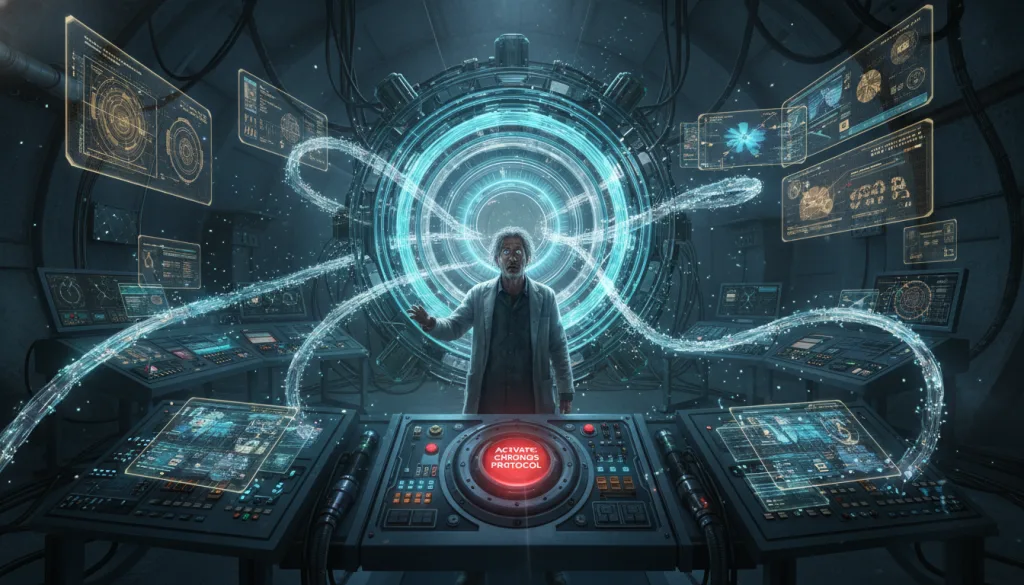
Titor's persona was meticulously crafted. He described himself as a soldier in a post-apocalyptic future, designated to retrieve an IBM 5100 computer, which he claimed was essential for debugging legacy computer systems. His claims included detailed descriptions of time travel mechanics, alternate timelines, and civil unrest in the United States. According to Titor, the future was rife with conflict, specifically a civil war that would erupt in 2005, culminating in a widespread societal collapse. The credibility of his narrative was bolstered by specific technological jargon and hypothetical scenarios that resonated with the audience.

Analysis of Titor's Technology Claims
Titor’s description of the time machine operated on principles akin to theoretical physics concepts, including quantum mechanics. He articulated a model in which time travel was possible through a “multiverse” framework, drawing on concepts that echo those proposed by physicists like Hugh Everett III in 1957. Titor referenced “closed time-like curves” and the need for “exotic matter” to stabilize a time machine.
His assertions align with certain interpretations of quantum physics. The concept of parallel universes, often cited by Titor, has roots in the Many-Worlds Interpretation. This theory postulates that all possible outcomes of quantum measurements are realized in some “branch” of the universe. David Deutsch, a prominent physicist, noted in 1997 that “the multiverse concept is not just a whimsical notion; it is a serious theoretical framework that some physicists use to explain quantum phenomena.” This lends some credence to Titor's claims, despite their speculative nature.

Impact on Culture and Speculation
The narrative spun by Titor quickly transcended the confines of online forums, influencing popular culture and engaging a wide array of scholars, conspiracy theorists, and enthusiasts. Discussions surrounding his claims infiltrated blogs, podcasts, and even academic circles. His influence is evident in the resurgence of interest in time travel narratives across various media, including television series like "Dark" and films such as "Predestination." A considerable part of this fascination stems from the compelling nature of Titor’s predictions and his seemingly detailed knowledge of future events.
Despite Titor’s captivating story, skeptics emerged swiftly. Notable among them was physicist Brian Cox, who stated in 2014 that “time travel to the past is inherently problematic and remains firmly in the realm of science fiction.” This skepticism is grounded in the lack of empirical evidence supporting Titor's claims. The absence of verifiable predictions and the vagueness surrounding his proposed timeline of events further fueled skepticism.
The Legacy of John Titor
As time progressed, the significance of Titor's narrative evolved. By 2003, the predicted civil unrest had not occurred, leading many to dismiss him as a hoax. However, Titor's followers often cite the ambiguity of his predictions and the nature of time travel itself as reasons to remain engaged with the narrative. The phenomenon surrounding John Titor has since been analyzed through various lenses, including psychology and sociology. The narrative serves as a case study in how fringe beliefs can take root in the digital age.
While many of Titor's predictions have been discredited, certain aspects of his narrative have endured. For instance, his warnings about societal division resonate with contemporary issues in the United States. This connection has led some to believe that Titor's story may have served as a form of social commentary rather than a literal account of time travel. In this way, Titor's legacy transcends mere speculation about time travel; it invites an exploration of human consciousness and sociopolitical dynamics.
“The human mind is prone to narrative construction, often weaving intricate tales from fragments of reality and imagination. Titor’s legend exemplifies this tendency.” - Dr. Jennifer S. Holt, 2020

Notre analyse :
Our analysis of John Titor's narrative reveals a complex interplay between science, culture, and psychological phenomena. Titor’s story highlights both the allure of time travel as a concept and the broader human desire for understanding and control over fate. The evidence strongly indicates that Titor's claim was not merely a hoax but a reflection of societal anxieties at the turn of the millennium. His narrative serves as a cautionary tale about the power of belief and the consequences of unverified claims in an increasingly interconnected world.
Sources & References
Everett III, Hugh. “Relative State Formulation of Quantum Mechanics.” 1957, Princeton University.
Cox, Brian. “Wonders of the Universe.” 2014, BBC.
Deutsch, David. “The Fabric of Reality.” 1997, Penguin Books.
Holt, Dr. Jennifer S. “The Psychology of Conspiracy Theories.” 2020, Journal of Social Psychology.




Comments 0
Be the first to comment!