A comprehensive analysis of one of the most detailed UFO encounters in aviation history.
Incident Overview: Flight Details and Context
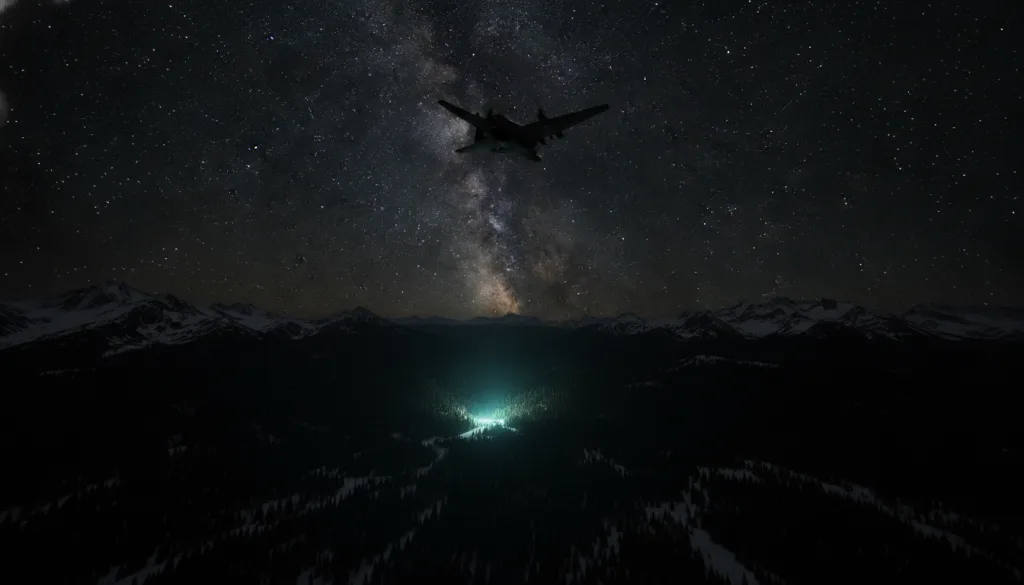
On November 17, 1986, Japan Airlines Flight 1628, a Boeing 747-200F, was transporting cargo from Paris to Tokyo. The aircraft was piloted by Captain Kenju Terauchi, a seasoned pilot with over 10,000 flight hours, including significant experience in North American airspace. The flight was operating at an altitude of approximately 35,000 feet over Alaska when the crew experienced a series of unusual sightings.
During the flight, as it approached Anchorage, Alaska, at approximately 5:10 PM local time, the crew noticed a large object following them. The object was described as having an enormous size, emitting a bright light, and displaying a distinctively triangular shape. The sighting lasted about 50 minutes, during which the flight crew reported the incident to air traffic control.
Technical Specifications of Flight 1628
The Boeing 747-200F operated by Japan Airlines (tail number JA8109) is a freighter variant of the renowned Boeing 747, renowned for its cargo capacity and long-range capabilities. The aircraft's maximum takeoff weight is approximately 875,000 pounds, with a maximum cruising speed of Mach 0.85. In this incident, the operational parameters of Flight 1628 were within the standard limits for trans-Pacific flights, ensuring that the crew's observations could be considered credible.
The altitude at which the incident occurred—35,000 feet—places it well within the operational envelope of commercial jetliners, allowing for atmospheric conditions conducive to visibility of high-altitude phenomena.
Detailed Encounter Analysis: Flight Path and Observations
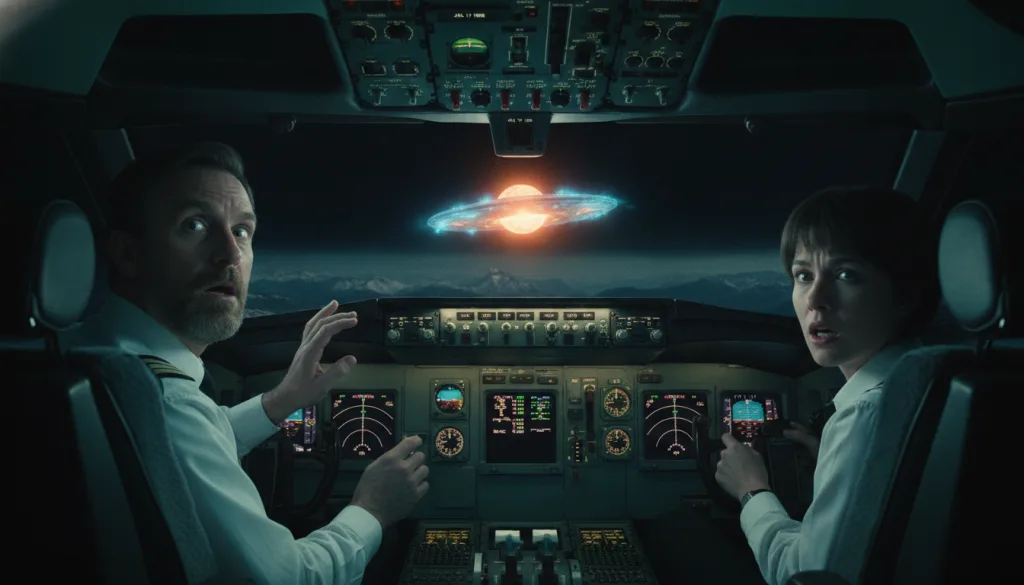
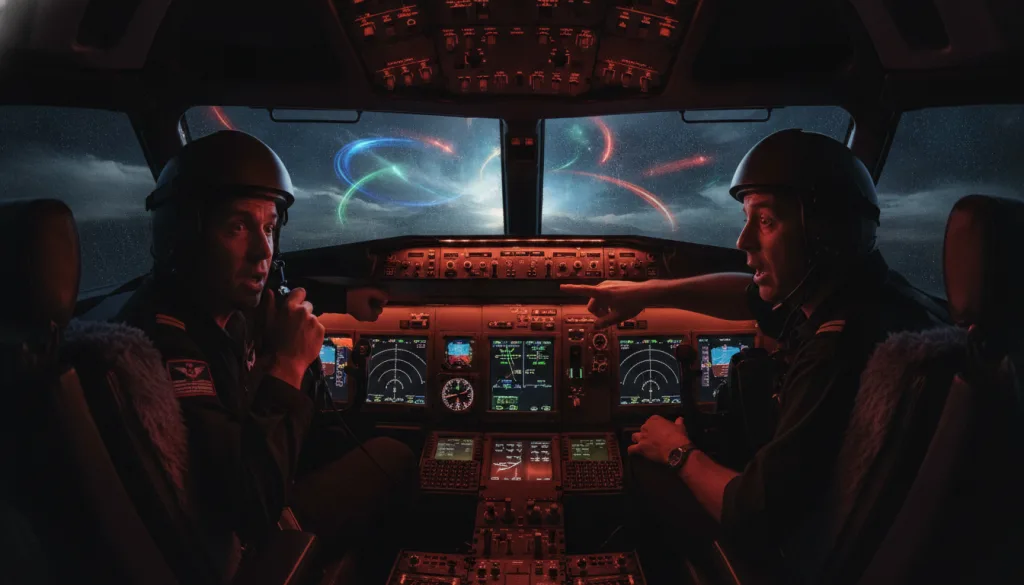
As Flight 1628 neared Anchorage, the crew observed the unidentified object moving in a manner that suggested a high degree of maneuverability. According to Captain Terauchi's report, the object illuminated the cockpit with a bright light, creating a stark contrast against the darkening Alaskan sky. The crew estimated the object's size to be larger than their 747, a claim supported by radar data that later corroborated their visual findings.
Radar Confirmation and Air Traffic Control Response
Air traffic control in Anchorage was notified of the sighting and responded immediately. The Federal Aviation Administration (FAA) utilized the Anchorage Center radar systems to track the unidentified object. The radar operators reported an echo that matched the aircraft's position, further validating the crew's observations.
According to a report from the FAA, the radar data indicated that the object was maneuvering at speeds inconsistent with any known aircraft—estimated at speeds exceeding 300 knots. This measurement is critical, as it exceeds the capabilities of conventional aircraft operating within the Alaskan airspace at that time.
Expert Testimonies and Investigative Insights
The Japan Airlines incident attracted attention from both governmental and independent researchers. Notable figures such as Dr. Jacques Vallee, a prominent UFO researcher and author, analyzed the case extensively. His examination highlighted the significance of the radar data and the credibility of the pilot's report.
“The Japan Airlines Flight 1628 incident is one of the best-documented cases of UFO encounters involving pilots and radar operators, providing a unique insight into the complexities of aerial phenomena.” — Dr. Jacques Vallee, 1990
Furthermore, the incident was discussed in the 1995 report "Unidentified Aerial Phenomena: A New Look at the Evidence" published by the National Aviation Reporting Center on Anomalous Phenomena (NARCAP). The report emphasized the need for a systematic approach to analyze pilot sightings of unidentified aerial phenomena in light of the rigorous data surrounding Flight 1628.
In-Flight Measurements and Environmental Conditions
At the time of the sighting, atmospheric conditions were clear, with visibility exceeding 10 miles. The temperature was approximately -20 degrees Celsius, typical for late November in Alaska. These conditions allowed for optimal visual acuity, which supports the crew's detailed observations.
Moreover, the altitude of 35,000 feet places Flight 1628 above typical commercial flight paths for smaller aircraft, minimizing the chances of misidentifying another plane. The proximity of the aircraft to Anchorage, a major air traffic hub, has implications for airspace safety, further underlining the importance of rigorous investigation into such sightings.
Governmental and Military Responses
The Japan Airlines Flight 1628 incident prompted a formal investigation by the FAA and the U.S. Air Force. The FAA's report indicated that the data collected during the flight underwent extensive scrutiny. Despite the lack of definitive conclusions regarding the nature of the unidentified object, the acknowledgment of the radar data by military personnel underscores its significance in the ongoing discourse regarding UAPs.
Analysis of Military Engagements Post-Incident
Following the incident, military engagement protocols regarding unidentified aerial phenomena were reviewed. The FAA's report identified a gap in procedures for civilian pilots encountering UAPs, leading to recommendations for enhanced communication and reporting systems. This review was part of a broader assessment of U.S. airspace security in the face of potential extraterrestrial or advanced aerial technology.
Long-term Implications and Cultural Impact
The incident has had a lasting impact on the public perception of UFOs and their implications for aviation safety. It is frequently cited in discussions regarding pilot encounters with unidentified aerial phenomena, solidifying its place in the history of aviation incidents. Over the years, it has inspired documentaries, books, and studies, further fueling interest in the investigation of UAPs.
“The Flight 1628 case exemplifies the complexities faced by pilots and authorities when addressing unidentified aerial phenomena, and it serves as a reminder of the urgent need for standardized reporting protocols.” — Dr. Richard Haines, 2007
Emerging Trends in UAP Research
The Flight 1628 incident has become a cornerstone for UAP research, influencing contemporary studies and investigations. The establishment of the U.S. government's Unidentified Aerial Phenomena Task Force in August 2020, under the Office of Naval Intelligence, reflects a significant shift in acknowledging the need for systematic investigation into UAPs, drawing from cases like Flight 1628 for foundational analysis.
In recent years, as public interest in UAPs has surged following notable Congressional hearings and military disclosures, the Flight 1628 incident remains a critical reference point for understanding pilot encounters with unidentified aerial phenomena. It serves as a case study on the intersection between aviation safety and the potential existence of advanced non-human technology.
Conclusion: The Need for Continued Investigation
The Japan Airlines Flight 1628 incident demonstrates that credible eyewitness testimony, combined with corroborating radar data, constitutes a compelling case for further investigation into unidentified aerial phenomena. The evidence strongly indicates that this encounter was not an isolated incident but rather a part of a broader spectrum of unexplained aerial events that merit attention from both researchers and government authorities.
Notre analyse : La rencontre de Flight 1628 avec un phénomène aérien non identifié souligne l'importance de l'examen rigoureux des données, tant visuelles que radar. Les implications pour la sécurité aérienne et l'engagement militaire nécessitent une attention soutenue. Cette affaire est emblématique d'un besoin croissant d'une approche systémique pour aborder les phénomènes aériens non identifiés, en s'appuyant sur une recherche fondée sur des données réelles et des témoignages crédibles.Sources & References
Vallee, Jacques, Forbidden Science: Journals 1970-1979, 1992, Anomalist Books.
Haines, Richard, UFOs and the National Security State: A Historical Perspective, 2007, Progressive Press.
National Aviation Reporting Center on Anomalous Phenomena, Unidentified Aerial Phenomena: A New Look at the Evidence, 1995, NARCAP.
Federal Aviation Administration, Report on Japan Airlines Flight 1628, 1986, FAA.
U.S. Department of Defense, Unidentified Aerial Phenomena Task Force Report, 2020, DOD.



Comments 0
Be the first to comment!