Humanity's aspirations for the stars are grounded in both imagination and scientific rigor.
The Cosmic Challenge of Interstellar Distance
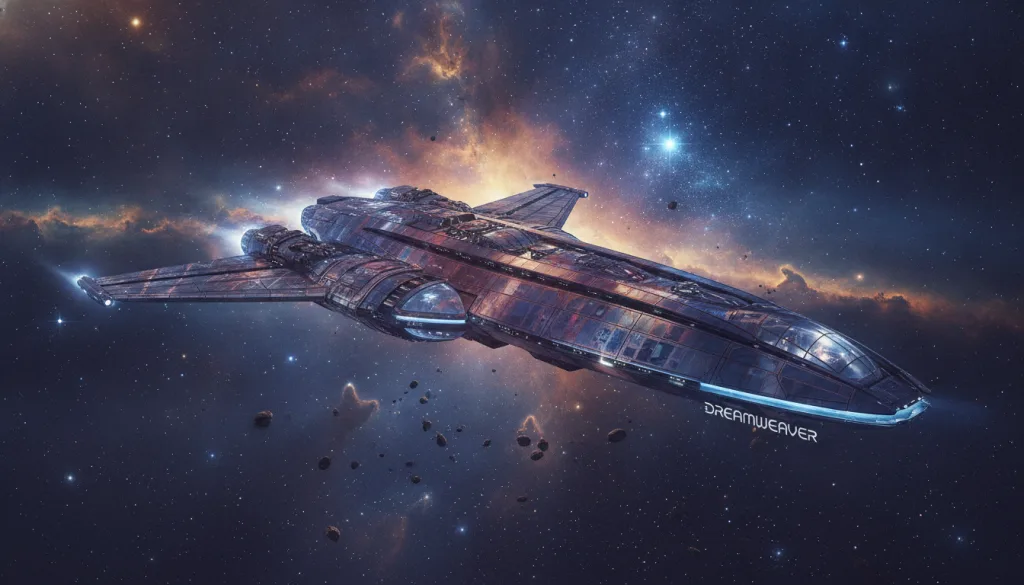
The vastness of space presents a formidable challenge for interstellar travel. Proxima Centauri, the closest star to our Solar System, lies approximately 4.24 light-years away or about 25 trillion miles. Even at the speed of light, which is 186,282 miles per second, it would take just over four years to reach Proxima Centauri. However, with current technology, our fastest spacecraft, the Parker Solar Probe, travels at about 430,000 miles per hour. This speed would require over 6,700 years to reach the nearest star. Clearly, the current state of human engineering and physics is inadequate for achieving interstellar travel within a human lifetime.
Understanding Light-Year and Travel Time
A light-year represents the distance light travels in a vacuum in one year, equivalent to about 5.88 trillion miles. To grasp the enormity of interstellar distances, consider the Voyager 1 spacecraft, which was launched in 1977 and has been traveling for over 45 years. It is currently about 14.1 billion miles from Earth, yet it would take Voyager over 73,000 years to reach Proxima Centauri. Such figures illustrate the immense hurdles humanity faces in its quest to explore other star systems.
Current Theoretical Approaches to Interstellar Travel
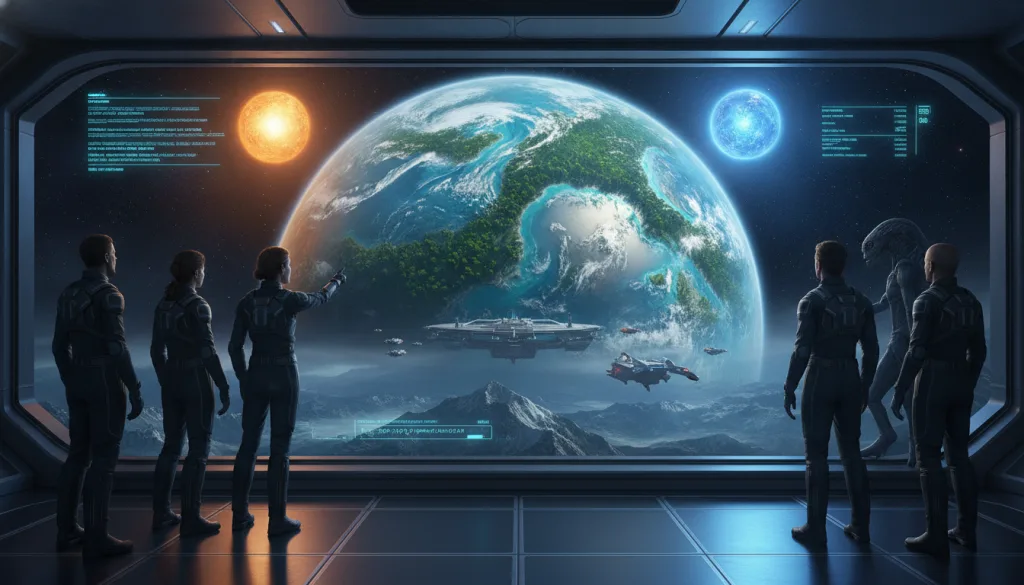
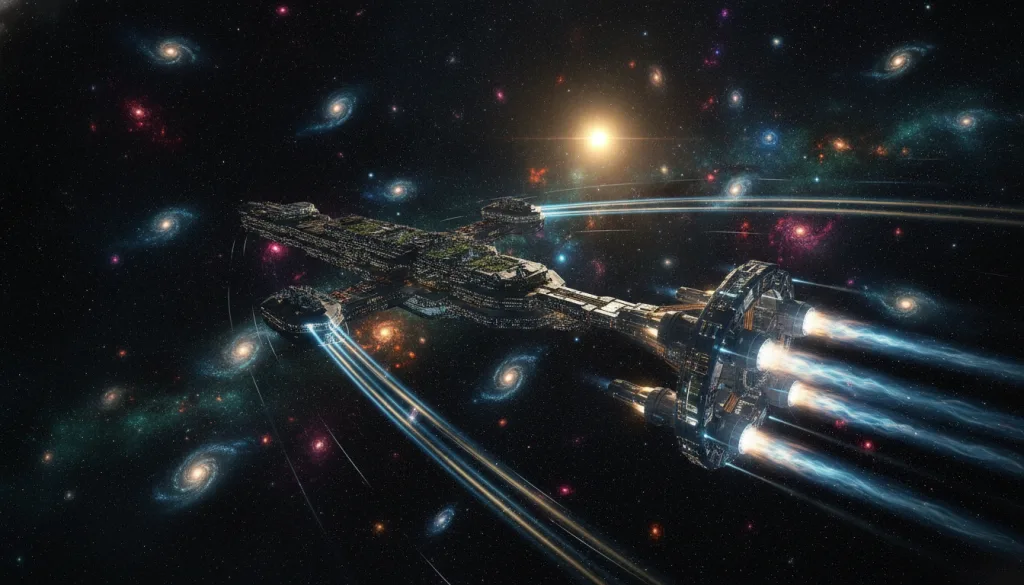
Theoretical physicists have outlined several potential methods of interstellar travel that could allow humanity to traverse the vast cosmic expanse. Among these concepts, the most noteworthy include the Alcubierre Warp Drive, solar sails, and antimatter propulsion.
The Alcubierre Warp Drive
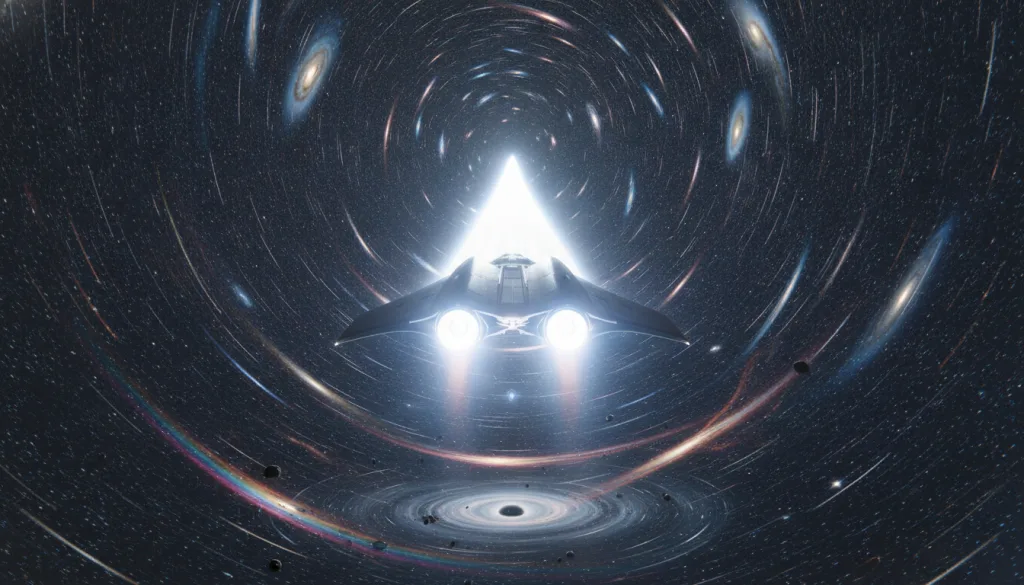
Proposed by Mexican physicist Miguel Alcubierre in 1994, the Alcubierre Warp Drive suggests a mechanism for faster-than-light travel through the manipulation of spacetime. The basic premise involves creating a 'warp bubble' that contracts space in front of a spacecraft and expands it behind. This would theoretically allow a spacecraft to move through space without locally exceeding the speed of light, thus circumventing the established physics of relativity.
“The key to interstellar travel is to look beyond traditional propulsion methods and understand spacetime as a dynamic entity.” — Miguel Alcubierre, 1994
Solar Sails: Harnessing the Power of the Sun
Solar sails represent a more practical yet still theoretical approach to interstellar travel. By utilizing large, reflective sails propelled by the pressure of sunlight or laser beams, solar sails can gradually accelerate to high velocities over time. Projects such as the Planetary Society's LightSail, which successfully demonstrated solar sail technology in 2019, show promise for future interstellar missions.
In 2018, an initiative called Breakthrough Starshot proposed sending tiny, lightweight probes to Alpha Centauri using powerful ground-based lasers to propel solar sails to speeds of up to 20% the speed of light. Although the technology remains in the conceptual phase, its feasibility could redefine humanity’s reach into the cosmos.
The Role of Antimatter in Propulsion
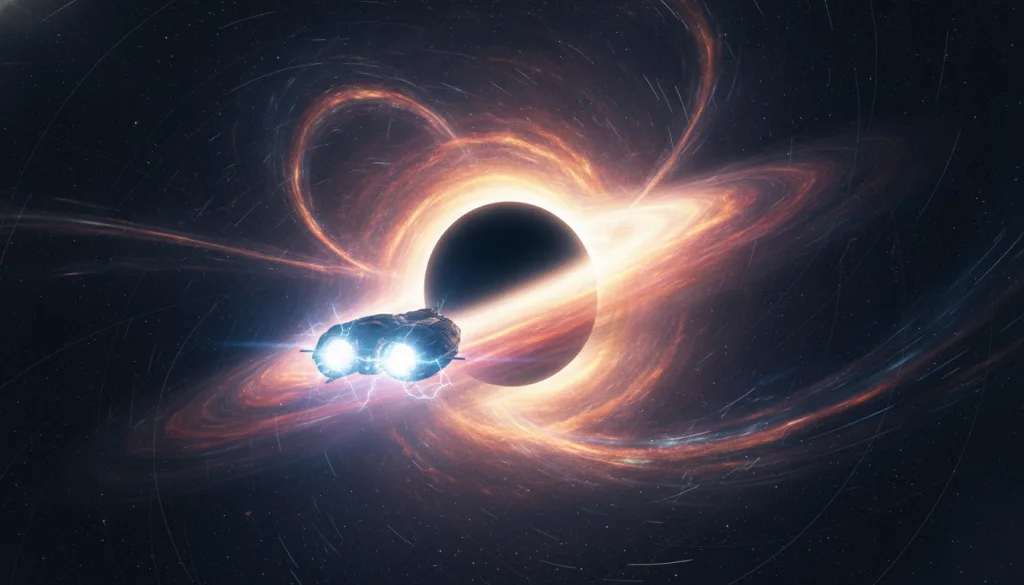
Another promising method for interstellar travel involves antimatter, the most efficient fuel known to science. When matter and antimatter collide, they annihilate each other, releasing energy that could be harnessed for propulsion. Theoretical studies, such as those conducted by the American Institute of Aeronautics and Astronautics, suggest that a spacecraft powered by antimatter could potentially achieve speeds up to 50% of the speed of light, making interstellar travel within a human lifetime a plausible scenario.
Challenges of Antimatter Production
Despite its potential, producing and storing antimatter poses significant challenges. Currently, antimatter is produced in minuscule amounts in particle accelerators such as CERN's Large Hadron Collider. The production costs are staggering; estimates suggest that creating just one milligram of antimatter could cost around $62.5 trillion. Further advancements will be required to make antimatter a viable fuel source for interstellar travel.
The Sociocultural Implications of Interstellar Exploration
As exciting as the prospect of interstellar travel may be, the sociocultural implications must also be addressed. The quest to reach the stars is not merely a scientific endeavor but an embodiment of humanity’s innate curiosity and desire for exploration. The potential to discover extraterrestrial life or habitable worlds could forever alter our understanding of our place in the universe.
The Role of International Collaboration
Achieving interstellar travel will require unprecedented international collaboration. Just as the Apollo program united scientists and engineers from diverse backgrounds, future endeavors must transcend national interests and foster cooperative exploration. Global initiatives like the International Space Station (ISS) demonstrate that collaboration can lead to groundbreaking advancements, and similar partnerships will be essential for interstellar missions.
Technological Limitations and Future Perspectives
While the theoretical frameworks for interstellar travel exist, practical implementation is still far from our grasp. The development of advanced propulsion systems, robust spacecraft designs, and life-support technologies are paramount. Additionally, the ethical and philosophical questions surrounding the exploration of potentially habitable planets must be addressed.
Moreover, our understanding of the physical laws governing the universe continues to evolve. Scientists are actively researching concepts like wormholes and quantum tunneling, which may one day offer new avenues for interstellar travel. The fabric of spacetime remains a mystery, and unlocking its secrets could one day enable humanity to venture beyond the confines of our Solar System.
Notre analyse :
La quête de voyager au-delà des étoiles est une entreprise humaine essentielle, qui nécessite des avancées scientifiques et technologiques significatives. Même si les défis sont énormes, la recherche d'un voyage interstellaire au cours d'une vie humaine est plus qu'une simple aspiration; elle est foncièrement ancrée dans notre nature. L'émergence de concepts comme le warp drive d'Alcubierre et les voiles solaires montre que l'humanité n'est pas insensible à ces défis. Il est impératif que l'investissement dans la recherche et le développement de ces technologies soit encouragé par les gouvernements et les institutions scientifiques, car l'avenir de l'exploration interstellaire dépend de notre capacité à innover et à collaborer.
Sources & References
Alcubierre, M., "The warp drive: hyper-fast travel within general relativity," 1994, Science.
Planetary Society, "LightSail 2: The First Solar Sail to Successfully Demonstrate Solar Sailing," 2019, Planetary Society.
Breakthrough Starshot, "Starshot Initiative: A Roadmap for Interstellar Exploration," 2018, Breakthrough Initiatives.
American Institute of Aeronautics and Astronautics, "Antimatter Propulsion: An Overview," 2016, AIAA.
CERN, "Antimatter: The Ultimate Energy Source," 2015, CERN Publications.



Comments 0
Be the first to comment!