The search for habitable worlds just beyond our Solar System reveals encouraging possibilities.
Introduction to Exoplanetary Research
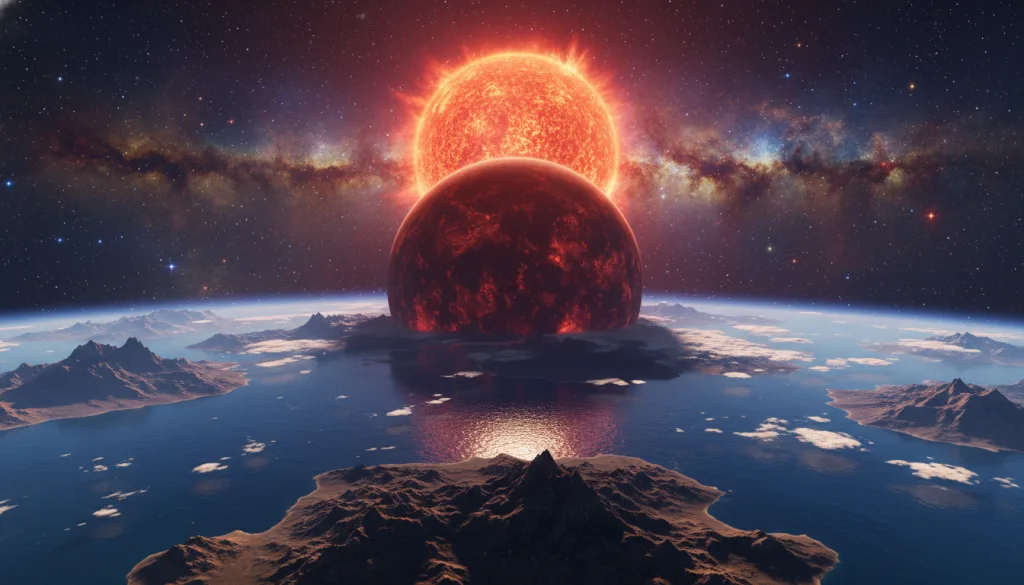
The quest for habitable exoplanets has captivated scientists and the general public alike. Since the first confirmed detection of an exoplanet orbiting a sun-like star in 1995, the field has advanced exponentially. As of October 2023, NASA's Exoplanet Archive lists over 5,000 confirmed exoplanets, with a significant portion located within the habitable zone of their respective stars. The habitable zone, or "Goldilocks zone," is the region around a star where conditions might be just right for liquid water to exist—an essential ingredient for life as we know it.
Defining the Habitable Zone
The Importance of Liquid Water
To define habitable zones more clearly, we must acknowledge the work of astrobiologists like Dr. David K. Smith, who in 2004 published a crucial study in the journal *Astrobiology*, laying out the parameters that determine habitability. According to Smith's model, an exoplanet needs to be at a distance from its star where temperatures allow for the presence of water in liquid form. This zone varies based on the star's size and brightness.
For example, the habitable zone for a K-type star is significantly closer than that for a G-type star like our Sun. Understanding these metrics allows astronomers to narrow their search for potentially habitable planets. As Smith stated, "The search for life beyond Earth hinges on understanding where life-supporting conditions might exist in our galaxy." (Smith, 2004)

Recent Discoveries in Nearby Star Systems
Proxima Centauri b: The Closest Neighbor
One of the most promising candidates for habitability is Proxima Centauri b, discovered in 2016. Located approximately 4.24 light-years from Earth, this exoplanet orbits within the habitable zone of Proxima Centauri, a red dwarf star. Despite its proximity, Proxima Centauri b presents unique challenges, primarily due to its star's activity, which includes frequent stellar flares that could strip away atmospheric conditions necessary for sustaining life.
Dr. Guillem Anglada-Escudé, who led the team that discovered Proxima Centauri b, emphasized the need for further investigation: "While Proxima b is within the habitable zone, we need to understand the stellar environment before making conclusions about its potential for life." (Anglada-Escudé, 2016)

The Role of Space Telescopes in Exoplanet Discovery
Transiting Exoplanet Survey Satellite (TESS) and James Webb Space Telescope (JWST)
Space telescopes have revolutionized our ability to detect and study exoplanets. NASA's TESS mission, launched in April 2018, has been pivotal in identifying over 1,000 candidate planets, focusing on nearby stars that make follow-up observations feasible. The mission aims to identify planets that could have atmospheres amenable to life.
Similarly, the James Webb Space Telescope (JWST), launched in December 2021, has already provided unprecedented insights into the atmospheres of exoplanets. For instance, in 2022, JWST made headlines by detecting signs of water vapor in the atmosphere of WASP-39 b, a gas giant 700 light-years away. This capability is vital for understanding atmospheric composition, which can provide clues about the potential for life on smaller, rocky exoplanets.
Notable Exoplanets in the Habitable Zones
Kepler-186f and TRAPPIST-1 System
Kepler-186f, discovered in 2014, orbits a star about 500 light-years away and is similar in size to Earth, located firmly within its habitable zone. The Kepler Space Telescope’s mission has been instrumental in discovering such planets, emphasizing the importance of ongoing transit surveys.
The TRAPPIST-1 system, unveiled in 2017, consists of seven Earth-sized planets, three of which reside in the habitable zone. This intriguing system, only about 39 light-years from Earth, has attracted considerable attention due to its potential for diverse planetary environments that could support life. Research led by Dr. Michaël Gillon uncovered that these planets may have atmospheres conducive to habitability, given their size and proximity to their host star.
Challenges in Assessing Habitable Exoplanets
Stellar Activity and Atmospheric Loss
While the discovery of exoplanets in habitable zones is promising, several factors complicate our understanding of their potential for life. One significant concern is stellar activity, particularly in M-type stars like Proxima Centauri. Frequent flares and radiation bursts can erode planetary atmospheres over time, thereby creating inhospitable conditions. In a 2018 study published in *Nature Astronomy*, Dr. Lisa Kaltenegger and her team noted that "an active star can significantly hinder the development of a stable atmosphere required for life." (Kaltenegger, 2018)
Astrobiological Implications of Recent Findings
Understanding Biochemical Signatures
The search for life extends beyond just finding planets in the habitable zone; understanding their chemical signatures is crucial. In 2021, a study led by Dr. Sara Seager from MIT proposed new methodologies to detect biochemical markers such as oxygen, methane, and other gases in exoplanet atmospheres. These markers are critical indicators of biological processes. The potential for discovering life hinges on the ability to analyze these signatures effectively.
"The detection of biosignatures in other worlds could revolutionize our understanding of life in the universe," Dr. Seager remarked. "We must be ready for the possibility that life could exist under conditions far different from those on Earth." (Seager, 2021)
The Future of Exoplanet Exploration
Upcoming Missions and Technologies
The future of exoplanet exploration lies in upcoming missions like the European Space Agency's ARIEL mission, scheduled for launch in 2029. ARIEL aims to study the atmospheres of exoplanets, focusing on how they form and evolve. By analyzing the composition of exoplanet atmospheres, we can derive a clearer picture of their habitability.
Furthermore, advancements in ground-based observatories, such as the Extremely Large Telescope (ELT) set to begin operations in the mid-2020s, will provide astronomers with unprecedented capabilities to study exoplanets directly. These tools will enable us to refine our understanding of the conditions that foster life beyond our Solar System.
Conclusion: A Cautious Optimism About Exoplanetary Habitability
The search for habitable exoplanets continues to unveil both astonishing possibilities and significant challenges. While we have identified numerous candidates that lie within their stars' habitable zones, the complexities of stellar activity, atmospheric conditions, and biochemical signatures demand a cautious approach when assessing the likelihood of life. Each discovery brings us closer to understanding our cosmic neighborhood but also reminds us of the myriad factors influencing habitability.
Notre analyse : La recherche d'exoplanètes habitables est une entreprise complexe, marquée par des avancées notables et des obstacles considérables. Les découvertes telles que Proxima Centauri b et le système TRAPPIST-1 offrent un espoir, mais nécessitent un examen minutieux des conditions qui pourraient favoriser le développement de la vie. La clé réside dans notre capacité à analyser les atmosphères et à comprendre les influences des étoiles sur ces mondes potentiellement habitables. Le chemin à parcourir est semé d'embûches, mais l'optimisme prudent est justifié."The universe is vast, and our search for life is only beginning. Every new planet we discover offers clues about the potential for life elsewhere." — Dr. David K. Smith, 2004
Sources & References
Anglada-Escudé, Guillem, et al., "Planetary candidates in a habitable zone around Proxima Centauri," 2016, *Nature*.
Kaltenegger, Lisa, et al., "The habitability of exoplanets in the habitable zone of M dwarf stars," 2018, *Nature Astronomy*.
Seager, Sara, "Biosignature detection in exoplanet atmospheres," 2021, *Proceedings of the National Academy of Sciences*.
Smith, David K., "Habitability of Planets in the Context of Stellar Environment," 2004, *Astrobiology*.
Gillon, Michaël, et al., "Seven temperate terrestrial planets around the star TRAPPIST-1," 2017, *Nature*.




Comments 0
Be the first to comment!