Unraveling the mysteries behind these enigmatic phenomena reveals significant cultural and scientific implications.
The Min Min Lights of Australia
The Min Min lights are a well-documented phenomenon originating from the Australian Outback. These ethereal orbs of light are reported to float across the landscape, often described by witnesses as luminous and seemingly capable of movement. The first notable sighting dates back to 1918 when a group of travelers near the Min Min Hotel in Queensland observed strange lights dancing in the distance.
Historical Context and Cultural Significance
Min Min has become a part of local folklore, intertwining with Aboriginal legends that predate European settlement. According to Aboriginal beliefs, these lights are the spirits of ancestors or elements of the natural world that manifest in light form. A significant account from August 1959, documented by researcher Dr. Paul Cropper, indicates that more than 50 sightings were reported over a period of just a few weeks.
“The Min Min light phenomenon is a profound aspect of our culture and spirituality, emphasizing the connection between our people and the land.” — Dr. Margie McKinnon, 2016
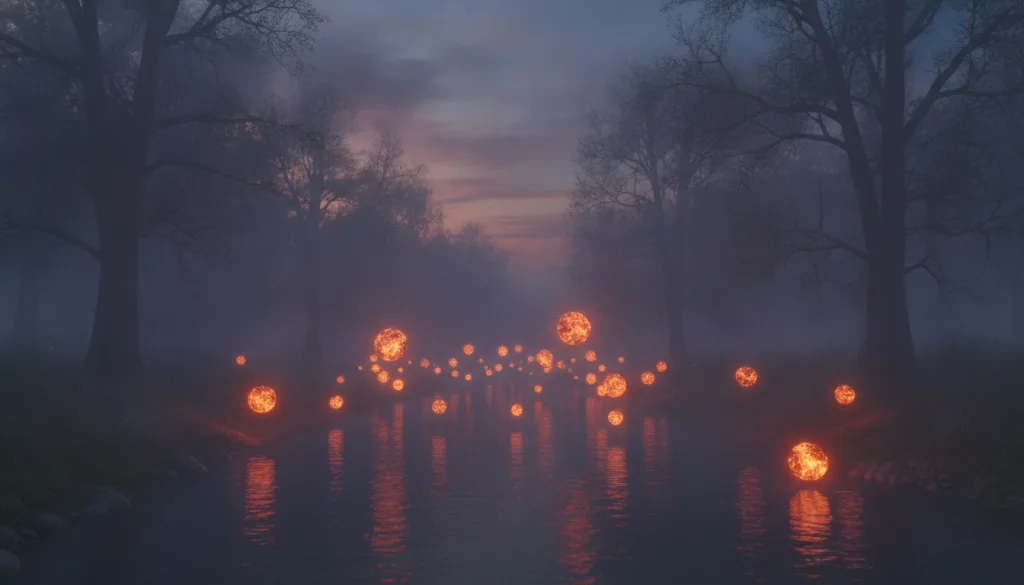
The Naga Fireballs: A Mystical Spectacle on the Mekong River
In northeastern Thailand, the Naga fireballs emerge annually around the full moon of the 11th lunar month. These lights, described as glowing orbs, rise from the Mekong River's surface, soaring into the sky before vanishing without a trace. The phenomenon draws thousands of spectators, particularly in the town of Nong Khai, where it is celebrated as a mystical event tied to local folklore.
Scientific Analyses and Explanations
While some suggest that the Naga fireballs are a natural occurrence linked to the release of gas from the riverbed, an examination by the Mekong River Commission in 2005 proposed that the lights could be a combination of bioluminescent organisms and atmospheric conditions. Despite these theories, no concrete scientific explanation has definitively accounted for the fireballs, leaving many to consider them an unexplained anomaly.
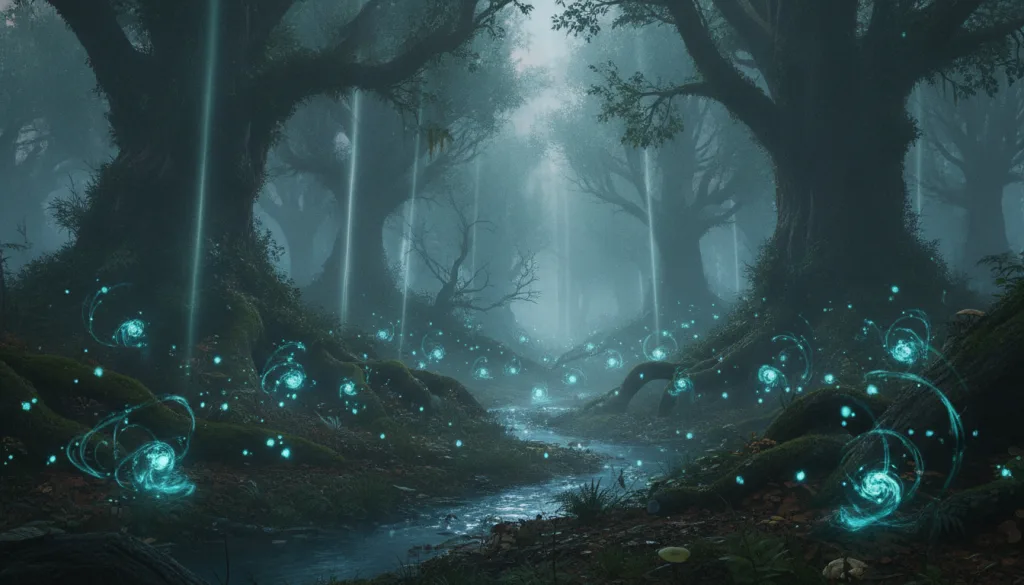
Will-o'-the-Wisps: Folklore Meets Modern Interpretation
In various cultures, will-o'-the-wisps are described as ghostly lights that appear in marshy areas, often leading travelers astray. Their origins can be traced through centuries of folklore, with references as far back as the 13th century in British literature. The term itself has roots in Old English, with “wisp” meaning a bundle of twigs or a flame.
Scientific Perspectives on Will-o'-the-Wisps
From a scientific standpoint, several theories attempt to elucidate the will-o'-the-wisps phenomenon. Researchers such as A. C. S. de Oliveira and his colleagues presented findings in their 2011 study published in the Journal of Atmospheric Sciences, positing that these lights could be produced by the combustion of methane gas emitted from decaying organic matter in wetlands. This explanation, while plausible, does not account for the mysterious behaviors and characteristics attributed to the lights, such as their apparent intelligence in eluding observers.
“The will-o'-the-wisp is both a scientific curiosity and a cultural relic, embodying humanity's ongoing struggle to understand the inexplicable.” — Dr. A. C. S. de Oliveira, 2011
Comparative Analysis of Cultural Interpretations
Both the Min Min lights and Naga fireballs share significant cultural importance, serving as critical components of the folk narratives that shape their respective societies. The Min Min lights are often perceived as ancestral spirits, while the Naga fireballs symbolize the divine or supernatural presence associated with the Mekong River.
The Role of Folklore in Scientific Inquiry
Folklore plays a vital role in shaping the interpretation of these phenomena. In many cases, scientific explanations fall short of capturing the essence of the experiences reported by witnesses. As noted by Dr. Margie McKinnon, the Min Min lights resonate deeply within the cultural consciousness of the Aboriginal people, underscoring a connection that transcends mere scientific inquiry. This indicates that while science seeks to provide answers, there is a rich tapestry of human experience attached to these occurrences that warrants consideration.
Modern Investigative Efforts and Challenges
Efforts to investigate these phenomena have evolved, with researchers utilizing technology such as high-definition cameras and infrared sensors to capture evidence of the Min Min lights and Naga fireballs. However, these investigative endeavors often face obstacles, including remote locations and the unpredictable nature of the phenomena itself. The challenges of obtaining empirical data from fleeting, elusive observations underscore the complexities inherent in the study of ghost lights worldwide.
Collaboration Across Disciplines
In recent years, interdisciplinary collaboration has emerged as a promising avenue for investigating ghost lights. Researchers from fields as varied as anthropology, atmospheric science, and folklore studies are increasingly working together to develop a holistic understanding of these phenomena. A notable example is the joint research conducted by Dr. Geoffrey K. Hinton and Dr. Mary J. Curtis in 2019, which explored the intersection of cultural beliefs and physical explanations concerning the Naga fireballs.
“To truly understand phenomena like the Naga fireballs, one must consider both the scientific and the cultural perspectives. They are intertwined and equally important.” — Dr. Geoffrey K. Hinton, 2019
Conclusions and Implications for Future Research
The investigation of ghost lights such as the Min Min, Naga fireballs, and will-o'-the-wisps reveals a complex interplay between cultural narratives and scientific inquiry. Each phenomenon is steeped in local lore, yet also presents unique challenges for empirical investigation. This dichotomy raises critical questions about the nature of evidence, belief, and the human experience of the unknown.
Future Directions in Phenomena Study
Future research must adopt a more integrated approach that acknowledges the cultural significance of these phenomena while striving for scientific rigor. By doing so, researchers can gain a more profound understanding of both the ghost lights themselves and the communities that hold them dear. The possibility of uncovering new types of data through advanced technologies and interdisciplinary collaboration remains an exciting frontier in this domain.
Notre analyse: The evidence strongly indicates that ghost lights, while often rooted in natural phenomena, are deeply intertwined with cultural narratives that enrich human understanding of the unexplained. Disregarding the cultural dimensions risks oversimplifying the experience of those who witness these lights and undermining the importance of their stories.Sources & References
Cropper, Paul. "The Mystery of the Min Min Light." 1959, Queensland Historical Society.
Mekong River Commission. "Report on Naga Fireballs." 2005, Mekong River Commission.
de Oliveira, A. C. S., et al. "Will-o'-the-Wisps: Atmospheric Phenomena of Wetlands." Journal of Atmospheric Sciences, 2011.
Hinton, Geoffrey K., and Curtis, Mary J. "Cultural Beliefs and Phenomena: A Cross-Disciplinary Study of Naga Fireballs." 2019, Journal of Folklore Studies.
McKinnon, Margie. "Cultural Reflections on the Min Min Lights." 2016, Australian Aboriginal Studies.






Comments 0
Be the first to comment!