Exploring the enigmatic nature of Fast Radio Bursts and their implications for our understanding of the cosmos.
What Are Fast Radio Bursts?
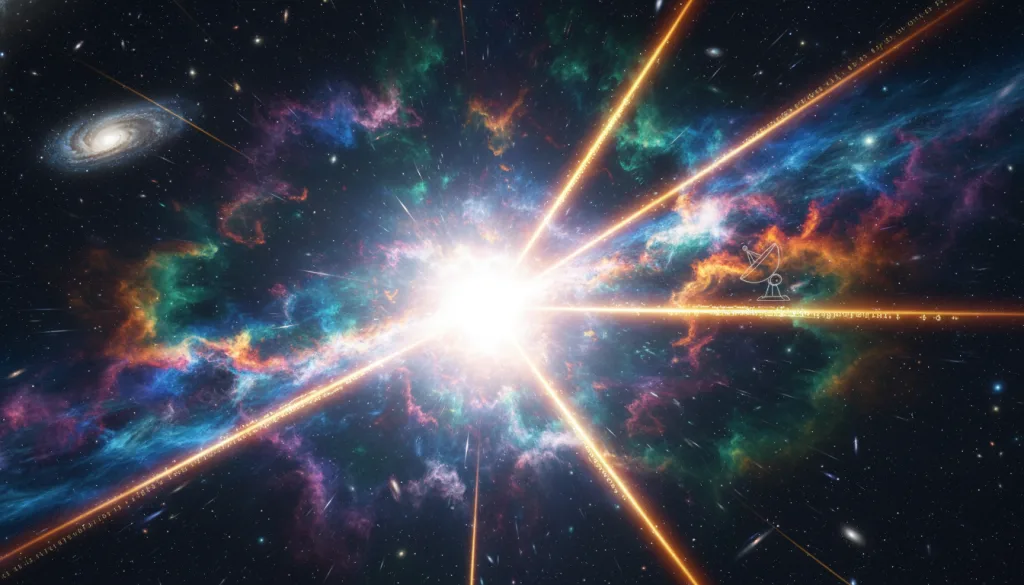
Since their discovery in 2007, Fast Radio Bursts (FRBs) have captured the attention and imagination of astronomers and the general public alike. These brief, bright flashes of radio frequency emissions last only milliseconds, yet they release an enormous amount of energy, often comparable to the amount released by the Sun over several days. While the origins of these bursts remain a tantalizing mystery, they have become a focal point in the search for understanding the universe's most enigmatic phenomena.
The Search for Origins
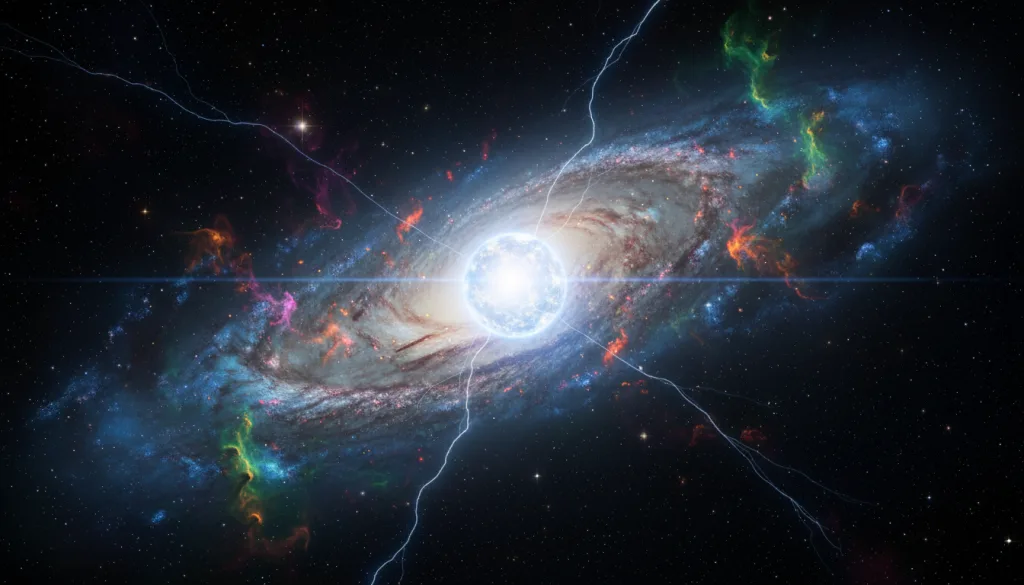
Initially, FRBs were considered to be random cosmic events, possibly stemming from pulsars, neutron stars, or other known astronomical phenomena. However, the realization that some FRBs repeat has led to increased speculation about their origins. Some theories suggest they could be associated with magnetars—highly magnetic neutron stars—or even the collision of neutron stars, which can produce intense bursts of energy.
Among the various hypotheses, the idea that these signals could potentially be of extraterrestrial origin has sparked a wave of excitement. Scientists are exploring the possibility that we might be receiving signals from advanced civilizations beyond our own. While this notion may seem far-fetched, it's crucial to keep an open mind; after all, humanity has only just begun to scratch the surface of cosmic understanding.
Scientific Investigations and Discoveries
Scientists have made significant strides in understanding FRBs. With telescopes like the Canadian Hydrogen Intensity Mapping Experiment (CHIME), researchers have been able to detect more FRBs than ever before, helping to build a clearer picture of how often these bursts occur and where they originate. The data collected suggests that FRBs are not isolated incidents but rather part of a larger cosmic tapestry.
Recent studies have indicated that FRBs are spread throughout the universe, and their dispersion can provide insights into the intergalactic medium. The amount of dispersion in an FRB's signal correlates with the density of matter it has traveled through, offering clues about the structure of the universe itself. As scientists continue to unravel the mystery of FRBs, they are also uncovering valuable data about cosmic evolution and the distribution of matter across vast distances.
Astrobiological Implications
The idea of FRBs being signals from extraterrestrial intelligence (ETI) invites a broader discussion on astrobiology—the study of the potential for life beyond our planet. If FRBs are indeed artificial signals, they could represent a form of communication from civilizations that have advanced far beyond our current technological capabilities.
Consider the implications of such contact. The introduction of new knowledge, perspectives, and technology could catalyze a new era for humanity. The existence of intelligent life elsewhere in the universe would validate the notion that we are not alone, fueling both scientific inquiry and philosophical exploration about our place in the cosmos.
The Search for Extraterrestrial Signals
The Search for Extraterrestrial Intelligence (SETI) has long sought signs of life beyond our planet, primarily focusing on radio signals. The detection of FRBs could add a new dimension to this search, encouraging scientists to develop new methodologies for distinguishing between natural and artificial sources. Various research initiatives have begun to allocate resources to analyze FRBs and determine whether they possess the characteristics of intelligence-driven signals.
One of the greatest challenges is filtering out the noise from natural radio emissions. Scientists must develop sophisticated algorithms and techniques to differentiate between potential signals of interest and background noise. This process is akin to searching for a needle in a cosmic haystack, but each FRB offers a new opportunity to refine these techniques and enhance our understanding of the universe.
The Community Response: Skepticism and Excitement
The possibility that FRBs might be alien signals has elicited both excitement and skepticism within the scientific community. While many researchers are open to exploring the idea, others caution against jumping to conclusions. Skeptics argue that the evidence pointing to natural phenomena is compelling and that attributing these signals to extraterrestrial civilizations requires more stringent proof.
Such skepticism is healthy; the scientific method thrives on questioning and testing hypotheses. However, this cautious approach does not dampen the excitement surrounding the subject. The ongoing research into FRBs and their potential implications serves as a reminder of the wonder and complexity of the universe. The balance between skepticism and curiosity is what drives scientific progress, and in this case, it motivates the search for answers.
Looking to the Future
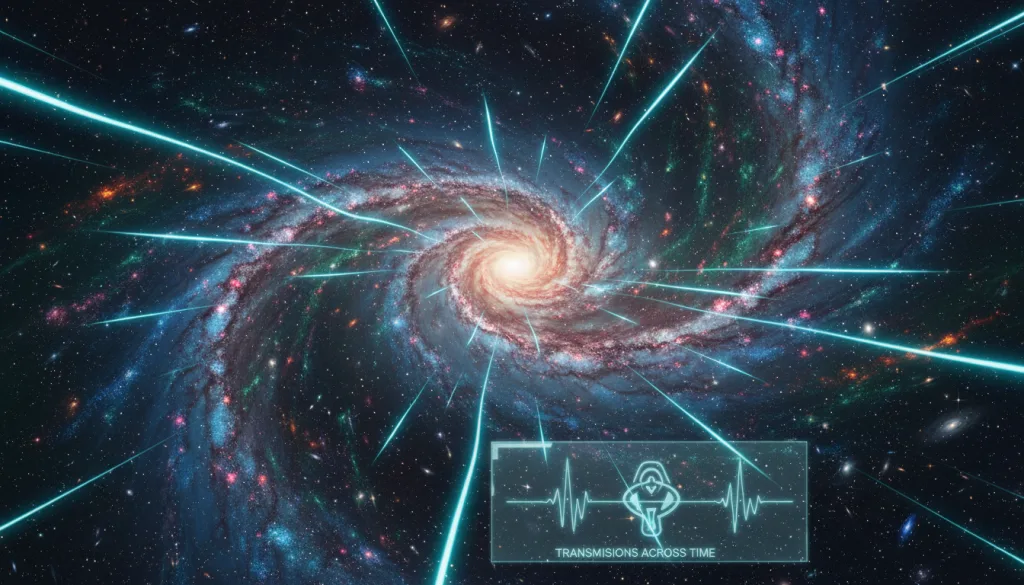
As technology advances, our capacity to detect and analyze FRBs will only improve. Future telescopes, like the Square Kilometre Array (SKA), with their unprecedented sensitivity and coverage, will enable astronomers to capture even more FRBs, potentially revealing more patterns and irregularities in their occurrence. These advancements could lead to breakthroughs in understanding the nature of these bursts and their implications for life beyond Earth.
Moreover, the interdisciplinary collaboration between astronomers, physicists, and engineers will foster innovation in analyzing cosmic signals. The quest to decode FRBs could lead to novel technologies and methodologies applicable across various fields, further enriching our scientific landscape.
Conclusion: A Cosmic Mystery Awaits
The exploration of Fast Radio Bursts represents one of the most intriguing puzzles in modern astrophysics. Whether they are natural phenomena or signals from distant civilizations, they challenge our understanding of the universe and inspire us to expand our horizons. The potential for discovery, the thrill of the unknown, and the hope of contact with other intelligent beings fuel our collective curiosity and imagination.
In embarking on this journey, we are reminded that we are part of a much larger story—a tapestry woven from the threads of time, space, and consciousness. As we continue to explore the cosmos, we carry with us the hopes of generations past and the dreams of future ones. No matter where the search for FRBs leads us, one thing is clear: the universe is alive with mystery, and we are just beginning to understand our place within it.




Comments 0
Be the first to comment!