*What if cooperation is not an evolutionary puzzle, but the starting point for understanding morality?*
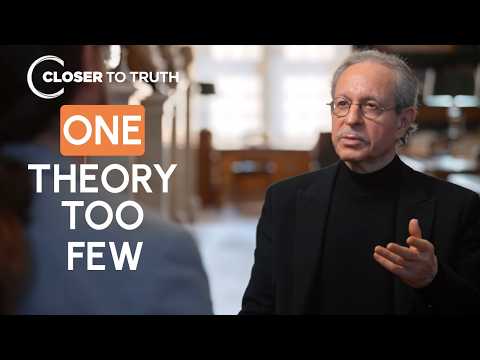
John Dupré challenges gene-centered explanations of biological altruism and argues that human morality developed through a long history of social cooperation and cultural evolution. He explains why he is skeptical that genetic explanations alone can adequately account for the emergence of human moral practices.
0:00 Altruism Isn't the Problem, the Theory Is
2:28 Morality as a Social and Cultural Story
5:31 Skepticism About Genetic Explanations of Morality
*John Dupré* is a British philosopher of science. He is the director of Egenis, the Centre for the Study of Life Sciences, and professor of philosophy at the University of Exeter. Dupré's chief work area lies in philosophy of biology, philosophy of the social sciences, and general philosophy of science.
*More from John Dupré on Closer To Truth:*
* Philosophy of Biology: A Series
* Closer To Truth contributors
Closer To Truth, hosted by Robert Lawrence Kuhn and directed by Peter Getzels, presents the world’s greatest thinkers exploring humanity’s deepest questions. Discover fundamental issues of existence. Engage new and diverse ways of thinking. Appreciate intense debates. Share your own opinions. Seek your own answers.
#CloserToTruth #Meaning #JohnDupre #BiologicalAltruism #CulturalEvolution





Comments 0
Be the first to comment!