Unearthing the secrets of ancient texts and their enigmatic languages reveals the lost knowledge of our ancestors.
The Enigma of the Voynich Manuscript
The Voynich Manuscript, a 15th-century codex discovered in 1912 by rare book dealer Wilfrid Voynich in Italy, remains one of the most perplexing artifacts of its time. This manuscript contains over 200 pages filled with illustrations of strange plants, astrological diagrams, and human figures engaging in mysterious activities. Despite extensive efforts, the script remains undeciphered. The manuscript is written in an unknown language, and its origins have baffled both amateur and professional cryptographers for over a century.
Attempts to Decipher the Manuscript
Notable attempts to decode the Voynich Manuscript have included input from renowned cryptographers such as American codebreaker William Friedman in the 1940s, who famously stated that the text is “not a cipher but a natural language.” In 2018, a team of researchers from the University of Alberta, led by Dr. Andrew Teixeira, applied computational analysis and machine learning techniques to the text, concluding that it could represent a linguistic structure, albeit one that remains unresolved. The manuscript’s illustrations often depict plants that do not match known botany, adding to the mystery of its purpose and origin.
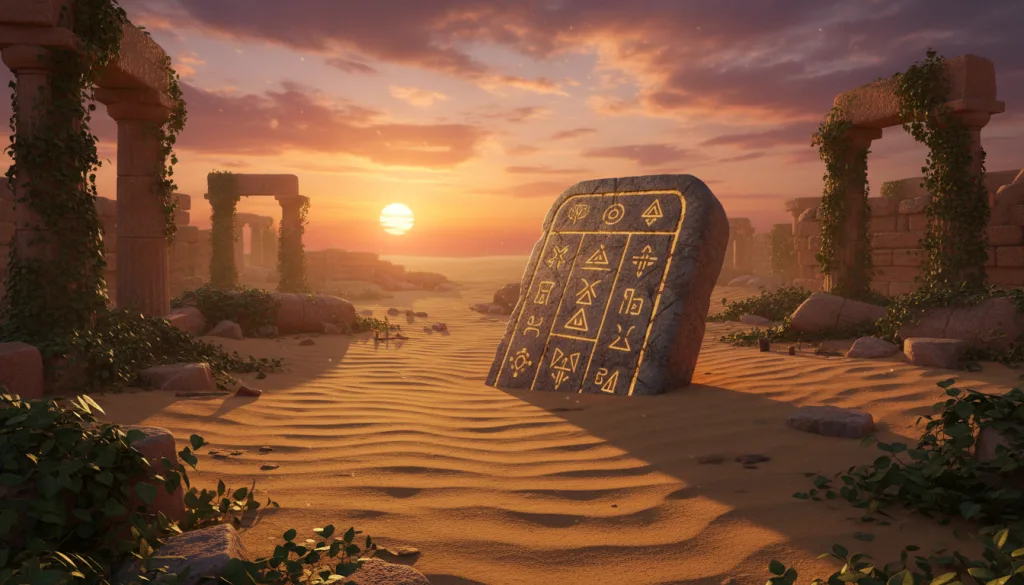
The Phaistos Disc: A Riddle from the Minoan Civilization
Discovered in 1908 on the island of Crete, the Phaistos Disc is a circular clay artifact imprinted with 241 distinct symbols. Dating back to around 1700 BCE, during the height of the Minoan civilization, the disc represents one of the earliest forms of written language in Europe. Its purpose remains a topic of intense debate, with interpretations ranging from religious texts to a form of accounting.
The Implications of the Symbols
The symbols on the Phaistos Disc have defied interpretation. According to linguist Dr. Gareth Owens, who has studied the disc extensively, the symbols appear to be logograms that could represent syllables in the Minoan language. Despite this, no consensus exists on either the language itself or the meaning of the disc. In 2021, a study published in the journal Archaeological Science highlighted how the symbols might relate to a form of ancient game or ritual, showcasing the diversity of thought surrounding this artifact. The disc serves as a reminder of how such artifacts can simultaneously reveal and conceal information, providing a glimpse into a civilization that remains largely enigmatic.
The Codex Gigas: A Medieval Mystery
Commonly known as the Devil's Bible, the Codex Gigas stands as a colossal work of medieval literature, created in the early 13th century in the Benedictine monastery of Podlažice, Bohemia. Measuring nearly three feet long and weighing approximately 165 pounds, this manuscript contains the complete Bible in Latin, along with numerous other texts. Its most striking feature is a full-page illustration of the devil, which has led to various myths about its origins and purpose.
Unraveling the Manuscript's Creation
According to a legend, the Codex Gigas was produced by a monk who, after being sentenced to death, made a pact with the devil to create the world's largest book in a single night. While this tale is likely apocryphal, the manuscript's unique compilation of texts and its elaborate illustrations have led to scholarly curiosity. A 2006 analysis by the University of Copenhagen conducted by Dr. Lars Boje Mortensen utilized modern imaging techniques to scrutinize the manuscript's pages, revealing that multiple hands likely contributed to its creation over time. This investigation highlighted how the Codex Gigas encapsulates the blending of religious thought and artistry in the medieval period, but the origins of its devilish illustration continue to stir fascination and speculation.
The Mysterious Writings of the Dead Sea Scrolls
Discovered between 1947 and 1956 in the Qumran caves near the Dead Sea in Israel, the Dead Sea Scrolls comprise a collection of Jewish texts that date from the third century BCE to the first century CE. These scrolls contain biblical texts, apocryphal writings, and sectarian manuscripts associated with the Essenes, a Jewish group that separated from the mainstream culture of the time. Among these texts is the famous Isaiah Scroll, which is nearly complete and provides invaluable insight into the biblical texts and their transmission over time.
Significance of the Scrolls
The importance of the Dead Sea Scrolls cannot be overstated. A 2020 study by the Israel Antiquities Authority, led by archaeologist Pnina Shor, revealed that these texts provide crucial evidence of the textual variations present in the Hebrew Bible, influencing our understanding of scripture. The scrolls have also suggested the existence of a distinct sect within Judaism with beliefs and practices that diverged from those of the Pharisees and Sadducees. The sophisticated methods used to produce these scrolls, such as the use of codices instead of scrolls, demonstrate a level of literacy and scholarship that was previously underestimated for this period, raising questions about the broader intellectual climate of ancient Judea.
The Language of the Rosetta Stone
Discovered in 1799 by French soldiers during Napoleon's campaign in Egypt, the Rosetta Stone is inscribed with the same text in three scripts: Greek, Demotic, and hieroglyphics. It was the key to unlocking the mysteries of ancient Egyptian writing. The stone's inscriptions date back to 196 BCE and record a decree issued during the reign of Ptolemy V. The decipherment of the stone's hieroglyphics by British polymath Thomas Young and later Jean-François Champollion in the 1820s revolutionized our understanding of ancient Egypt.
The Decipherment Process and Its Impact
Champollion's breakthrough in 1822, which involved comparing the Greek text to the hieroglyphics, revealed that hieroglyphs were not merely symbolic but represented sounds as well. This insight opened the floodgates to the understanding of thousands of inscribed monuments, tombs, and papyri. A study published in 2017 in the journal Egyptian Archaeology reiterated the continued relevance of the Rosetta Stone, emphasizing its role in bridging cultures and languages. Today, it symbolizes the quest for knowledge, demonstrating how language can both link and isolate civilizations across time.
Unbreakable Codes and Their Enduring Mystique
The pursuit of understanding ancient codes is not merely an academic endeavor; it is a testament to humanity’s desire to connect with its past. The numerous attempts to decipher texts like the Voynich Manuscript and the Phaistos Disc underscore a broader truth—our fascination with the unknown drives us to seek answers to questions that may never find resolution. Every unbreakable code tells a story, a narrative that transcends time and speaks to our innate curiosity.
Conclusion: The Tapestry of Knowledge
In a world where many ancient texts still elude our understanding, the legacy of cryptic manuscripts and unbreakable codes serves as a reminder of the complexities of human language and thought. The evidence strongly suggests that these artifacts not only hold historical significance but also offer a portal into the philosophies and cultures of the civilizations that produced them. Every manuscript, every inscription is imbued with the essence of its time, capturing the voices of those who came before us. While some secrets may remain forever locked away, the journey to uncovering these enigmas enriches our collective narrative.






Comments 0
Be the first to comment!