Deep beneath icy surfaces, the potential for extraterrestrial life lurks in the shadows of our solar system’s most captivating moons.
Europa: A World of Hidden Depths
The icy moon Europa, orbiting Jupiter, reveals tantalizing hints of a subsurface ocean beneath its frozen crust. In 1979, during the Voyager 1 flyby, scientists first observed the remarkable smoothness of Europa's surface, alongside its complex patterns of ridges and cracks. This remarkable landscape, stretching across an expanse of approximately 3,100 kilometers, suggested the presence of liquid water beneath the ice. Subsequent data from Galileo's mission in the 1990s provided further evidence, including magnetic field measurements indicating a conductive layer beneath the surface, consistent with a saline ocean.
The presence of liquid water is a fundamental requirement for life as we understand it. In a 2020 study, researchers at the University of California, Santa Barbara, led by physicist Thomas Brinckerhoff, examined the potential for lifeforms in Europa's ocean. They suggested that the ocean might be in contact with the moon's rocky mantle, allowing for chemical interactions that could support life. The team utilized data from the Hubble Space Telescope, which detected plumes of water vapor erupting from the surface, hinting at a dynamic oceanic environment.
"The potential for life on Europa is not just a hypothetical concept; it's a scientific possibility bolstered by robust data." - Thomas Brinckerhoff

Enceladus: A Cryovolcanic Wonder
Saturn's moon Enceladus has captured the attention of astrobiologists since the Cassini spacecraft revealed its plumes of water vapor and ice particles in 2005. The discovery of these geysers, originating from a subsurface ocean, presented an exciting opportunity to explore the potential for life in a similar yet distinct environment from Europa. Scientists determined that Enceladus has a subsurface ocean about 10 kilometers deep, lying beneath a crust of ice that varies in thickness.
A pivotal moment in the study of Enceladus occurred on October 28, 2015, when researchers published findings based on data from Cassini’s close encounters with the moon. They identified organic molecules in the plumes, suggesting that the ocean is not only present but also chemically diverse. The presence of these organic molecules, alongside the detection of molecular hydrogen, implies that hydrothermal vents on the ocean floor could provide the necessary energy for life. According to a study led by planetary scientist Christopher Glein at NASA's Johnson Space Center, these conditions are strikingly similar to those found in Earth's deep-sea hydrothermal ecosystems, where life thrives despite the absence of sunlight.
"The discovery of organic compounds in Enceladus's plumes fundamentally changes our understanding of where life might exist in the solar system." - Christopher Glein
Astrobiological Implications of Ocean Worlds
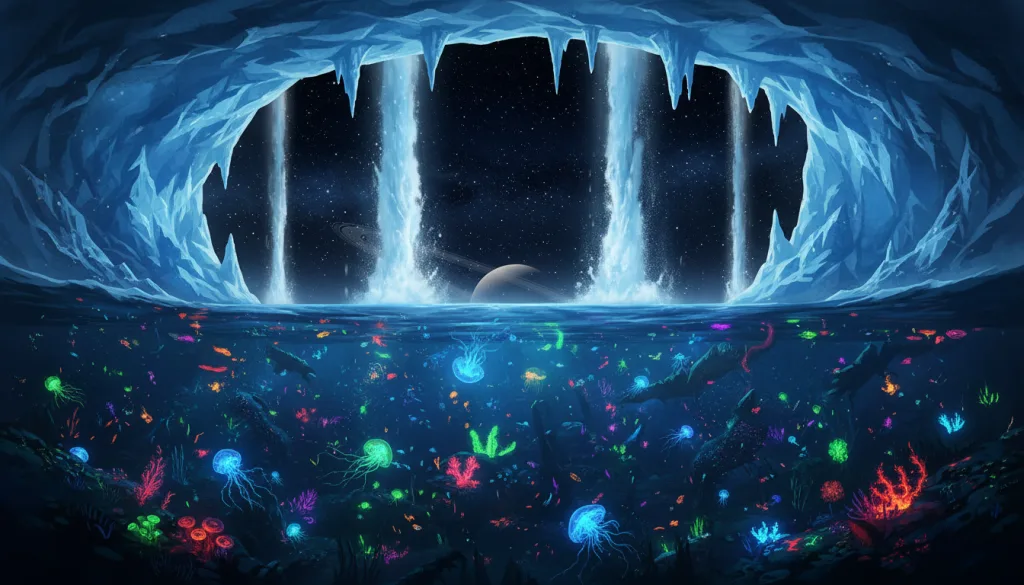
The implications of potential life in the oceans of Europa and Enceladus are profound. Both moons exhibit the necessary ingredients for life: liquid water, organic compounds, and energy sources. The idea that life could exist elsewhere in our solar system reshapes the narrative of astrobiology and shifts the focus of exploration. Researchers advocate for missions that could directly sample the plumes of Enceladus or explore the ice crust of Europa. NASA's upcoming Europa Clipper mission, slated for launch in the 2020s, aims to investigate the icy moon's habitability by conducting detailed reconnaissance of its surface and subsurface properties.
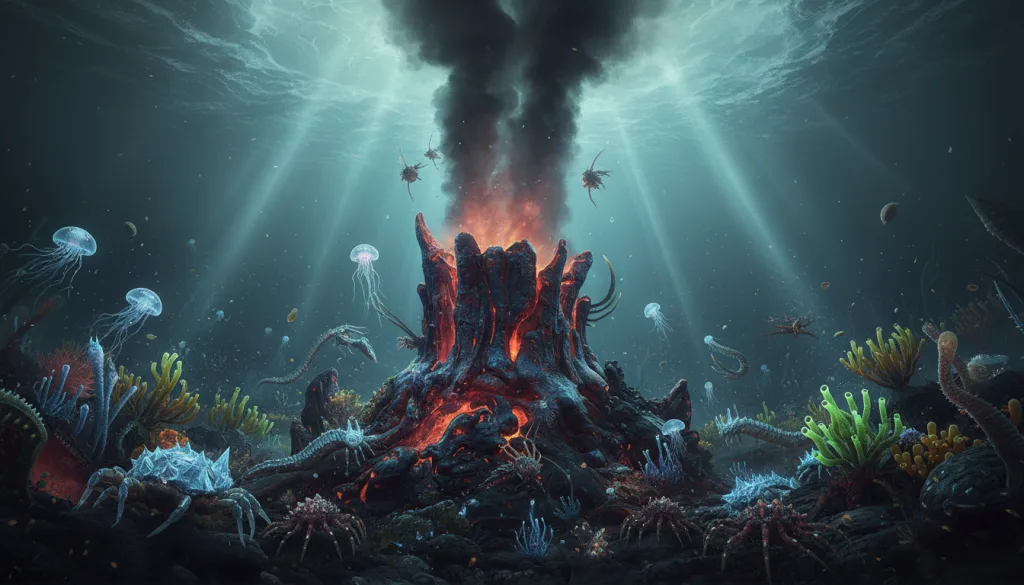
Moreover, the potential existence of extremophiles—microorganisms that thrive in extreme environments—could expand our understanding of life's adaptability. A notable study by the European Space Agency, published in 2019, demonstrated that certain extremophiles from Earth's hydrothermal vents can survive in conditions mimicking those predicted for Europa and Enceladus. This evidence bolsters the case for life in these ocean worlds, suggesting that if life exists on either moon, it could take forms vastly different from terrestrial organisms.
Challenges and Future Exploration
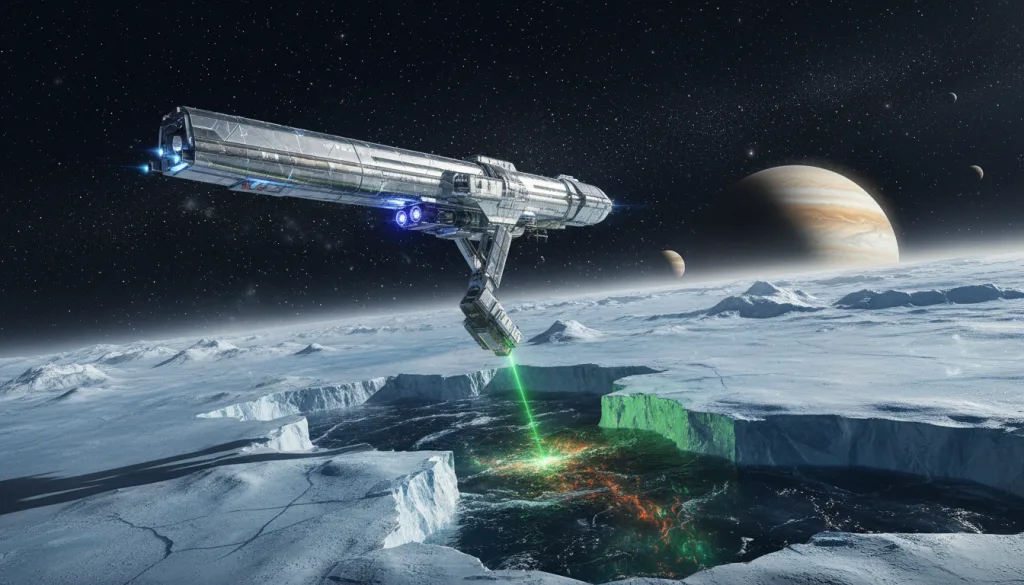
Despite the tantalizing possibilities, significant challenges remain in the pursuit of understanding Europa and Enceladus. The thick ice crust poses a formidable barrier, complicating direct exploration. The landing on or drilling into the icy surface presents significant engineering challenges. This complexity requires innovative solutions, as highlighted in a 2021 study by a team from the Massachusetts Institute of Technology. The researchers proposed using a melt probe, capable of penetrating the ice and exploring the ocean beneath, potentially uncovering signs of life.
In addition, the environments on these moons differ fundamentally from Earth’s ecosystems. The chemical makeup of the subsurface oceans, influenced by the respective planetary bodies they orbit, introduces uncertainties about the potential for life. The presence of ammonia, for instance, detected in Europa's plumes, might create a vastly different biochemical landscape than that of Earth. Understanding how life might adapt to these conditions is still an open question, driving further research and exploration.
The Scientific Consensus: Life is Possible
The consensus among experts is that both Europa and Enceladus hold significant promise in the search for extraterrestrial life. As astrobiologist Kevin Hand from NASA's Jet Propulsion Laboratory stated, "The search for life is not confined to rocky planets; the ocean worlds of our solar system may be some of the best candidates for finding life beyond Earth." The Moon's dynamic geology, hydrothermal activity, and chemical complexity create conditions that could support life, albeit in forms adapted to their unique environments.
Evidence from these celestial bodies indicates that we may not have to look far beyond Earth to find signs of life. The Galilean moons, particularly Europa and Enceladus, are primed for exploration, with advanced missions slated for the near future. The potential for discovering life in these distant oceans presents a compelling opportunity, one that could redefine our understanding of life in the universe.
The future of astrobiology hinges on these explorations. With each new data point collected from Europa and Enceladus, researchers inch closer to answering fundamental questions about life in our solar system. The promise of discovering extraterrestrial life compels scientists to persist in their quests, pushing the boundaries of exploration into the far reaches of our cosmic neighborhood.





Comments 0
Be the first to comment!