Exploring the boundary between consciousness and quantum mechanics in the realm of teleportation.
Understanding Consciousness Through Quantum Physics
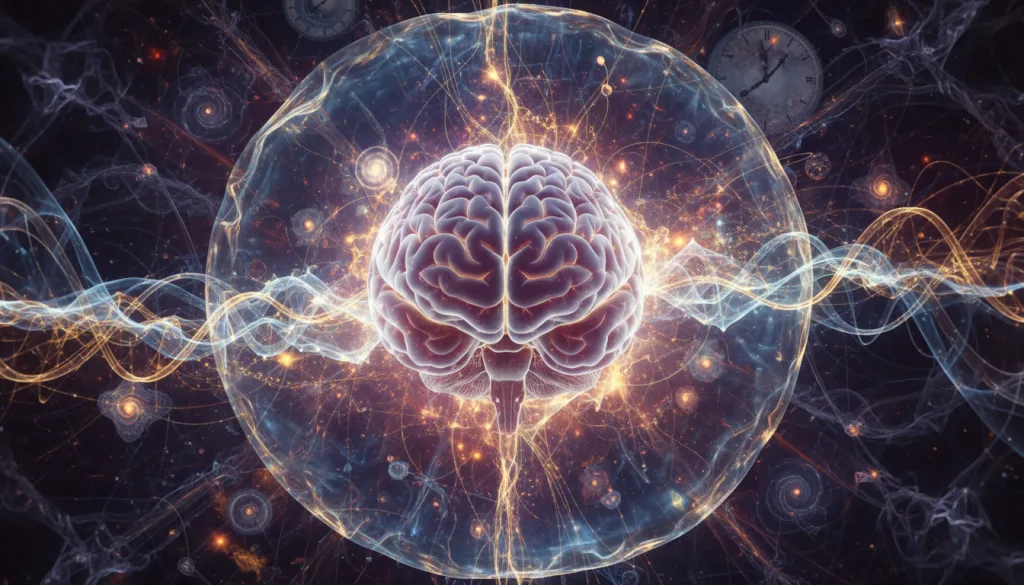
The intersection of consciousness and quantum physics has captivated scientists and philosophers alike, leading to a myriad of theories attempting to unravel the complexities of the mind. A pivotal concept in this discussion is the idea that consciousness may arise from quantum processes within the brain. In 1987, physicist Roger Penrose posited a controversial theory in his book "The Emperor's New Mind," suggesting that human consciousness cannot be explained by classical physics alone. Instead, he argued that quantum mechanics plays a crucial role. Penrose hypothesized that the brain functions as a quantum computer, where microtubules in neurons facilitate quantum states, allowing for a non-algorithmic phenomenon that could correspond to consciousness itself.
The Penrose-Hameroff Model
In response to Penrose's initial ideas, anesthesiologist Stuart Hameroff expanded upon this framework in the 1990s, introducing the "Orchestrated Objective Reduction" (Orch-OR) theory. Hameroff's model suggests that microtubules not only facilitate quantum computation but also serve as the nexus for consciousness. According to him, this model provides a mechanism through which subjective experiences arise from quantum events. A significant publication in this regard was presented in their co-authored paper in 1996 titled "Consciousness in the Universe: A Review of the 'Orch OR' Theory," published in the journal "Journal of Consciousness Studies."
The Nature of Quantum Teleportation
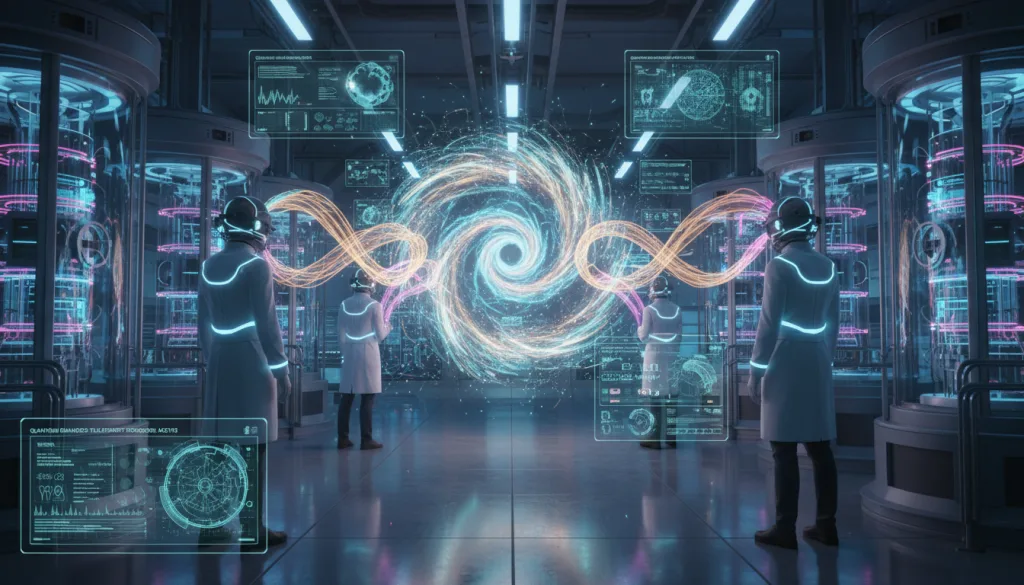
Quantum teleportation, a phenomenon that has been experimentally confirmed since its first demonstration in 1997 by scientists at the University of Innsbruck, represents the transmission of quantum information from one particle to another without traversing the physical space in between. In this groundbreaking experiment, physicists Anton Zeilinger and his team successfully teleported the quantum state of a photon over a distance of 60 kilometers. Such findings have led to discussions on whether similar principles could apply to consciousness.
Technical Foundations of Quantum Teleportation
To grasp how teleportation operates, one must understand the principles of quantum entanglement and superposition. Entangled particles exhibit correlations irrespective of the distance separating them, a phenomenon that Albert Einstein famously termed "spooky action at a distance." In quantum teleportation, an entangled pair of particles allows for the complete transfer of a quantum state from one particle to another. However, this requires classical communication to relay the measurement results, emphasizing the necessity of a physical medium, unlike the popular notion of instantaneous travel.
Challenges in Teleporting Consciousness
Despite the intriguing implications of quantum theories about consciousness, substantial challenges arise when contemplating the teleportation of consciousness. One fundamental issue is the lack of empirical evidence linking quantum processes in the brain directly to conscious experiences. Neuroscientists maintain that consciousness is fundamentally a product of complex neural networks rather than quantum phenomena. In a 2018 review published in "Nature Reviews Neuroscience," researchers led by neuroscientist Nikos K. Logothetis examined the disconnect between quantum mechanics and consciousness, asserting that the brain's activities could be explained by neurophysiological processes rather than quantum states.
The "Hard Problem" of Consciousness
Philosopher David Chalmers articulated the "hard problem" of consciousness in 1995, emphasizing the difficulty of explaining why and how subjective experiences arise from neural processes. Although some researchers suggest that quantum mechanics may offer a pathway to understanding consciousness, the consensus remains that profound questions linger. The subjective nature of consciousness remains elusive, making it challenging to ascertain how, or if, teleportation could ever extend beyond quantum states to encapsulate the entirety of conscious experience.

Alternative Explanations: Classical vs. Quantum Models
While quantum theories continue to generate enthusiasm, classical approaches to understanding consciousness prevail within the scientific community. Neurobiologist Christof Koch argues that consciousness is an emergent property of complex neural circuitry rather than a quantum phenomenon. In his 2012 book "Consciousness: Confessions of a Romantic Reductionist," Koch states that understanding the brain through neurobiology and algorithms is paramount, as consciousness is intrinsically tied to physical processes. This perspective aligns with traditional neuroscience, which recognizes the brain's architecture as the foundation for cognition and awareness.
Neuroscience Breakthroughs and Consciousness
Groundbreaking experiments, such as those conducted by neuroscientists at the University of California, Berkeley, demonstrate the complexity of consciousness without invoking quantum mechanics. In a 2017 study, researchers led by Jack Gallant utilized functional magnetic resonance imaging (fMRI) to decode visual experiences in human subjects. Their results indicated that the neural patterns elicited by visual stimuli could be interpreted, revealing a direct correlation between brain activity and conscious perception. This study emphasizes that understanding consciousness may rely more on advances in neuroscience and less on speculative quantum theories.

Fringe Science and the Pursuit of Mind Teleportation
Despite the skepticism surrounding quantum consciousness theories, fringe science continues to explore the potential of mind teleportation. Various proponents advocate for the notion that consciousness could be transmitted across distances akin to quantum information. Notable figures like Dean Radin of the Institute of Noetic Sciences have published works suggesting that consciousness may not be confined to the brain alone. Radin's 2006 book "Entangled Minds" presents anecdotal evidence of psychic phenomena, although his claims lack rigorous scientific validation and peer-reviewed studies, leading to criticism from the scientific community.
The Role of Technology in Mind Uploading
The rise of technology has fueled speculation about mind uploading, where consciousness could theoretically be transferred to a digital medium. In 2020, academics from the University of Oxford, including neuroscientist Michael A. Arbib, published a paper titled "Human-Level AI: A Roadmap," suggesting that advancements in artificial intelligence and brain-computer interfaces may one day allow for a digital representation of consciousness. However, the ethical, philosophical, and technical challenges of such undertakings remain immense and unresolved.
The Future of Consciousness and Quantum Mechanics
The exploration of consciousness through the lens of quantum mechanics poses profound questions about the nature of existence and reality. Theoretical physicist Michio Kaku highlights in his 2021 book "The Future of Humanity" that if the mind operates at quantum levels, utilizing principles like superposition and entanglement, it might become possible to comprehend consciousness and its implications. Nevertheless, Kaku recognizes the gap between current understanding and the full realization of such concepts.
The Intersection of Science and Philosophy
As scientific inquiry and philosophical exploration continue to intersect, the investigation of consciousness and quantum mechanics remains a contentious and evolving field. The challenge lies not only in establishing a scientific basis for these theories but also in reconciling the vast array of perspectives that exist within modern thought. As physicist Sean Carroll remarked in his 2019 book "Something Deeply Hidden," the relationship between consciousness and reality is far from fully understood, and premature conclusions could hinder genuine progress.
Conclusion: A Quantum Future or a Neural Reality?
The debate surrounding the possibility of teleporting consciousness mirrors the larger questions about the nature of reality and the mind. While quantum theories offer tantalizing glimpses into the potential intersections of consciousness and quantum physics, the scientific community remains skeptical regarding the feasibility of such concepts. The evidence strongly suggests that consciousness is an emergent property of complex neural activities rather than a product of quantum phenomena. As neuroscience progresses, the focus should remain on elucidating the mechanisms of the mind through empirical research and technology rather than speculative theories.
The possibility of mind teleportation may remain a captivating subject for science fiction but is unlikely to find a solid footing within established scientific paradigms. Until substantive evidence emerges to link consciousness directly to quantum processes, it is prudent to approach the notion of teleporting the mind with caution, emphasizing the importance of rigorous investigation and empirical validation in the quest to understand the essence of consciousness.


Comments 0
Be the first to comment!