The growing body of pilot testimonies reveals unsettling patterns in UFO encounters.
The ASRS Database: A Repository of Anomalous Encounters
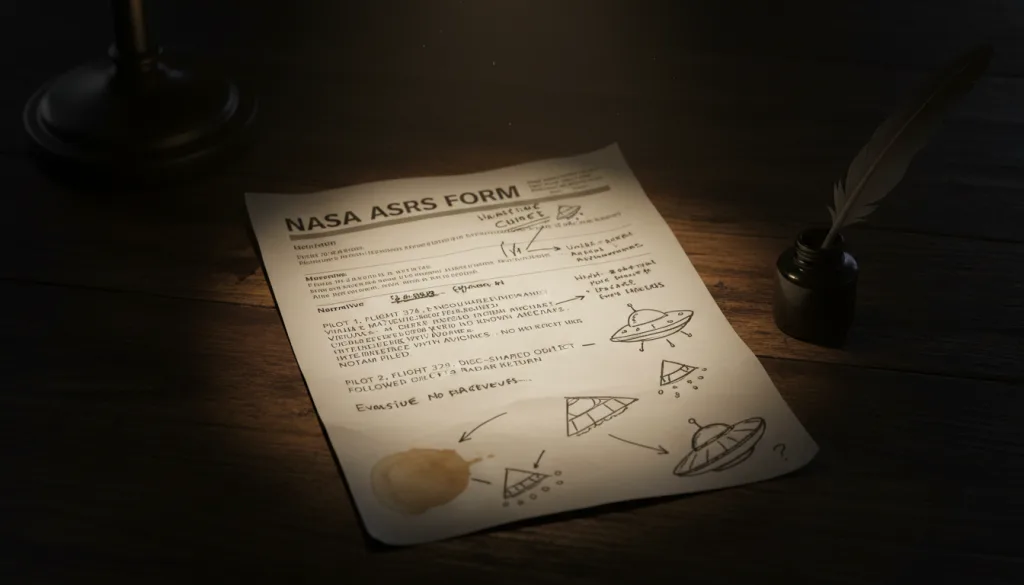
Since its inception in 1976, NASA's Aviation Safety Reporting System (ASRS) has served as a critical platform for pilots to report any aviation-related incidents, including encounters with unidentified flying objects (UFOs). The ASRS is designed to promote aviation safety by encouraging voluntary reporting, thus providing a wealth of data on incidents that might otherwise go unreported.
Among the myriad reports, a smaller, yet revealing, subset pertains to UFO sightings. These reports encompass a range of experiences, from fleeting glimpses of strange lights to detailed accounts of close encounters with unidentified craft. Pilots, trained to observe and report, provide unique insights that challenge the conventional understanding of aerial phenomena.
What Pilots Are Reporting
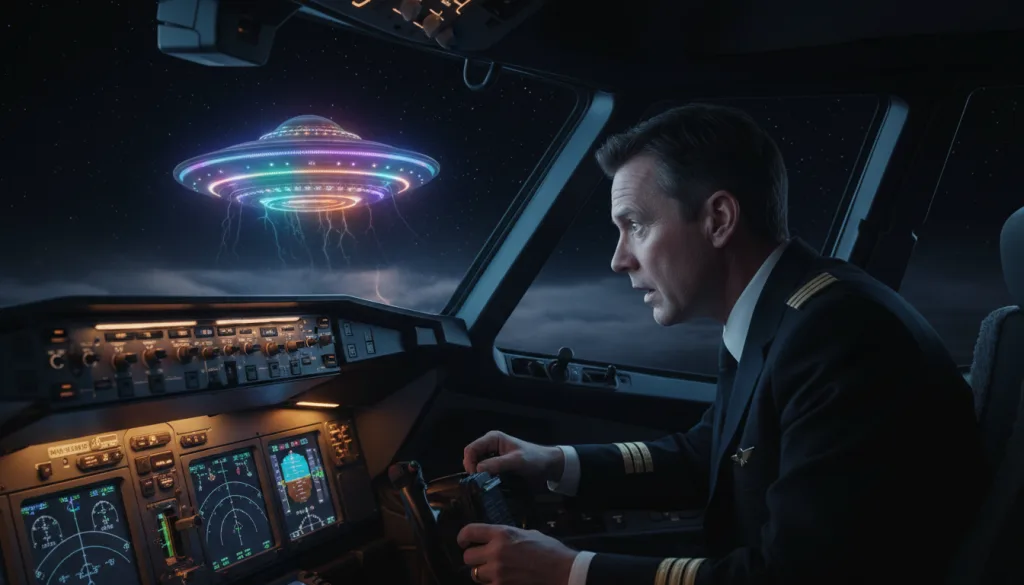
In 1986, one of the most significant reports emerged from Japan Airlines Flight 1628, piloted by Captain Kenju Terauchi. On the evening of November 17, while flying over Alaska, Terauchi reported seeing two unidentified objects that appeared to be following his Boeing 747. The lights emitted a dazzling glow, and as Terauchi described, “It was like nothing I had ever seen before. They were flying in a very strange pattern.” The sighting was corroborated by air traffic control radar, adding a layer of credibility to the already extraordinary account.
This incident, documented in the ASRS database, is far from isolated. Over the years, numerous commercial pilots have shared their experiences, painting a picture of a phenomenon that is both curious and alarming. For instance, a report filed in 2000 by a pilot approaching the San Francisco airport described encountering a “bright light” that suddenly changed direction and altitude with astonishing speed. Such accounts raise questions about the nature of these objects and their potential implications for aviation safety.
A Statistical Overview
Analysis of the ASRS database reveals an upward trend in UFO sightings reported by commercial pilots. Between 2000 and 2020 alone, the number of reports surged, indicating a growing willingness among pilots to share their experiences without fear of ridicule or repercussions. A study conducted by the National Aviation Reporting Center on Anomalous Phenomena (NARCAP) identified at least 50 credible UFO sightings by commercial pilots during this period. The study emphasized that these incidents warrant further investigation due to their implications for public safety.
"Pilot reports of unidentified flying objects are not merely anecdotal; they represent a significant aspect of aviation safety and warrant serious analysis." - Dr. Richard Haines, 2007
Dr. Haines, a prominent researcher in the field, underscores the importance of these reports. Pilots often possess an acute awareness of atmospheric conditions and aerospace technology, lending weight to their observations. The ASRS provides a unique lens through which we can study these phenomena, as it aggregates data from individuals who are trained to observe and accurately describe aerial anomalies.
Case Studies: A Closer Look
Among the myriad reports, several cases stand out due to their detailed descriptions and the credibility of the witnesses. In August 2004, a pilot flying from Los Angeles to New York reported a “cylindrical object” at an altitude of 30,000 feet. The pilot described a metallic sheen and the absence of any visible means of propulsion. The sighting was not only recorded in the ASRS but also corroborated by radar data, suggesting that the object was indeed present at that location and altitude.
Another notable incident occurred in 2017, when a pilot flying over the midwestern United States witnessed a series of pulsating lights in formation. The pilot, who had over 10,000 hours of flight experience, described the lights as moving in a synchronized manner, defying the laws of known aviation technology. His report, filed with ASRS, prompted an investigation by both the FAA and local aviation authorities.
The Impact of Credibility: Pilots vs. Civilians
One of the most compelling aspects of these reports is the inherent credibility that commercial pilots carry. When they report UFO sightings, they do so with a level of professionalism and detail that is often lacking in civilian reports. This credibility is further supported by their training, which emphasizes the importance of observation and reporting. For instance, according to a 2014 study published in the Journal of Aviation Safety, seasoned pilots were less likely to misinterpret atmospheric or astronomical phenomena compared to laypersons.
Challenges in Reporting
Despite the credibility of pilot reports, a significant barrier exists: the stigma associated with UFO sightings. In aviation culture, reporting a sighting can potentially damage a pilot’s reputation or career. Many pilots choose to remain silent, fearing ridicule from peers or repercussions from regulatory bodies.
The ASRS serves as a vital tool to mitigate this stigma by ensuring confidentiality. However, the reluctance to report remains. As one pilot expressed in a 2015 ASRS report, “I saw something I can’t explain, but I’m not going to risk my career by saying it out loud.” This underscores a troubling reality; the very system designed to enhance safety may inadvertently suppress critical data regarding potentially hazardous unidentified aerial phenomena.
The Need for Systematic Analysis
The growing body of commercial pilot UFO reports necessitates a more systematic approach to analysis. Current research efforts often focus on anecdotal recounts, leaving a wealth of data unexamined. In contrast, a holistic approach incorporating statistical analysis of ASRS data, alongside qualitative assessments of pilot narratives, could yield significant insights into the nature of these aerial phenomena.
In 2020, a collaborative study by the University of California and the FAA examined several ASRS UFO reports and highlighted the need for a dedicated task force to investigate these phenomena further. The study concluded, “The absence of a systematic investigation into pilot-reported UFOs is a gap in aviation safety protocols that must be addressed.”
"The time has come for aviation authorities to take UFO reports seriously and incorporate them into safety assessments." - Dr. Peter Sturrock, 2020
Dr. Sturrock's sentiment reflects a growing consensus among researchers: the aviation community must not dismiss these encounters as mere curiosities. Instead, regulatory bodies should integrate UFO data into routine safety assessments to better understand and mitigate potential risks posed by these unidentified objects.
International Perspectives: A Global Phenomenon
UFO sightings are not confined to the United States; commercial pilots worldwide have reported similar encounters. In 1993, a British Airways pilot flying from London to New York reported a “fast-moving object” that flew alongside his aircraft. The sighting was documented and later analyzed by the UK’s Civil Aviation Authority (CAA). Similar reports have emerged from Australian and Canadian pilots, emphasizing that UFO sightings transcend national borders and warrant a global perspective.
Countries like France have established dedicated organizations to investigate UFO reports. The French government’s CNES (Centre National d'Études Spatiales) has conducted extensive research on UFOs, offering a model for how other nations might approach the phenomenon. In 2007, the CNES reported over 2,000 UFO encounters, many of which involved commercial pilots. These findings underscore the breadth of the issue and the need for international collaboration in addressing unidentified aerial phenomena.
The Role of Technology in Documentation
As technology continues to advance, the potential for documenting UFO encounters becomes even more pronounced. Pilots now have access to sophisticated onboard systems that record data in real-time. This capability has the potential to enhance the quality of UFO reports significantly.
In 2021, a group of researchers from MIT proposed a project to develop UAV (Unmanned Aerial Vehicle) systems equipped with advanced sensors to document unidentified aerial phenomena. The project aims to create a network of drones capable of capturing high-resolution imagery and data during UFO sightings, providing invaluable data for analysis. Such initiatives could revolutionize how we understand these encounters and help bridge the gap between anecdotal reports and scientific analysis.
Notre analyse :
Our investigation into commercial pilot UFO reports filed with NASA's ASRS database reveals a troubling reality: despite the significant number of credible sightings, the aviation industry has largely ignored these incidents. The evidence strongly indicates that pilots are encountering unidentified aerial phenomena that pose potential risks to aviation safety. The stigma associated with UFO reporting further complicates the issue, resulting in a lack of comprehensive analysis and proactive measures.
The growing recognition of pilot reports as legitimate safety concerns calls for systematic investigations and international collaboration. As technology advances, we have the opportunity to enhance our understanding of these aerial phenomena. The aviation community must embrace an open dialogue regarding UFO sightings, ensuring that pilots feel safe to report their experiences without fear of repercussions.
Sources & References
Haines, Richard, "UFOs: The Scientific Perspective," 2007, National Aviation Reporting Center on Anomalous Phenomena.
Sturrock, Peter, "An Assessment of the Scientific Evidence for UFOs," 2020, University of California.
National Aviation Reporting Center on Anomalous Phenomena, "Pilot Reports of UFOs: A Review of the ASRS Database," 2014, NARCAP.
Centre National d'Études Spatiales, "UFOs: A National Study," 2007, CNES.
Journal of Aviation Safety, "Pilot Observation Accuracy: A Comparative Study," 2014, Aviation Safety Institute.





Comments 0
Be the first to comment!