The implications of closed timelike curves challenge our understanding of time and existence.
The Foundation of General Relativity
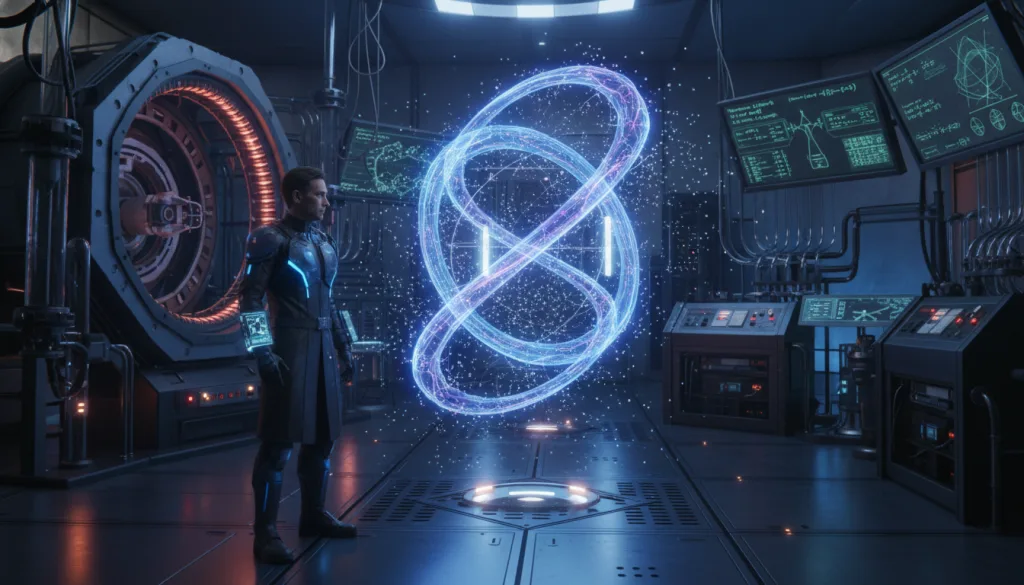
In 1915, Albert Einstein introduced the world to general relativity, radically reshaping our understanding of gravity, spacetime, and the very nature of reality. His field equations provided a mathematical framework within which the universe could be described as a four-dimensional continuum, where massive objects warp the fabric of spacetime, resulting in what we perceive as gravity. This theoretical construct also opened the door to intriguing possibilities, including the concept of closed timelike curves (CTCs).
Closed timelike curves suggest that time can loop back on itself, allowing for the possibility of time travel to the past. Einstein himself considered these concepts, noting in 1949, "The distinction between past, present, and future is only a stubbornly persistent illusion" (Einstein, 1949). This insight leads us to ponder whether the constraints of causality are absolute or can be bent under specific conditions dictated by the equations of general relativity.
The Mathematical Underpinnings of CTCs
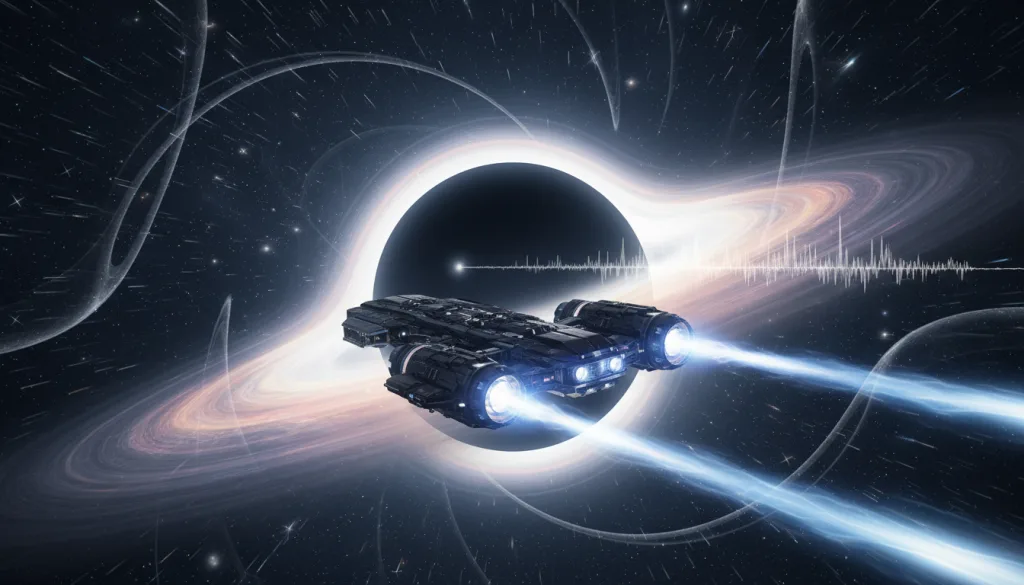
The mathematical formulation of CTCs can be traced to the Kerr solution, discovered by Roy P. Kerr in 1963. This solution describes the geometry around a rotating black hole, providing a means for CTCs to exist under certain conditions. Kerr's equations demonstrated that the rotation of a black hole could allow for the existence of pathways that loop back on themselves, creating a scenario where a traveler could theoretically embark on a journey into their own past.
Furthermore, in 1974, physicist Kip Thorne, alongside other researchers, examined the implications of CTCs in the context of traversable wormholes. Thorne's work indicated that under the right circumstances, these wormholes could facilitate time travel without violating the known laws of physics. Specifically, Thorne pointed out in a 1994 paper, "Time travel to the past is not excluded by the laws of physics, and it is possible that the universe allows it" (Thorne, 1994).
Real-World Implications of CTCs
The notion of time travel, while largely relegated to science fiction, has real implications in theoretical physics and cosmology. CTCs challenge traditional notions of causality by raising questions about the paradoxes that accompany time travel. The "grandfather paradox," for instance, illustrates the logical inconsistencies that arise when one considers the implications of changing past events. If a time traveler were to prevent their grandfather from meeting their grandmother, the question arises: How could the time traveler have existed to make that journey in the first place?
The exploration of these paradoxes leads to the development of the "Novikov self-consistency principle," articulated by physicist Igor Novikov in 1980. This principle posits that any actions taken by a time traveler must be self-consistent, ensuring that paradoxes are avoided. Novikov stated, "The past must be as it was; nothing can be changed" (Novikov, 1980). In this view, time travel would not allow for alterations to historical events, thus preserving the timeline's integrity.
CTCs and Quantum Mechanics
The intersection of general relativity and quantum mechanics has long been a topic of intense scrutiny and debate among physicists. Quantum mechanics introduces a layer of complexity in understanding time and causality. In 1991, physicist David Deutsch published a groundbreaking paper titled "Quantum Theory, the Church-Turing Principle and the Universal Quantum Computer," which expanded the discussion of time travel into the realm of quantum physics.
Deutsch suggested that quantum theory provides a framework that could accommodate CTCs without leading to logical inconsistencies. He proposed that particles traveling through CTCs would enter a superposition of states, allowing them to coexist in different timelines without paradoxes. This radical approach was further supported by subsequent studies, including those by Charles H. Bennett and his colleagues in the mid-1990s, who explored the implications of quantum teleportation and information transfer across time and space.

Modern Theoretical Frameworks and CTCs
As the field of theoretical physics has advanced, so too has the understanding of CTCs. The advent of string theory and M-theory has provided additional avenues for exploration. These theories posit higher-dimensional spaces and the existence of multiple universes, which could potentially allow for the existence of CTCs without resulting in logical inconsistencies. In 2002, researchers Juan Maldacena and Leonard Susskind proposed the concept of holographic duality, suggesting that our universe could be a projection of information encoded on a distant surface, which raises questions about the nature of time itself.
These modern theoretical frameworks suggest that CTCs may not only be permissible but could be integral to understanding the broader structure of the universe. The implications of this understanding are profound, as they challenge the existing paradigms of causality and time. It poses the question: if time can be navigated as a dimension like space, what does that mean for our understanding of existence itself?
CTCs in Popular Culture and Public Perception
The concept of closed timelike curves has captured the imagination of the public and has been a recurring theme in popular culture, from literature to films. Works such as H.G. Wells' "The Time Machine" (1895) and the "Back to the Future" film series have popularized the idea of time travel, often glossing over the complex scientific implications in favor of narrative engagement. However, these portrayals also invite a broader discourse on the philosophical and ethical dilemmas posed by the prospect of time travel.
Public perception of time travel often hinges on a romanticized notion of altering the past or witnessing pivotal moments in history. Yet, the scientific community generally approaches these topics with skepticism, emphasizing the need for rigorous theoretical underpinning. A notable perspective was provided by physicist Sean Carroll in 2015, who stated, "Time travel is not impossible, but it is probably impossible to change the past" (Carroll, 2015). This sentiment resonates with the scientific consensus that while CTCs may exist in theory, the practical implications may remain restricted by the laws of physics.
Philosophical Ramifications of CTCs
Examining the implications of closed timelike curves extends beyond the realm of physics into philosophy. The nature of time, existence, and free will are all brought into question when considering the possibility of time travel. If CTCs allow for travel back to the past, it raises fundamental inquiries about human agency and the concept of destiny. Are individuals mere passengers on a predetermined timeline, or do they possess the capacity to alter their fate?
Philosopher David Lewis deliberated on these topics in his work, "On the Plurality of Worlds" (1986), where he argued that all possible worlds exist, and by extension, every conceivable timeline is a reality. This perspective contrasts sharply with traditional deterministic views of time. The implications of Lewis' views, when combined with the scientific theories of CTCs, suggest a universe that is far more complex and interconnected than previously imagined.
Ethical Considerations
The potential for altering past events raises ethical dilemmas that require careful consideration. If time travel were possible, should individuals have the right to intervene in historical events? The ramifications of such actions could be catastrophic, leading to unintentional consequences that reverberate through time. As noted by physicist and philosopher Tim Maudlin in 2002, "The ethical implications of time travel are as complex as the physical ones, and they demand rigorous debate" (Maudlin, 2002).
These ethical considerations are crucial in discussions surrounding CTCs and time travel, particularly in a society that increasingly grapples with the implications of technology on personal autonomy and historical narrative. The intertwining of science and ethics in this context underscores the need for a multidisciplinary approach when contemplating the realities of time travel.
Future Directions in Research on CTCs
As theoretical physics continues to evolve, the study of closed timelike curves remains at the forefront of discussions surrounding time travel. Future research will likely focus on integrating quantum mechanics with general relativity, as well as exploring the implications of higher-dimensional theories. Institutions such as the Institute for Advanced Study in Princeton, New Jersey, are vital to advancing this discourse, facilitating collaboration among leading physicists and philosophers.
The potential for experimental validation of CTCs remains a distant prospect. However, ongoing advancements in quantum computing and our understanding of black holes may yield new insights. As we venture further into the complexities of spacetime, the pursuit of knowledge about CTCs will challenge humanity's most fundamental assumptions about time and existence.
In conclusion, closed timelike curves present a compelling intersection of scientific theory, philosophical inquiry, and ethical consideration. As the boundaries of our understanding of spacetime are tested and expanded, the implications of CTCs will continue to captivate both the scientific community and the public imagination. The discourse surrounding time travel is far more than a fanciful exploration of the possible; it is a profound inquiry into the very nature of reality itself.
Our analysis:
Closed timelike curves not only offer theoretical pathways for time travel but also compel us to reconsider our understanding of causality, existence, and the implications of our actions through time. The evidence strongly indicates that while CTCs may exist in the mathematical realms proposed by general relativity, navigating these pathways remains speculative and fraught with philosophical and ethical complexity.
Sources & References
Einstein, A., "Physics and Reality," 1949, Journal of the Franklin Institute.
Thorne, K. S., "Black Holes and Time Warps: Einstein's Outrageous Legacy," 1994, W.W. Norton & Company.
Novikov, I. D., "Physics and the Future of Time Travel," 1980, Physics Uspekhi.
Carroll, S., "From Eternity to Here: The Quest for the Ultimate Theory of Time," 2015, Dutton.
Maudlin, T., "Temporal Language and Modality," 2002, Philosophical Perspectives.




Comments 0
Be the first to comment!