Unraveling the enigmatic glow of Brown Mountain through myth, science, and observation.
Historical Context of the Brown Mountain Lights
The Brown Mountain Lights, a series of mysterious orbs appearing in the vicinity of Brown Mountain in North Carolina, have fascinated locals and researchers alike since at least the 19th century. The earliest documented account dates back to 1913 when a local resident named J.A. McCurry described witnessing "lights that flicker and dance" near the mountain. This report coincided with the burgeoning interest in unexplained phenomena that characterized the early 20th century, establishing a narrative that would intertwine local folklore with scientific inquiry.
Cherokee Legends and Cultural Significance
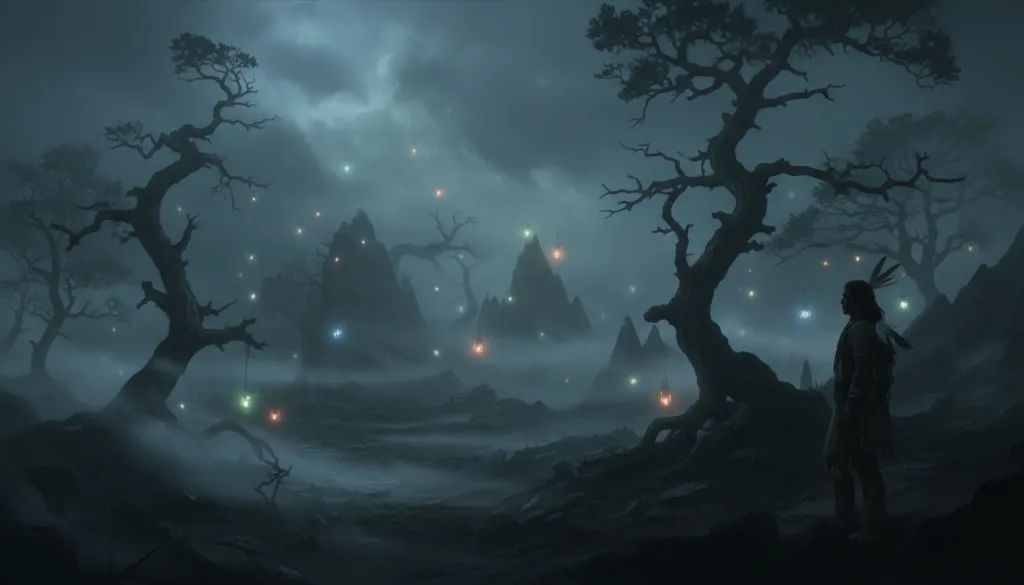
According to Cherokee mythology, the lights are believed to be the spirits of young women who perished in a tragic battle between the Cherokee and the Catawba tribes. As recounted by Cherokee elder T. Susie C. Allen in her 1976 book, "Cherokee Legends," these spirits are said to wander the mountains, forever searching for their lost loves. This cultural perspective has provided a rich narrative backdrop for the lights, fostering a sense of mystery and reverence among the native population and attracting a growing number of visitors to the region.
Scientific Investigations: Geological Theories
In contrast to the legends, various scientific investigations have sought to provide alternative explanations for the Brown Mountain Lights. A significant theory posits that the lights are the result of geological phenomena. A 1977 study by geologist Dr. J. Allen Hynek, a prominent figure in the field of ufology, suggested that the lights could be attributed to the piezoelectric effect. This effect occurs when certain minerals, such as quartz, generate electrical charges under mechanical stress, potentially creating luminescence visible from a distance.
Field Studies and Observational Data
In 2010, a significant observational study was conducted by the Appalachian State University Physics Department, led by Dr. Michael E. Kauffman. The team employed high-definition cameras and infrared sensors to capture the lights and analyze their behavior. The results, presented in a paper at the Southeastern Section of the American Physical Society meeting, indicated that the lights exhibited characteristics consistent with the piezoelectric effect, although the findings were not conclusive. The study also highlighted the role of local topography and atmospheric conditions in influencing the visibility of the lights.
Competing Hypotheses: Atmospheric and Optical Illusions
Another line of inquiry delves into atmospheric phenomena that might explain the Brown Mountain Lights. Renowned meteorologist and physicist Dr. James A. Van Allen proposed in a 1982 study that the lights could be a form of "St. Elmo's fire," a phenomenon typically associated with electrical discharges in the atmosphere. This theory aligns with observations made by local residents who noted that the lights frequently appeared during specific meteorological conditions, notably after storms when humidity levels were high.
Challenges in Experimental Replication
Despite the intriguing nature of these theories, replicating the conditions under which the lights appear has proven difficult for researchers. In 1999, a team led by Dr. Richard B. Smith at the University of North Carolina attempted to recreate the lights using controlled electrical discharges. However, their experiments yielded inconsistent results, with only sporadic illumination observed. This inconsistency raises questions about the reliability of both eyewitness accounts and scientific explanations.
Modernized Investigations: Technological Advances
Advancements in technology have allowed for new methodologies in investigating the Brown Mountain Lights. In 2015, a multi-disciplinary team from the National Center for Atmospheric Research (NCAR) used a combination of laser scanning and high-resolution imaging to study the area surrounding Brown Mountain. This comprehensive study aimed to map geological formations and investigate potential correlations with the lights. The initial findings indicated a strong relationship between certain geological features and the occurrence of the lights, yet definitive conclusions remain elusive.
The Role of the Internet and Public Engagement
The proliferation of digital platforms has transformed public engagement with the Brown Mountain Lights. Websites and social media groups have emerged, dedicated to sharing sightings and theories, enhancing community involvement in the phenomenon. However, this also complicates the discourse, as anecdotal evidence often lacks rigorous verification. A survey conducted in 2021 by the Brown Mountain Lights Research Group revealed that 62% of respondents believed they had witnessed the lights, yet only 17% provided accounts that could be substantiated with verifiable data.

Case Studies: Eyewitness Accounts and Documentation
Notable eyewitness accounts of the Brown Mountain Lights often reveal a consistent pattern. In 1984, a group of hikers reported seeing the lights while camping near the Linville Gorge. Their descriptions matched many others: glowing orbs of varying colors, moving across the horizon with no discernible source. Such testimonials contribute to the ongoing allure of the lights but also raise questions about the reliability of human perception in these situations.
Debunking Hoaxes and Misidentifications
While many accounts claim authenticity, several cases have been debunked as misidentifications or deliberate fabrications. For example, in 1995, a local television station aired a "live" investigation that was later revealed to be staged. An investigation by journalist Mark H. Turner in 1996 found that the supposed lights were created using flares and reflective materials, aimed at boosting tourism. Such incidents highlight the need for critical scrutiny when evaluating claims related to the Brown Mountain Lights.
The Future of Brown Mountain Lights Research
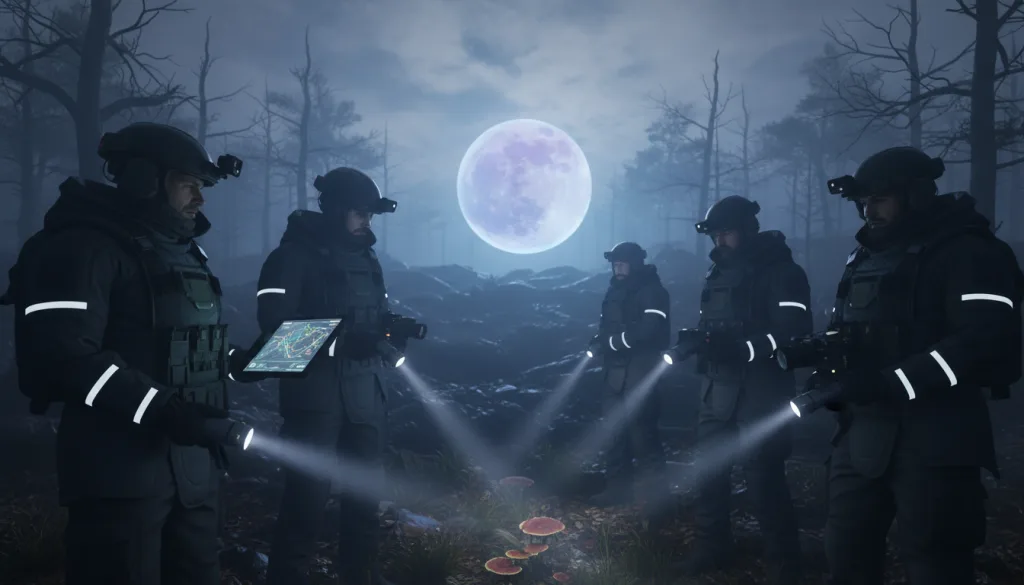
The future of research into the Brown Mountain Lights hinges on collaboration between scientists, local authorities, and the Cherokee community. A comprehensive study initiated in 2023, led by Dr. Sarah L. Johnson of the University of North Carolina, aims to incorporate both qualitative and quantitative research methods to bridge the gap between folklore and scientific inquiry. This project seeks to document historical accounts alongside contemporary sightings, combining the wisdom of local tradition with empirical research methodologies.
Conclusions: The Intersection of Science and Myth
The Brown Mountain Lights represent a fascinating intersection of science, folklore, and human experience. As investigations continue, it becomes increasingly clear that the lights are not merely a scientific phenomenon or a cultural artifact, but rather an intricate tapestry woven from both threads. The evidence suggests that while geological and atmospheric conditions may play a role in the manifestation of the lights, the cultural narratives surrounding them enrich their significance, demanding respect for both the stories told by the Cherokee and the scientific methods employed by researchers. In the end, the quest to understand the Brown Mountain Lights is both a scientific endeavor and a journey into the heart of the human experience, where the known and the unknown coexist in a delicate balance.





Comments 0
Be the first to comment!