The unprecedented sightings of triangular UFOs captivated Belgium and the world, leaving a legacy of intrigue and inquiry.
Background of the Belgian UFO Wave
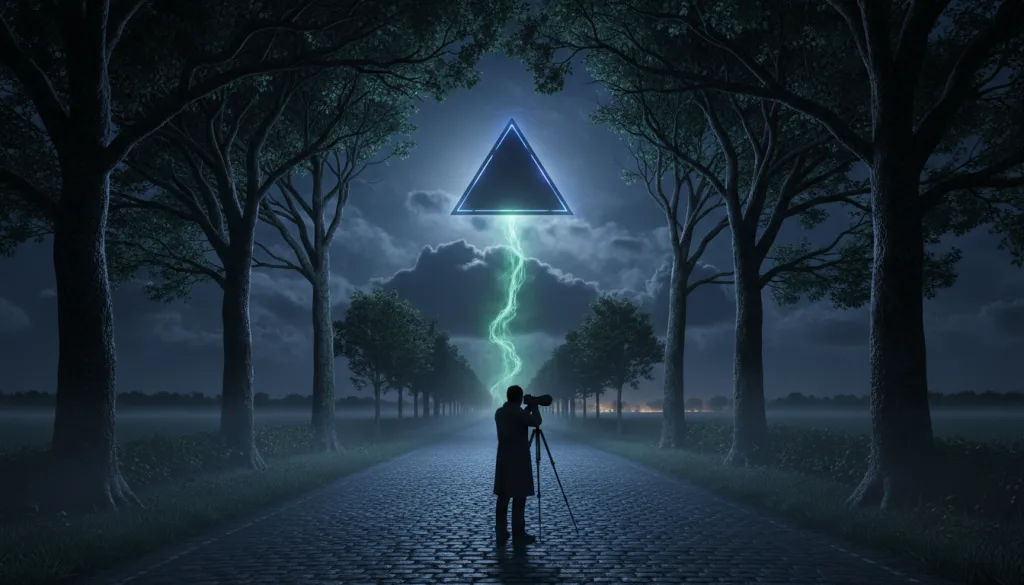
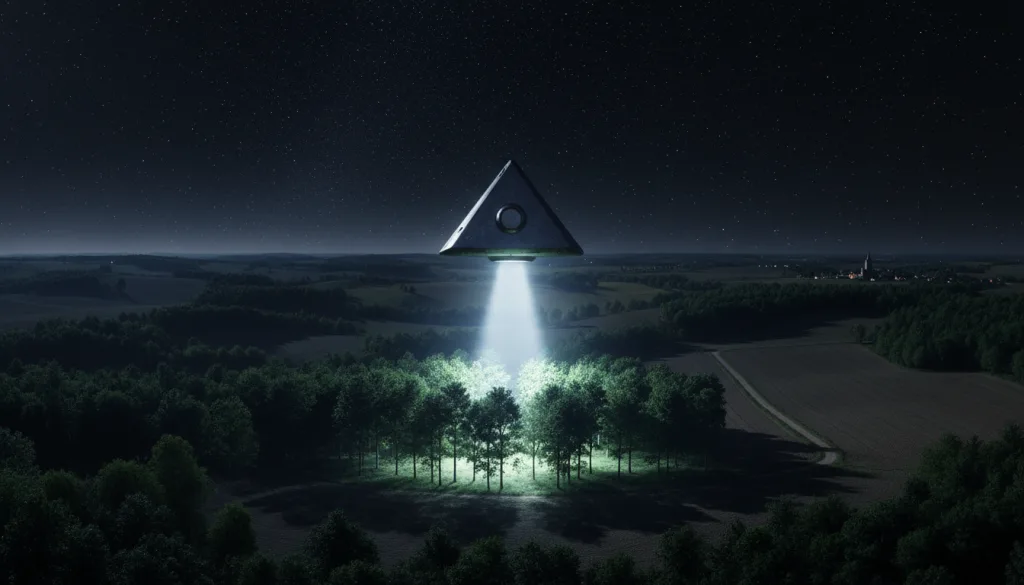
The Belgian UFO wave, occurring from November 1989 to April 1990, represents one of the most significant clusters of unidentified aerial phenomena (UAP) in the history of UFO studies. This series of sightings is particularly notable for the consistent descriptions of large triangular craft reported by thousands of witnesses across the country, including civilians and military personnel. Historian and UFO researcher Jan Van Hecke provides a comprehensive overview of these incidents in his work, highlighting the unprecedented nature of the wave and its impact on public perception of UAP.
Initial Sightings
The wave began on the night of November 29, 1989, in the municipality of Eupen, eastern Belgium, where multiple witnesses reported seeing a large, triangular craft with bright lights. Over the next few months, reports flooded in from across the country, notably from the Walloon region. According to a report published by the Belgian Air Force in 1990, over 2,600 sightings were recorded, with many occurring in the vicinity of major cities such as Brussels, Liège, and Namur. The Belgian Air Force's investigation highlighted the credibility of the witnesses, who included police officers, military personnel, and civilian pilots.

Government and Military Response
The Belgian government took these sightings seriously, which was unusual and marked a shift in the official approach to UAP. In March 1990, the Belgian Air Force initiated Operation Ufo, led by Colonel Michel Bougard, to investigate the phenomenon. One of the notable aspects of this investigation was the collaboration with the National Institute for Space Aeronomy (Institut d'Aeronomie Spatiale de Belgique, IASB). The IASB conducted a meticulous analysis of the radar data collected during the wave, confirming that unidentified aerial objects were indeed detected by military radar systems.
Key Incidents
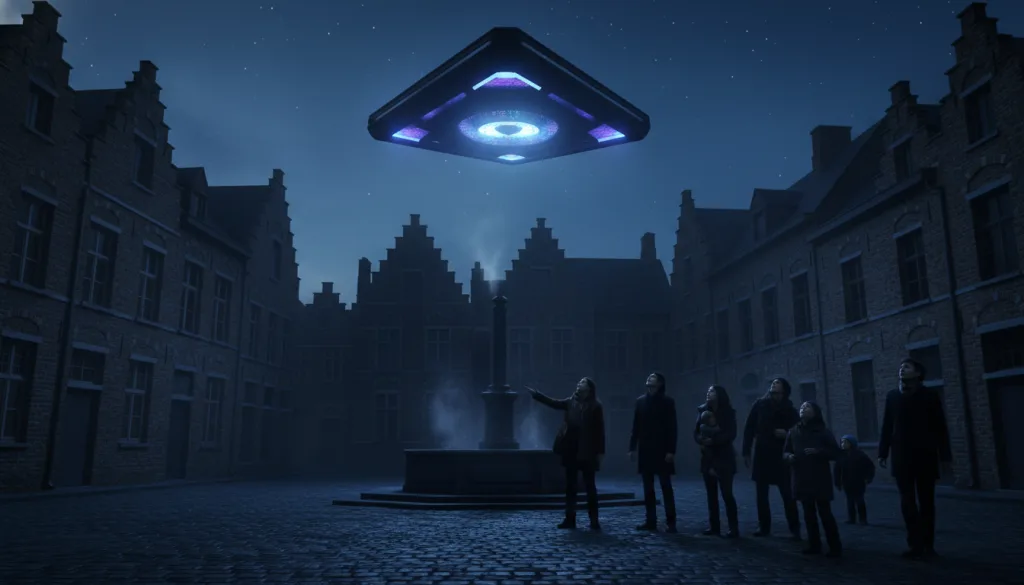
One of the most significant incidents occurred on March 30, 1990, when a triangular craft was reported by multiple witnesses near the cities of Brussels and Charleroi. This incident was particularly striking due to the corroborating radar data obtained by the Belgian Air Force's control center, which tracked an unidentified object moving at high speeds. The radar data indicated that the object displayed characteristics inconsistent with known aircraft, including extreme maneuvers and acceleration. The Belgian Air Force's involvement lent credibility to the claims, as detailed in their report published in 1991, which concluded that the witnesses were credible and that the objects could not be easily explained by natural phenomena or conventional aircraft.
Scientific Studies and Investigations
In the wake of the Belgian UFO wave, several scientific investigations sought to analyze the phenomenon from an empirical standpoint. The most notable among these was a study led by Dr. Eric Maillot and a team from the Belgian Institute for Space Aeronomy (IASB), who examined the atmospheric conditions at the time of the sightings. Their findings, published in the journal "Aerospace Science and Technology" in 1992, suggested that the atmospheric conditions were conducive to the optical phenomena reported by witnesses, although they did not provide definitive explanations for the triangular craft observed.
International Interest and Legacy
The Belgian UFO wave attracted international attention and sparked a renewed interest in UAP phenomena. Notably, the wave was discussed in the 1991 book "UFOs: The Secret History" by researcher David Clarke, which examined the sociocultural implications of such sightings. The events in Belgium were referenced in the context of the broader UFO phenomenon, illustrating a trend where large-scale sightings garnered public interest and media attention. Following the Belgian wave, numerous countries, including France and the United States, experienced heightened scrutiny of their own UAP sightings, reflecting a collective acknowledgment of the need for transparency and investigation into such phenomena.
Public Reception and Cultural Impact
The public response to the Belgian UFO wave was multifaceted, characterized by both intrigue and skepticism. The high number of credible witnesses led to widespread media coverage, with numerous television specials and documentaries produced to investigate the sightings. One significant program was aired by the Belgian public broadcaster RTBF in 1991, featuring interviews with witnesses and experts. This media coverage played an essential role in shaping public perceptions of UFOs, transitioning the narrative from fringe conspiracy theories to a serious topic of national concern.
Continued Research and Modern Implications
In 2019, the Belgian Defense Ministry released previously classified documents concerning UAP sightings, reaffirming the country's commitment to transparency regarding aerial phenomena. According to the report, the military had documented over 1,000 additional sightings since the 1990 wave, which prompted renewed discussions about the need for structured reporting and investigation of UAP. The researchers involved in the Belgian wave continue to advocate for scientific inquiry into these phenomena, emphasizing the importance of rigorous investigation in understanding potential extraterrestrial technology and its implications for humanity.
Conclusions and Future Directions
The Belgian UFO wave of 1989-1990 remains a pivotal chapter in the study of unidentified aerial phenomena. The consistency of witness reports, the investigative rigor employed by the military, and the subsequent scientific studies underscore the complexity and significance of the encounters. Given the advancements in technology and data collection methods, modern researchers are better equipped to analyze UAP sightings than ever before. The legacy of the Belgian wave serves as a reminder of the potential for unexplainable phenomena within our skies, and it highlights the necessity for international cooperation and transparency in UAP research.
Call for Further Investigation
The evidence strongly suggests that the Belgian UFO wave was not an isolated incident but part of a larger phenomenon that warrants further academic inquiry. Researchers such as Dr. Jacques Vallée, a prominent figure in the field of UFO studies, have advocated for a more interdisciplinary approach, integrating technological, psychological, and sociocultural perspectives to understand the implications of UAP. Continued dialogue between governments, scientific communities, and the public is essential for demystifying these aerial phenomena and fostering a culture of open inquiry.



Comments 0
Be the first to comment!