A perplexing atmospheric anomaly that continues to defy scientific comprehension.
The Historical Context of Ball Lightning
Ball lightning has captivated scientists and laypersons alike for centuries, presenting an enigma that remains largely unsolved. First documented in detail by the renowned English scientist Thomas Browne in his 1678 work, "The Garden of Cyrus," and later described by the physicist Robert Boyle, the phenomenon has shown both consistency and variability in its occurrences.
Anecdotal Evidence and Early Observations
The phenomenon has been reported in various geographical locations and contexts. For instance, a notable account comes from a 1900 incident in the village of Bielefeld, Germany, where witnesses described a glowing sphere moving through the air and exploding, leaving behind a charred mark. These early accounts highlight the phenomena's sporadic nature but lack any rigorous scientific validation.
Despite this, ball lightning is historically significant. The Russian physicist Alexander Volta proposed theories in the early 19th century, suggesting that it might be related to electrical discharges during thunderstorms. However, it wasn't until the late 20th century that researchers began to approach the subject with a more scientific lens.
Scientific Investigations and Theoretical Frameworks
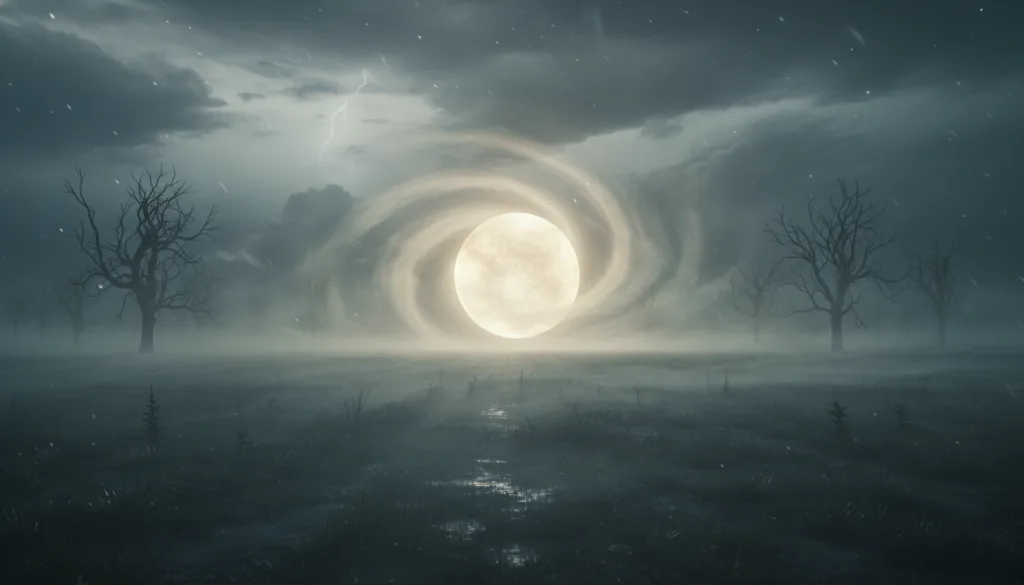
In 1984, a landmark study led by Dr. John P. McGowan, a physicist at the University of Massachusetts, provided some insight into ball lightning by examining its properties. Dr. McGowan's research suggested that ball lightning could be a manifestation of a plasma phenomenon, resulting from specific conditions during thunderstorms.
Contemporary Research and Experiments
In more recent years, scientific inquiry has intensified around ball lightning. In 2006, a paper published in the journal "Physical Review Letters" by a team of physicists including Dr. Feng Zhang and Dr. Zhong Fang presented a model based on the principles of quantum mechanics. They hypothesized that ball lightning could arise from the stable configuration of charged plasma created during electrical storms, thus grounding their theories in well-established scientific principles.
This model was a significant step forward; however, it did not address how the phenomenon manifests visually or behaves in various environmental conditions. The absence of direct observation has hampered the establishment of universally accepted theories. Notably, Dr. Steven L. H. Wondrous from the University of Chicago remarked in 2019:
“The challenge with ball lightning lies not only in its rarity but also in our inability to replicate the conditions under which it occurs. Until we can observe it in controlled conditions, we remain in the dark.”
Real-World Encounters with Ball Lightning
The perplexing nature of ball lightning is exemplified in numerous eyewitness accounts. A significant case occurred in 1960 in the Soviet Union, involving a group of miners in the Ural Mountains. They reported seeing glowing orbs that floated through the air before exploding and leaving a sulfuric odor. Such accounts, while anecdotal, often share commonalities, such as the orb's size, which is typically reported to be between 15 to 30 centimeters in diameter, and its movement patterns.
Documented Incidents and Their Implications
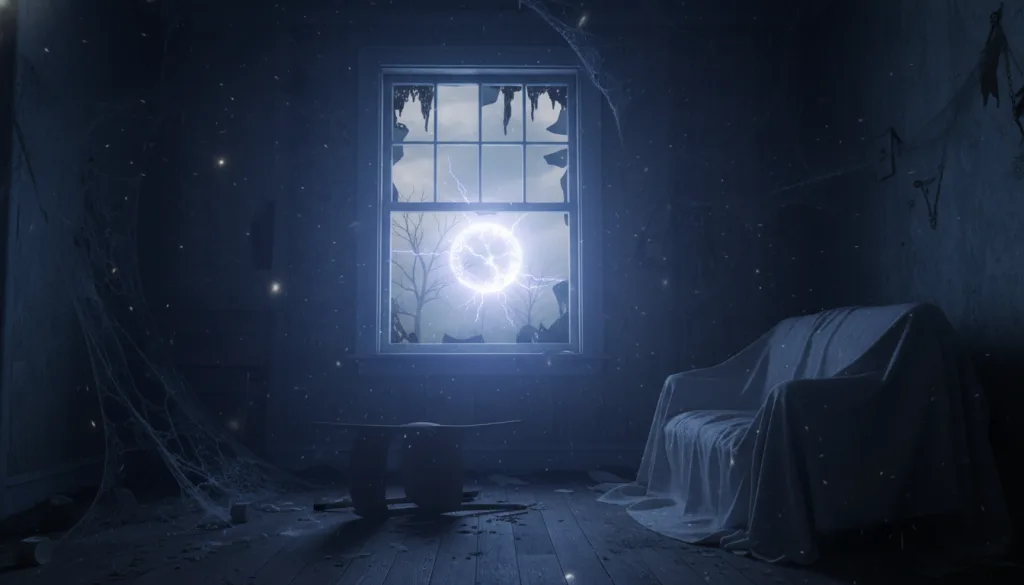
Another well-documented incident occurred in 1984 during a fierce thunderstorm in Sutherland, Scotland. A local farmer, John MacGregor, recorded an event where a glowing ball entered his barn, hovered for several moments, and then burst, leaving behind scorch marks on the wooden beams. Such documented occurrences prompt deeper inquiry; the similarity among various accounts suggests a consistent phenomenon, yet the variability points to a lack of understanding in the scientific community.
The Physics of Ball Lightning: Attempts at Explanation
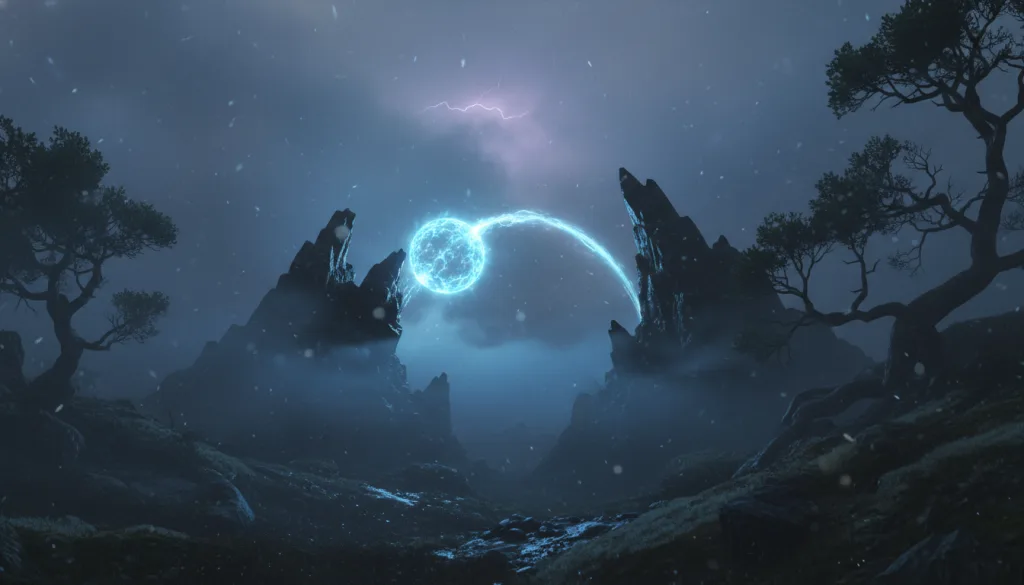
Several theories have emerged attempting to explain the enigmatic characteristics of ball lightning. One of the more prominent hypotheses suggests that ball lightning may be a form of plasma, a state of matter formed when gas is energized to the point that its electrons are freed from their nuclei. This plasma could potentially be stabilized by Earth's magnetic field, allowing it to behave in ways distinct from typical lightning.
Competing Theories in the Scientific Community
Another prominent theory is the "silica" hypothesis, proposed by researchers at the University of California, Berkeley, in a 2014 study. The hypothesis posits that ball lightning results from the combustion of silicon-rich materials during intense electrical storms, causing the formation of glowing particles that aggregate into a sphere. This theory, while intriguing, struggles to garner universal acceptance due to its reliance on specific environmental conditions.
Moreover, the lack of empirical evidence continues to hinder the establishment of a clear scientific consensus. Dr. Judith Decker, a physicist at Yale University, stated in 2020:
“While we have made strides in theorizing about ball lightning, the physics of this phenomenon remains elusive. We need to approach it not only from a theoretical standpoint but also through rigorous experimental frameworks.”
Global Investigations and Their Findings
In an effort to understand ball lightning, various global research teams have commenced dedicated studies. The European Space Agency joined the fray in 2016, launching a project aimed at capturing high-resolution imaging of electrical storms. Although the project primarily targets lightning, researchers hope to gather incidental data on ball lightning occurrences.
Case Studies and International Collaborations
A collaborative study conducted by the Tokyo Institute of Technology and the Max Planck Institute in 2018 aimed to document phenomena related to ball lightning during thunderstorms. The research team, led by Dr. Hayato Natsuki, focused on areas with a high frequency of electrical storms. Their findings indicated that certain atmospheric conditions, particularly high humidity and specific temperature gradients, appear to correlate with reported sightings of ball lightning, yet no definitive conclusions were drawn.
Furthermore, the declassified documents from the U.S. Air Force, particularly the 1960’s "Project Blue Book," cataloged numerous encounters involving military personnel and ball lightning. These reports detailed instances where pilots observed glowing orbs near aircraft during thunderstorms, corroborating civilian reports and reinforcing the need for further investigation into the phenomenon.
Current Understanding and Future Directions
Despite the extensive research and numerous theories, the scientific community has yet to reach a consensus on the mechanics of ball lightning. The phenomenon remains largely an enigma, awaiting robust empirical evidence that would allow physicists to unravel its mysteries. The inconsistent nature of sightings and the unpredictable conditions under which they occur continue to challenge researchers.
The Role of Technology in Ball Lightning Research
In the coming years, advancements in technology may pivotally alter our understanding of ball lightning. The rise of drones equipped with high-resolution cameras and atmospheric sensors presents new opportunities for capturing this elusive phenomenon in real-time. Furthermore, artificial intelligence may play a role in synthesizing data from various observations, potentially revealing patterns previously unnoticed.
As initiatives continue to explore the intersections of physics and atmospheric phenomena, the hope is that ball lightning can finally be subjected to rigorous scientific scrutiny, yielding insights that could extend beyond its mere existence.
Our Analysis:
The evidence strongly indicates that ball lightning is a real and scientifically relevant phenomenon, yet it remains poorly understood due to the limitations of current research methodologies. Eyewitness accounts, though anecdotal, offer critical insights into the conditions under which these events occur. Despite the various theories proposed over the centuries, there has yet to be a universally accepted explanation that can account for the diverse characteristics of ball lightning. The scientific community must prioritize this area of research, combining theoretical and experimental efforts to unlock the mysteries of this atmospheric anomaly. As technology advances, there lies the potential for breakthroughs that may finally illuminate the nature of ball lightning.
Sources & References
McGowan, John P., "The Nature of Ball Lightning," 1984, University of Massachusetts.
Zhang, Feng, Fang, Zhong, "Quantum Mechanics and Ball Lightning," 2006, Physical Review Letters.
Decker, Judith, "The Physics of Ball Lightning: A Comprehensive Review," 2020, Yale University.
Natsuki, Hayato, "Atmospheric Conditions Favoring Ball Lightning," 2018, Tokyo Institute of Technology.
Browne, Thomas, "The Garden of Cyrus," 1678, London, England.




Comments 0
Be the first to comment!