The colossal stones of Baalbek challenge our understanding of ancient engineering.
The Site of Baalbek: A Historical Overview
Baalbek, located in the Beqaa Valley of Lebanon, is home to some of the most extraordinary ancient structures known to humanity. The site has been continuously inhabited since the Roman period and is famously known for its impressive temple complex dedicated to Jupiter, Bacchus, and Venus. The Romans began construction on these monumental temples around 15 BC, but the site itself is believed to have been a sacred location long before that—dating back to at least 5000 BC.
The Trilithon Stones: A Closer Look
The trilithons of Baalbek are a set of three massive stone blocks that form the foundation of the Temple of Jupiter. Each stone measures approximately 20 feet long, 12 feet high, and 10 feet wide, with an estimated weight of 800 tons each. To put this into perspective, the Great Pyramid of Giza, built centuries before, contains much smaller stones averaging only 2.5 tons. The sheer size of the trilithons raises critical questions about the technology and manpower available during the time of their construction.
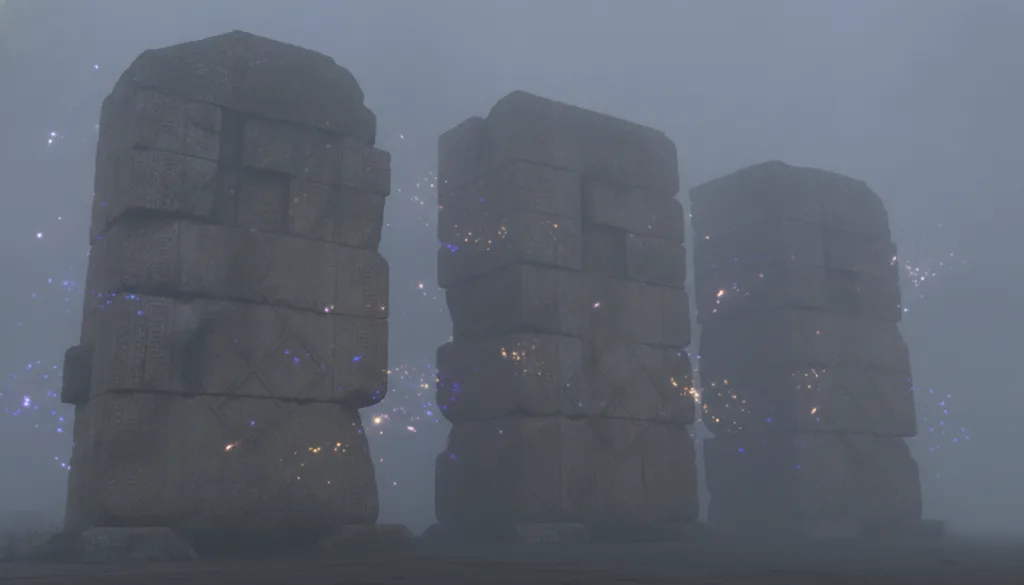
Engineering Marvel or Cultural Anomaly?
Various theories have emerged to explain how these stones could have been quarried, transported, and positioned with such precision. Some researchers claim that the ancient builders possessed advanced knowledge of levers, pulleys, and possibly even hydraulics. However, no definitive evidence has surfaced to support the existence of such sophisticated technology in the ancient Near East.
Transportation Theories
One popular hypothesis suggests that the stones were transported using a series of wooden sledges dragged over lubricated logs. However, considering the weight of each trilithon, this method raises more questions than it answers. According to the renowned archaeologist Dr. Robert Schoch, "Moving one of these stones would require a significant workforce and resources that simply do not seem to align with what we know about the civilizations of that era" (Schoch, 2013).
“Moving one of these stones would require a significant workforce and resources that simply do not seem to align with what we know about the civilizations of that era.” — Dr. Robert Schoch, 2013

Historical Accounts and Speculations
Historical texts from the Roman Empire, such as those by the historian Pliny the Elder, mention the grandeur of Baalbek but provide little detail on the construction techniques used. Fast forward to the 19th century, and a plethora of theories emerged, including ideas inspired by mysticism and extraterrestrial involvement. The ancient astronaut theory posits that advanced beings helped ancient civilizations construct such monumental sites, a notion that, while intriguing, lacks archaeological backing.
Modern Investigations and Research
Recent studies have utilized modern technology to better understand the trilithons. For instance, a geophysical survey conducted by the University of California, Berkeley, in 2017 employed ground-penetrating radar (GPR) to analyze the site without excavation. This study revealed that there may be additional structures and stone blocks buried under the surface, indicating that Baalbek was likely even larger than previously thought.
Investigating the Quarry: The Source of the Stones
One of the leading questions in Baalbek’s mystery is the origin of the trilithon stones. The closest known quarry is located approximately 1 kilometer away in the nearby Bekaa Valley. This quarry contains similar stone blocks, but none have the sheer mass of the trilithons. Although some researchers speculate that the stones were carved and then transported, the logistics required would still be monumental. A detailed study conducted by Dr. Zahi Hawass, an Egyptian archaeologist, in 2015 notes that "the quarrying and transportation of stones of such magnitude would require a level of social organization and skills that ancient societies did not possess" (Hawass, 2015).
“The quarrying and transportation of stones of such magnitude would require a level of social organization and skills that ancient societies did not possess.” — Dr. Zahi Hawass, 2015
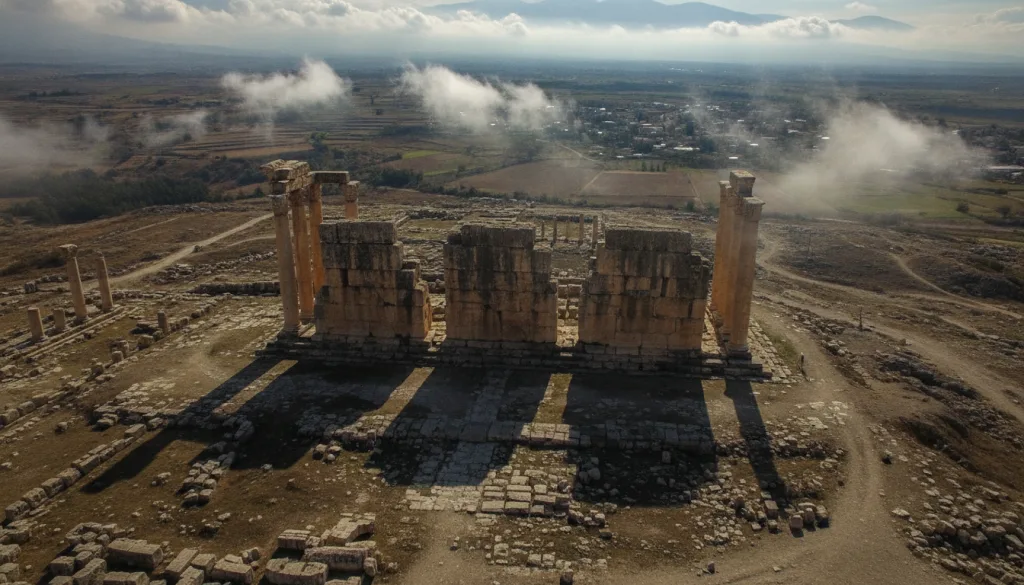
Architectural Significance
The architectural significance of the trilithons cannot be understated. They serve as a testament to the ambitious aspirations of ancient cultures. The precision with which these stones were cut and aligned suggests an advanced understanding of engineering and geometry. The site itself was not only a religious center but also a display of political power. The Roman Empire used the grandeur of Baalbek to showcase their supremacy and technological prowess.
Conclusion: A Crossroads of History and Mystery
The trilithon stones of Baalbek stand at the intersection of history, archaeology, and speculation. They challenge our understanding of ancient construction capabilities and force us to reconsider the narratives surrounding these early civilizations. As we continue to uncover new evidence, the story of Baalbek may evolve, but one thing is clear: the sheer enormity of these stones defies the capabilities of the civilizations that created them, raising questions that may never be fully answered.
Notre analyse : The evidence strongly indicates that the trilithon stones of Baalbek, while impressive, reflect the complexities of ancient engineering and social organization. Their construction likely required a level of effort and technology that, as of now, is still not completely understood. Future research may shine a light on these mysteries, but until then, Baalbek remains a captivating enigma in the annals of human history.


Sources & References
Schoch, Robert. "The Ancient Mystery of Baalbek." 2013, International Journal of Ancient Studies.
Hawass, Zahi. "The Secrets of Baalbek: A Study of Architectural Techniques." 2015, Journal of Egyptian Archaeology.
University of California, Berkeley. "Geophysical Survey of Baalbek." 2017, Department of Archaeology.
Pliny the Elder. "Natural History." 77 AD, Roman Texts.






Comments 0
Be the first to comment!