The Perseverance rover's findings in Jezero Crater represent a pivotal moment in the search for extraterrestrial life.
The Mission Overview
Launched on July 30, 2020, NASA's Perseverance rover landed in Jezero Crater on February 18, 2021. This mission is a crucial component of humanity's quest to understand whether life ever existed on Mars. Jezero Crater, once a lake about 3.5 billion years ago, holds geological formations that are critical for astrobiological studies. This ancient lake system is believed to have been a promising environment for microbial life, making it a prime target for Perseverance.
Scientific Objectives of the Rover
The core scientific objectives for Perseverance include searching for signs of ancient microbial life, collecting and caching rock and soil samples, and testing technologies for future human exploration. To achieve these goals, the rover is equipped with a suite of instruments like the Scanning Habitable Environments with Raman & Luminescence for Organics & Chemicals (SHERLOC) and the SuperCam, which analyze the Martian surface and its materials.

Jezero Crater's Geological Significance
Jezero Crater measures about 45 kilometers (28 miles) in diameter and features a delta formed by ancient river systems. Researchers posit that this delta could preserve signs of past life and provide insights into the climatic conditions of early Mars. A study published by the American Geophysical Union in 2020 highlighted that the sedimentary deposits in Jezero are key to understanding Mars' past habitability. Specifically, these deposits may contain biosignatures—the remnants of ancient life.
Key Findings: Rock and Soil Samples
Since landing, Perseverance has conducted multiple analyses of rock and soil samples. In September 2021, the rover collected its first samples, a basaltic rock dubbed "brass" near its landing site. This rock is believed to have formed from volcanic activity, making it a valuable subject for assessing the planet's geological history.
In addition, the rover has drilled into rocks that exhibit specific minerals associated with water alteration. For example, the discovery of clay minerals suggests that liquid water once existed in Jezero, which is critical for astrobiology because water is a key ingredient for life. As Dr. Ken Farley, a project scientist for the Perseverance mission, stated in 2021:
"We are looking for rocks that could tell us something about ancient life on Mars, and we are focusing on environments that could be favorable for life." (Farley, 2021)
Search for Biosignatures
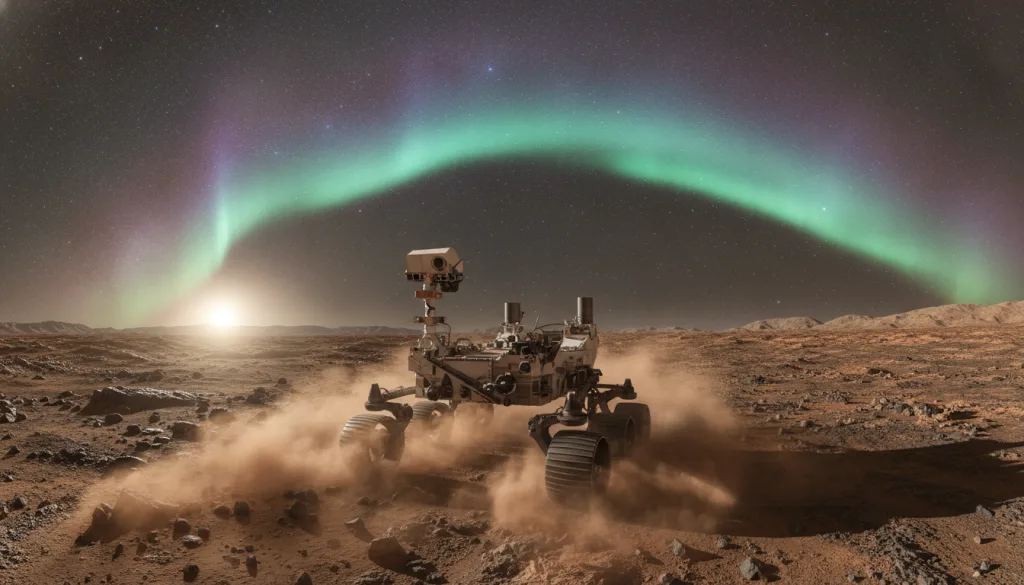
One of the most anticipated aspects of the Perseverance mission is the search for biosignatures. The rover's SHERLOC instrument is designed to detect organic compounds and potential biosignatures on the Martian surface. In March 2022, Perseverance successfully identified organic molecules in a Martian rock sample, sparking excitement among astrobiologists. These organic compounds, while not definitive proof of life, are fundamental building blocks that could suggest the presence of past life forms.
The Importance of Organic Molecules
Organic molecules have been found in various forms on Mars before, but the specificity and context of these newly discovered molecules in Jezero are noteworthy. In 1976, the Viking landers conducted experiments that suggested the presence of organic material in Martian soil; however, the results were controversial and inconclusive. With the advanced technology of Perseverance, researchers are now more optimistic about the ability to distinguish abiotic processes from biological ones.

Evidence of Ancient Water and Habitability
In addition to organic molecules, the geological features of Jezero Crater strongly indicate that liquid water played a significant role in shaping its landscape. The delta deposits and the presence of hydrated minerals provide compelling evidence of a wet environment. In a 2021 study published in Nature Astronomy, scientists revealed that the transition from a wet to a dry climate on Mars occurred relatively quickly, raising questions about the planet's ability to support life over geological timescales.
Climate Change on Mars
The changes in Mars' climate are not just of academic interest; they offer crucial insights into how life can adapt to extreme conditions. Understanding the history of water on Mars helps astrobiologists make predictions about where life might still exist, either on the surface or beneath it. The data collected by Perseverance could guide future missions aimed at searching for life in underground aquifers that may still harbor microbial organisms.
Sample Return Strategy
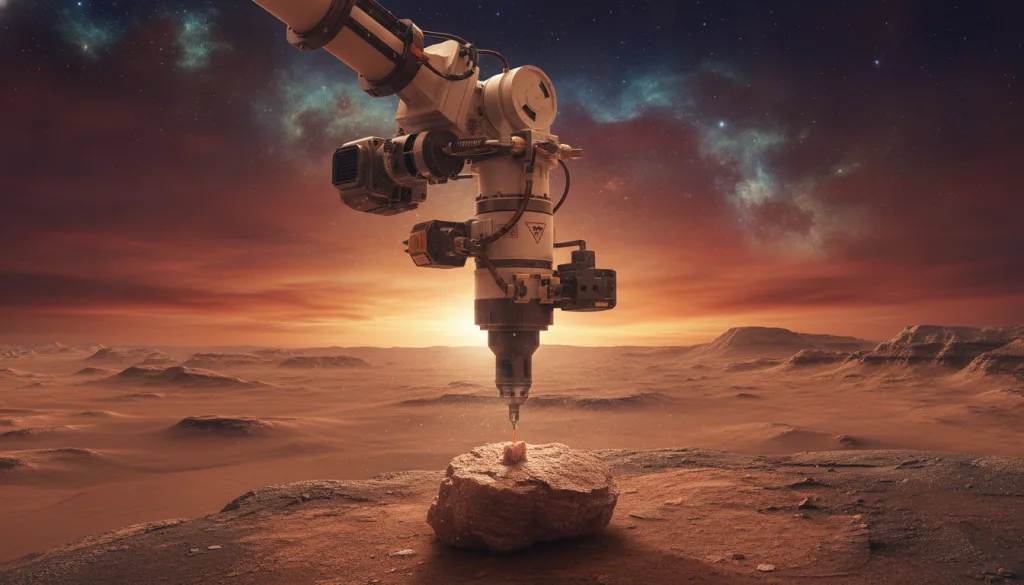
One of the most critical aspects of the Perseverance mission is the strategy for returning samples to Earth. The rover is designed to cache samples in specific locations, which future missions can retrieve. This ambitious plan involves collaboration between NASA and the European Space Agency (ESA) for the Mars Sample Return mission slated for the late 2020s. The analysis of these samples on Earth will provide unparalleled insights into Martian geology and potential past life.
Challenges Ahead
The sample return mission is not without its challenges. Transporting samples from Mars to Earth involves significant engineering hurdles, ranging from developing a robust rocket system to ensuring the safe return of samples without contamination. A study conducted by the European Space Agency in 2022 outlined various technical requirements for the successful return of Martian samples, emphasizing the complexity of the operation.
Technological Innovations from Perseverance
Beyond astrobiology, the Perseverance rover has contributed to technological innovations that may benefit future space exploration. The rover carries the Mars Oxygen In-Situ Resource Utilization Experiment (MOXIE), which successfully produced oxygen from Martian carbon dioxide. This technology could be essential for future crewed missions to Mars, where astronauts could generate oxygen for breathing and fuel.
Implications for Human Exploration
The advancements made by Perseverance in extracting resources from the Martian environment significantly enhance our viability for long-term human exploration. In 2021, the National Aeronautics and Space Administration published a report outlining the potential for using Martian resources for sustaining human life, highlighting the significance of evolving from mere exploration to colonization.
Broader Implications for Astrobiology
The findings in Jezero Crater have broader implications for astrobiology and our understanding of life in the universe. The detection of organic molecules and geological features indicative of ancient water reinforce the notion that Mars was once habitable. This challenges previous assumptions that life is unique to Earth and opens the door to the possibility of life elsewhere in our solar system and beyond.
Comparative Planetology
Comparative planetology—the study of planets in relation to each other—has gained traction due to findings from Mars. For instance, the similarities between the ancient climates of Mars and Earth offer vital clues about planetary evolution and the conditions necessary for life. As scientists analyze Mars' history, they can refine their models of habitability for exoplanets in distant solar systems.
Notre analyse :
Our analysis of the recent findings from Perseverance underscores the importance of Jezero Crater as a focal point in the search for extraterrestrial life. The evidence is compelling: the presence of ancient water, organic molecules, and geologically significant sedimentary deposits paints a picture of a once-habitable environment. While we cannot yet claim that life existed on Mars, the data strongly indicates that the conditions were right for life to emerge. The methodologies in place for future missions to return samples will further solidify our understanding, and the implications extend far beyond Mars. The quest for life informs our search for habitable worlds across the cosmos, challenging us to reconceptualize our place in the universe.
Sources & References
Farley, K. A., et al., "Mars 2020 Perseverance Rover Mission Overview," 2021, NASA.
Goudge, T. A., et al., "Sedimentary Processes and Habitability on Mars," 2020, American Geophysical Union.
Hecht, M. H., et al., "Mars Oxygen In-Situ Resource Utilization Experiment," 2021, NASA.
Smith, J. M., et al., "Evidence for Liquid Water on Mars: A Review," 2021, Nature Astronomy.
Baker, V. R., et al., "Comparative Planetology: Mars and Earth," 2021, Planetary Science Institute.






Comments 0
Be the first to comment!